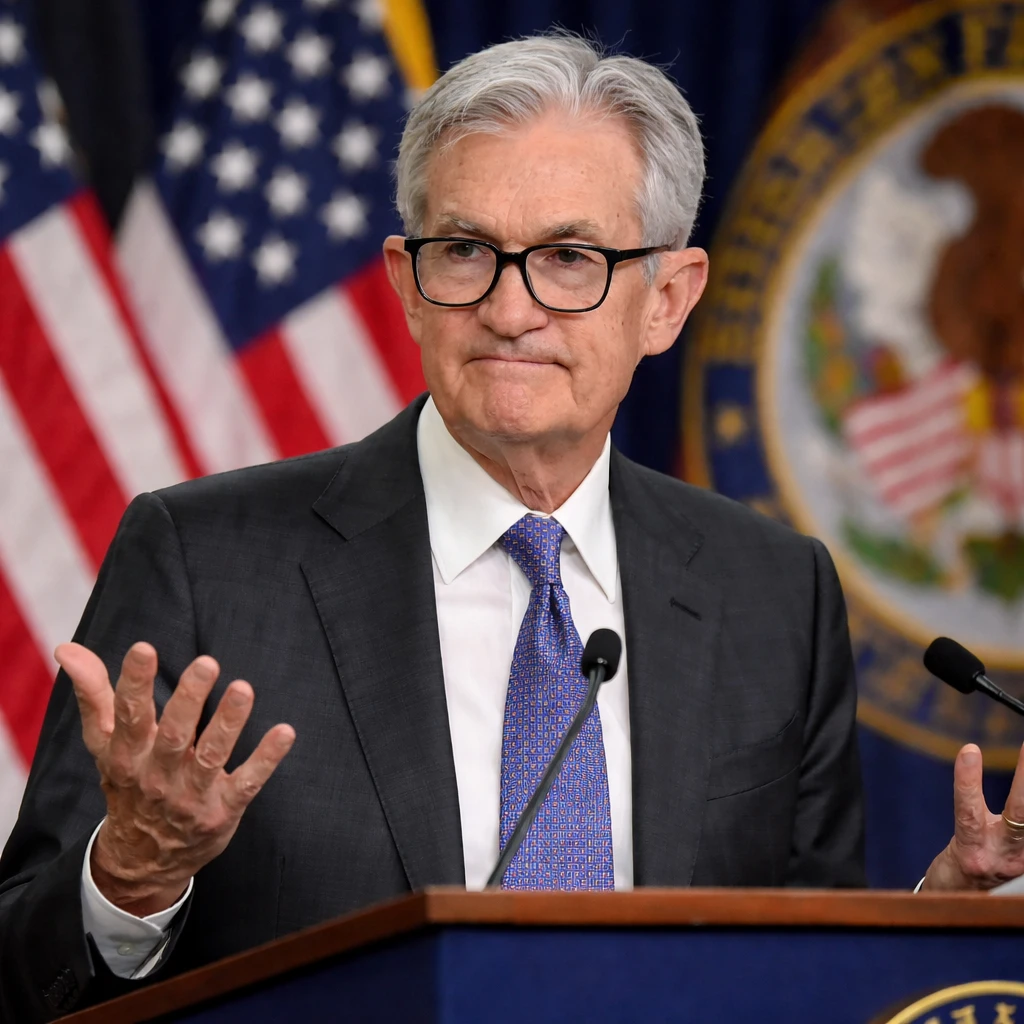

The ongoing criminal investigation by the Justice Department targeting Federal Reserve Chairman Jerome Powell has intensified focus on a critical question within the central bank’s governance: will Powell vacate his position on the Fed’s Board of Governors when his four-year term as chair ends in mid-May, or will he remain as an ordinary governor, an uncommon step not seen in nearly five decades?
Powell’s chairmanship is set to expire on May 15, but unlike his role as chair, which has a four-year term, his membership on the seven-person Board of Governors extends through January 31, 2028. Traditionally, Fed chairs exit the board upon concluding their chair terms; however, Powell may become the first in approximately 50 years to continue in a governing capacity after ceasing to be chair. Market watchers and Federal Reserve observers suggest that the criminal investigation concerning Powell’s sworn testimony about cost overruns tied to a $2.5 billion refurbishment of Fed office buildings might be perceived as an effort to intimidate him from leveraging his board seat post-chairmanship.
Should Powell choose to retain his board membership, it could effectively restrict the White House from obtaining a majority on the Board, thereby thwarting the Trump administration’s aspirations to exert greater control over the Fed—a body that has maintained significant insulation from routine political pressures for decades.
David Wilcox, formerly a senior economist at the Federal Reserve and currently affiliated with the Peterson Institute for International Economics, stated, "I find it very difficult to see Powell leaving before midnight on January 31, 2028. This situation poses an existential challenge to the governance framework of the Fed as it has existed for roughly ninety years. Powell likely considers it his solemn responsibility to continue serving on the Board to uphold that structure."
Appointed by President Trump to chair the Federal Reserve in 2018, Powell is compelled to relinquish the chairmanship this May at the conclusion of his second term. Despite repeated inquiries by the media, Powell has refrained from disclosing his intentions beyond that date, and representatives have declined to offer statements concerning his future.
President Trump has repeatedly expressed dissatisfaction with Powell’s reluctance to enact aggressive interest rate reductions, which Trump believes would alleviate inflationary pressures on essential goods and services such as food, utilities, and housing—issues with sustained political importance despite recent signs of easing inflation.
On a recent occasion, Trump pointed to a recent fall in mortgage rates over the past year as an indicator of progress but lamented the lack of support from the Fed, remarking, "If I had the help of the Fed, it would be easier. But that jerk will be gone soon." Despite such statements, Powell’s departure is not assured.
Potential Outcomes if Powell Remains on the Board
Trump has voiced intentions to nominate a new Federal Reserve chair imminently; however, ongoing legal scrutiny related to Powell’s testimony may stall any confirmation processes. Some Republican senators, notably on the Senate Banking Committee, have voiced reservations regarding the allegations surrounding Powell’s testimony about the costly Fed building renovations—an issue heavily criticized by Trump as extravagant spending. U.S. Attorney Jeanine Pirro has issued subpoenas to the Federal Reserve as part of this legal inquiry.
Senator Thom Tillis of North Carolina has publicly stated his refusal to endorse any Federal Reserve appointments until the legal matters enveloping Powell are conclusively resolved, illustrating the potential for significant delays in approving Trump’s nominees. Should no successor chair be confirmed by May 15, Powell may sustain his role as chair until a replacement is adequately vetted and confirmed.
Following his chairmanship expiration, if Powell remains a governor, the Trump administration would be limited to appointing three of the seven board seats (including two prior appointments from Trump's first term), perpetuating a minority on the board. Even with a new chair nominated by Trump aligned with the administration’s policy objectives, that individual would wield limited influence, as Powell and fellow governors could outvote the chair in Federal Open Market Committee decisions—a scenario not witnessed since 1986.
Implications if Powell Departs the Board
Conversely, if Powell steps down entirely, Trump could appoint a fourth board member, thereby clinching a majority on the Board of Governors. The administration might further bolster this majority if the Supreme Court permits the dismissal of Governor Lisa Cook, with a decision on the matter pending.
Securing a board majority would pave the way for expansive revisions to the Fed's operational structure. Treasury Secretary Scott Bessent has advocated policy shifts aimed at curtailing the Fed's influence over the economy and financial markets. Moreover, control over the selection or removal of presidents from the twelve regional Federal Reserve banks—which participate in interest-rate-setting through voting rights—could be leveraged to align policy actions with the administration's preferences. Several regional bank presidents have opposed the steep rate cuts sought by Trump, so the board could act decisively under a majority to replace dissenting officials.
Historical Context of Chair Departures from the Board
Although nearly all Federal Reserve chairs have historically relinquished their governor roles upon ending their chairmanship, there are instances of deviation. In 1978, Chair Arthur Burns remained on the board for approximately three weeks post-chairmanship.
More notably, in 1948, Chair Marriner Eccles stayed on as a governor for nearly three years after ending his term as chair, at the request of President Harry Truman. Eccles’s tenure as governor after chairmanship culminated in his pivotal role opposing Truman’s directives on interest rate policy, precipitating the Fed-Treasury Accord that enshrined the Federal Reserve’s operational independence—a principle which Eccles symbolizes, though some scholars debate the extent of his legacy.
The Fed’s main office building—currently under refurbishment and central to Powell’s investigation—is named in honor of Eccles. Following Eccles, Truman appointed Treasury official William McChesney Martin as Fed chair, anticipating compliance with the administration’s policies. Martin instead raised interest rates, prompting Truman to label him a "traitor" in a chance meeting years later. The Federal Reserve’s second office building bears Martin’s name, underscoring his complex legacy.
Columbia University law professor Lev Menand, an expert on the Federal Reserve, notes, "This history serves as a cautionary tale for President Trump in his hope to install a compliant Fed chair. Martin did not follow Truman’s expectations." This precedent suggests the commissionership role is not guaranteed to align with presidential preferences, even under conditions of political pressure or board majority.