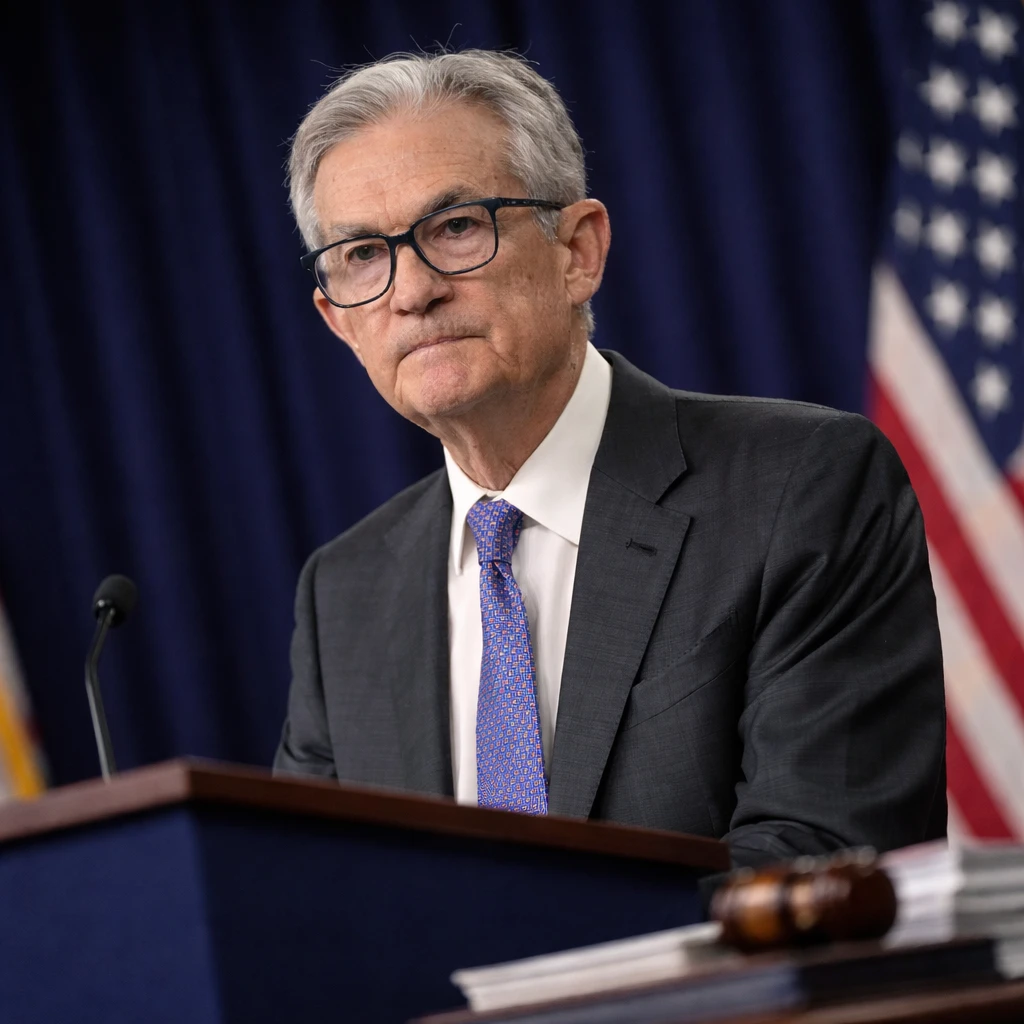

In a recent policy announcement, the Federal Reserve decided to maintain its benchmark interest rate at roughly 3.6%, pausing after three successive cuts over the previous year. Federal Reserve Chair Jerome Powell, during a post-decision news conference, emphasized that the economic outlook has enhanced notably since the last policy meeting in December, predicting that this improvement should eventually stimulate employment growth.
The Fed's official statement acknowledged preliminary indicators of job market stabilization. With economic growth proceeding robustly and unemployment rates showing signs of steadiness, officials appear to find limited justification for immediate additional reductions in borrowing costs.
Despite the hold, the majority of Fed policymakers anticipate that borrowing rates may be lowered further within the year, conditioned on clearer indications that inflation, which remains elevated compared to the Fed's 2% target, is decreasing. As per the Fed's preferred inflation gauge, the rate was 2.8% in November—a slight uptick compared to the previous year.
Michael Gapen, Morgan Stanley's chief U.S. economist, remarked that Powell left open the possibility of future rate cuts once sufficient evidence emerges confirming the slowdown of inflation. Powell also suggested that the inflationary impact of tariffs, which have increased prices for goods including furniture, appliances, and toys, might peak by midyear, leading to a subsequent decline in inflation rates.
“The economy's outlook has clearly improved since the last meeting,” Powell stated, underscoring ongoing vigilance on inflation trends and labor market conditions.
In a rare scenario, the Fed grappled with external pressures during Trump’s second term, prompting Chair Powell to confront various political and institutional issues beyond the immediate scope of monetary policy. Of particular note, two Federal Reserve governors dissented against the decision to hold rates. Governors Stephen Miran, appointed by President Trump in September and a consistent advocate for half-point rate cuts, and Christopher Waller, considered a potential replacement for Powell, preferred a 0.25 percentage point reduction.
This split denotes internal divergence within the Federal Reserve regarding the pace and necessity of further monetary easing. The decision to keep rates steady is expected to intensify criticism from President Donald Trump, who has persistently urged for more aggressive lowering of short-term interest rates.
Lowering the Fed’s key interest rate typically reduces borrowing costs across sectors, influencing mortgage rates, auto loans, and business financing. However, these rates are also affected by market forces beyond central bank control. The critical issue facing the Fed remains determination over the duration of the current hold period. The rate-setting body is divided between members awaiting proof of declining inflation before further cuts and those inclined to take action sooner to bolster employment.
Overall, the Federal Reserve’s decision reflects a balancing act between fostering economic growth and moderating inflation, signifying cautious optimism amid a complex policy environment shaped by economic data and political dynamics.