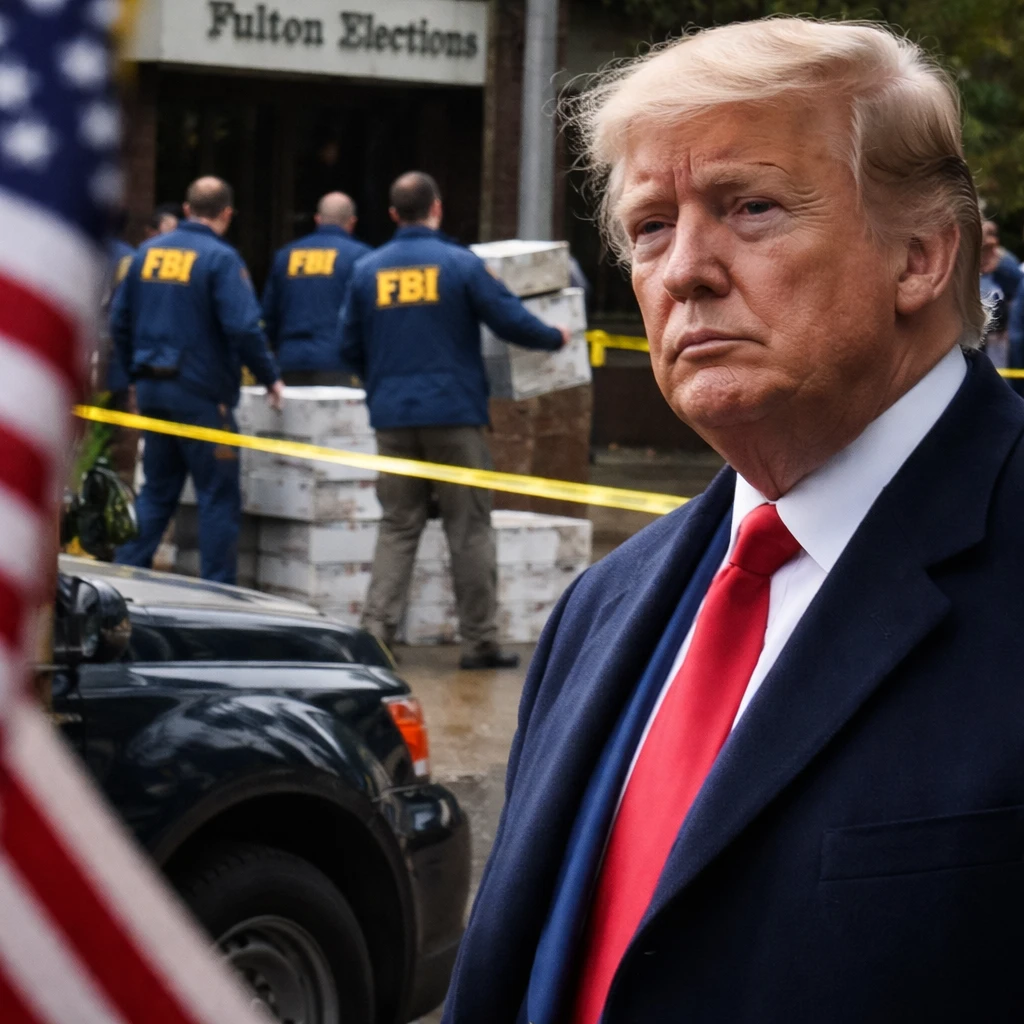

After the 2020 presidential election, which Donald Trump lost, he has continued, over a span exceeding five years, to promote the false narrative that the election was tainted by extensive fraud. Despite lacking evidence to substantiate these claims, he has remained fixed on this standpoint. Now reinstated as president, Trump is utilizing federal mechanisms to reinforce these disputed allegations.
On a recent Wednesday, the Federal Bureau of Investigation implemented a search warrant at the election headquarters located in Fulton County, Georgia, which encompasses most of Atlanta. The search sought the 2020 election ballots. This law enforcement action closely followed Trump's public remarks earlier in the month during a speech at the World Economic Forum in Davos, Switzerland, where he implied that forthcoming charges concerning the election were expected.
Rick Hasen, a law professor at UCLA, commented on the situation, emphasizing Trump's unique position of possessing the extensive power of the United States government to pursue personal obsessions: "The man has obsessions, as do a fair number of people, but he’s the only one who has the full power of the United States behind him." Hasen and other observers view Trump's direction of the FBI's actions in Georgia as part of a broader trend of transforming federal institutions into instruments for settling personal political grievances.
Senator Jon Ossoff, a Democrat from Georgia, drew parallels between the FBI’s search in Georgia and a recent immigration enforcement crackdown in Minnesota linked to Trump’s efforts to target the state’s governor, who previously campaigned alongside Vice President Kamala Harris in 2024. Ossoff characterized these moves as indicative of a president erratically deploying federal law enforcement as a tool for revenge and unaccountable power.
This federal activity has occurred amid nationwide preparations for the 2026 midterm elections. Trump faces challenges in aiding his party’s efforts to maintain control of Congress. Given his previous contemplation in 2020 of utilizing military forces to seize voting machines post-election loss, concerns have arisen that he may be setting a precedent for similar maneuvers in the upcoming electoral cycle.
Kristin Nabers, representing the progressive organization All Voting Is Local, underscored Georgia's significance in this context, noting that the seizure of election materials there could embolden attempts to confiscate such materials or machines in other states following electoral defeats.
Georgia has been a focal point in Trump's ongoing fixation on the 2020 election outcomes. On January 2, 2021, Trump made an infamous telephone call to Georgia’s Republican Secretary of State, Brad Raffensperger, requesting that the official "find" an additional 11,780 votes to reverse Biden's victory in the state. Raffensperger repudiated the request, citing multiple verifications that confirmed Joe Biden's narrow win.
This instance was one among numerous state-level audits in battleground states—often spearheaded by Republicans—that reaffirmed Biden's electoral success. These included states such as Michigan, Wisconsin, and Nevada. Trump also faced legal defeat in dozens of lawsuits challenging the election results. His administration's then-Attorney General declared the absence of evidence supporting widespread fraud.
Several of Trump's associates who propagated falsehoods about the election results have faced successful defamation lawsuits. For example, former New York Mayor Rudy Giuliani settled for damages after a court mandated he pay $148 million to two Georgia election workers defamed in the aftermath of the 2020 contest.
Companies producing voting machines similarly litigated against conservative media outlets that broadcast unsupported claims accusing their equipment of fraud. Fox News resolved one such case by agreeing to a $787 million settlement after a judge determined the allegations lacked merit.
The Trump campaign's efforts to sway Georgia led to a prosecutorial attempt by Fulton County District Attorney Fani Willis, a Democrat, which ultimately collapsed due to conflict-of-interest allegations. Trump subsequently filed a lawsuit against Willis.
Upon resuming office, Trump pardoned, commuted, or pledged to dismiss charges against approximately 1,500 individuals accused in the January 6, 2021, Capitol attack who had previously supported efforts to overturn the 2020 election. He also issued an executive order aimed at reforming state election systems and voting procedures; however, judicial rulings have repeatedly blocked these initiatives on constitutional grounds, noting that authority over elections predominantly resides with states and Congress.
As part of a broader campaign of political reprisal, Trump has expressed intentions to pursue criminal charges against members of the House committee investigating the January 6 attack, contending that any presidential pardons they might receive from President Biden would be legally void. He has also targeted a former cybersecurity official who assured the public of the 2020 election’s integrity.
Throughout his presidential tenure, while managing significant issues such as conflicts in Gaza and Ukraine and navigating major tax and spending legislation through Congress, Trump has persistently revisited and emphasized the 2020 election controversy. He has repeatedly asserted baseless claims that the election was manipulated, accused Democrats of cheating, and even installed a plaque in the White House purporting Biden’s tenure began after "the most corrupt election ever."
David Becker, former Department of Justice voting rights attorney and executive director of The Center for Election Innovation & Research, expressed skepticism regarding the FBI search’s potential to result in successful prosecutions. Noting that Trump has demanded charges against several adversaries, such as former FBI Director James Comey and New York’s Attorney General Letitia James, who have seen their cases stalled in the legal system, Becker suggested that much of the administration’s efforts are designed more to influence public discourse via social media rather than to pursue valid judicial remedies. Becker remarked, "I suspect this is more about poisoning the well for 2026."