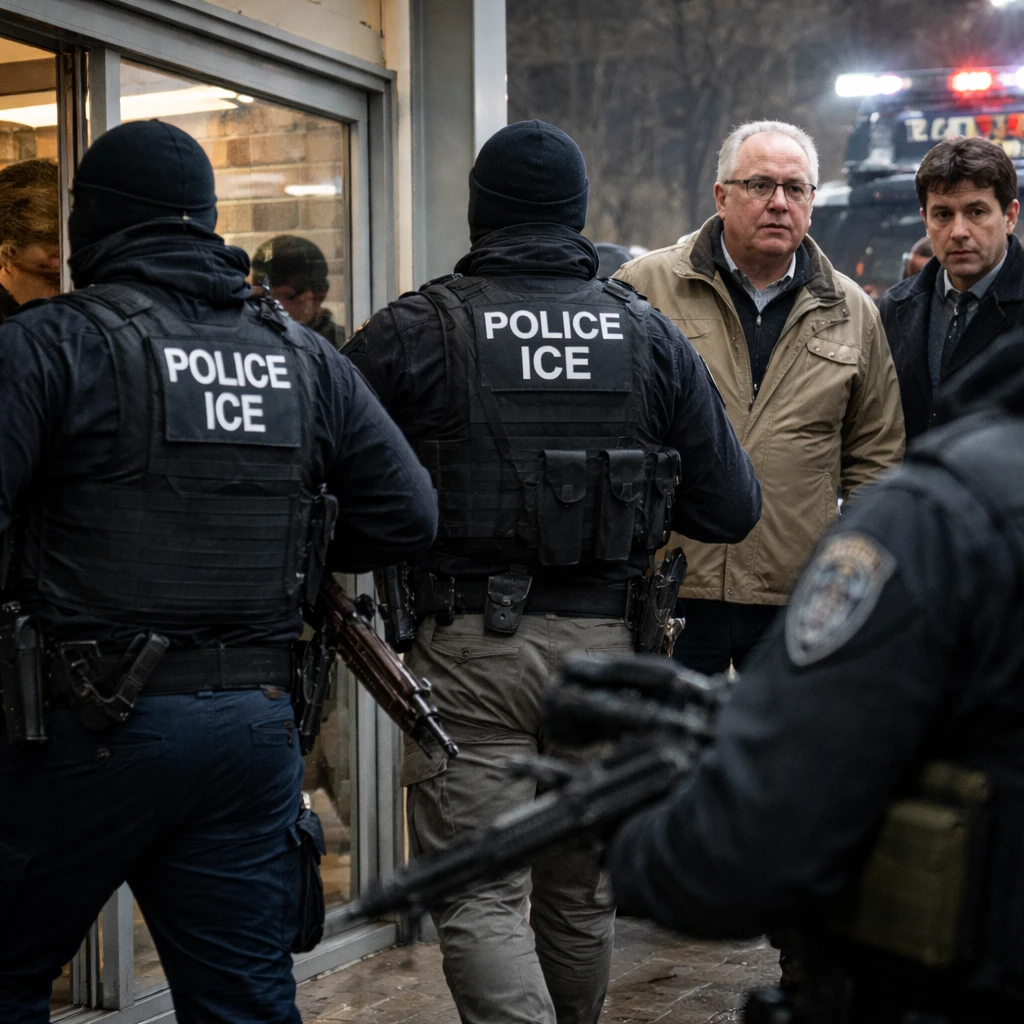

Federal prosecutors in Minnesota have initiated an inquiry involving key state and local government officials concerning their possible interference with law enforcement activities surrounding a large-scale immigration operation in the Minneapolis-St. Paul metropolitan area. According to an individual familiar with the investigation, grand jury subpoenas requesting extensive records were delivered Tuesday to the offices of Governor Tim Walz, Attorney General Keith Ellison, Minneapolis Mayor Jacob Frey, St. Paul Mayor Kaohly Her, and officials from Ramsey and Hennepin counties. The source declined to be named due to the sensitive nature of the ongoing investigation.
The subpoenas are part of an evaluation into allegations that these Minnesota officials may have obstructed federal immigration efforts through their public statements and actions. Two informed individuals indicated the focus is on potential infringements of a conspiracy statute related to these alleged obstructions.
In response to the subpoenas, Mayor Frey released the document publicly, noting that it demands a comprehensive collection of documents by February 3, including any that might evidence resistance to aiding immigration officers. Both Governor Walz and Mayor Frey, Democrats, have characterized the federal investigation as a tactic designed to intimidate and stifle political opposition. Mayor Her, also a Democrat and a Hmong immigrant, confirmed receipt of the subpoena and expressed confidence in facing the inquiry without intimidation.
The governor’s office referred inquiries to a previous statement in which Governor Walz accused the Trump administration of distracting from justice with this probe.
Meanwhile, Vice President JD Vance is anticipated to visit Minneapolis on Thursday for discussions with local leaders and community stakeholders, as reported by anonymous sources familiar with these plans.
This development follows the Justice Department’s recent motion urging a federal judge to deny requests to halt the intensified immigration enforcement activities that have caused unrest in Minneapolis and St. Paul over recent weeks. Government attorneys criticized the state’s lawsuit against the enforcement actions as "legally frivolous," asserting that Minnesota sought a veto over federal law enforcement operations.
Attorney General Ellison has contended that the federal government is infringing on constitutional free speech protections and other rights, describing the presence of armed immigration officers as excessive and poorly managed, calling for a cessation of what he terms an "invasion." The timing for a ruling by U.S. District Judge Katherine Menendez remains uncertain.
Legal experts, like constitutional law professor Ilan Wurman from the University of Minnesota Law School, have expressed skepticism that the state's legal challenge will succeed, emphasizing that immigration enforcement jurisdiction clearly falls under federal authority.
U.S. Border Patrol Commander Greg Bovino, overseeing the immigration operation under the Trump administration, stated that over 10,000 undocumented individuals have been apprehended in Minnesota over the last year. Among these arrests, 3,000 were classified as some of the most dangerous offenders in the past six weeks during "Operation Metro Surge." He highlighted that some detainees had extensive criminal backgrounds, coming from countries such as Laos, Guatemala, and Honduras, affirming that these cases involve serious threats rather than minor violations.
Advocates, including Julia Decker of the Immigrant Law Center of Minnesota, have raised concerns about the transparency of these arrest figures, emphasizing the lack of reliable information about individuals in custody and the potential risks to their welfare.
The enforcement surge has sparked tensions following the fatal shooting of Renee Good on January 7, 2026, by an immigration officer engaged in operation activities in Minneapolis. Government officials have described the shooting as self-defense, although video footage shows conflicting perspectives. In reaction, public protests have frequently clashed with immigration officers, resulting in the use of crowd-control tactics such as tear gas and chemical irritants. Reports also document aggressive immigration enforcement actions, including forced entries into homes, breaking vehicle windows, and detaining individuals forcibly.
Commander Bovino has defended his personnel's conduct, categorizing their actions as lawful and ethical, and described disruptive protestors as rioters and anarchists rather than ordinary citizens.
Local law enforcement have noted incidents where off-duty officers and residents, including U.S. citizens, were subject to racial profiling and unwarranted stops by federal agents, with complaints reported in suburbs like Brooklyn Park.
On the community front, a Minnesota church experienced an invasion during an anti-ICE demonstration where protestors entered the sanctuary, prompting the church leadership to condemn the actions as unlawful disruptions of worship. Activists also called for the resignation of a church leader who concurrently works with ICE, citing conflicts of interest.
Homeland Security Secretary Kristi Noem labeled the protestors as agitators and signaled potential arrests, escalating the rhetoric surrounding the events.
The probe into Minnesota officials highlights the ongoing clash between federal immigration enforcement priorities and local governmental responses, compounded by public demonstrations and legal challenges that underscore deep divisions on the approach to immigration enforcement.