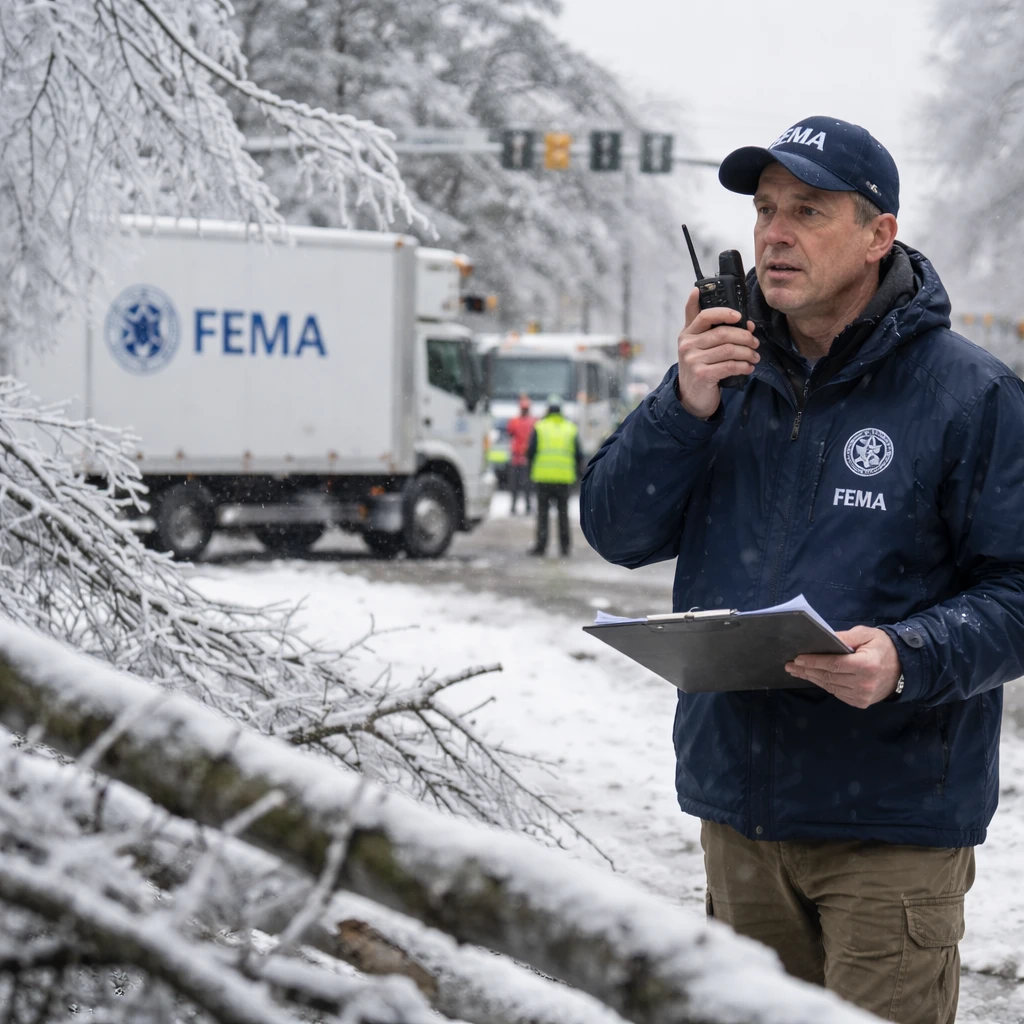

Federal Emergency Management Agency (FEMA) maintains a robust financial position with approximately $7 billion to $8 billion in its Disaster Relief Fund (DRF), assuring continuity in responding to a severe winter storm, even as a partial U.S. government shutdown approaches at midnight Friday. Though officials from the current administration have expressed concerns suggesting otherwise, experts and former FEMA staff confirm that the agency's disaster response capacity will remain largely unaffected in the short term.
These figures, sourced from individuals acquainted with FEMA’s funding yet unauthorized for public comment, indicate that the DRF balance will sustain emergency response activities despite potential lapses in Congressional appropriations, particularly the funds allocated under the November spending legislation that concluded the prior government shutdown.
"The available budget is sufficient not only for winter storm recovery but also to address any immediate disaster requirements in the upcoming weeks," noted Sarah Labowitz, senior fellow at the Carnegie Endowment for International Peace and curator of the Disaster Dollar Database, which meticulously monitors federal disaster expenditures.
FEMA operates under the Department of Homeland Security (DHS), whose fiscal year 2026 funding remains uncertain pending Senate approval of a spending package previously passed by the House of Representatives. Heightened tensions in the Senate, fueled by demands from some Democratic lawmakers to impose restrictions on immigration enforcement following the death of a Minneapolis man at the hands of federal immigration agents, have complicated DHS appropriations negotiations, increasing the possibility of a government funding lapse.
Administration messaging has emphasized the ongoing winter storm's disruption as a primary rationale to prevent a shutdown. White House Press Secretary Karoline Leavitt underscored, "We are currently confronting the fallout from the recent winter storm that began this past weekend, with many Americans still affected. Therefore, the continuity of funding is critical." DHS, however, has not provided direct commentary on these funding issues.
The Disaster Relief Fund finances not only disaster response and recovery operations but also supports the personnel engaged in these critical activities. Should the funding expire, functions tied directly to the DRF would face limitations. To date, FEMA has coordinated closely with state agencies in managing the impact of the winter storm which swept through multiple states, causing extensive power outages affecting hundreds of thousands and contributing to at least 70 fatalities.
Following presidential emergency declarations across 12 states, FEMA facilitated federal relief including pre-staging generators in affected regions such as Louisiana and Texas and aiding tasks including debris clearance on roadways in Mississippi and Tennessee. While assessments of infrastructural and residential damages remain ongoing, it is undetermined how many states may formally seek major disaster declarations, which unlock additional federal aid covering critical infrastructure repairs and individual financial assistance via the DRF.
Michael Coen, who served as FEMA Chief of Staff under both the Obama and Biden administrations, remarked, "Currently, the scale of this winter storm is manageable by local and state agencies without necessitating extraordinary federal measures." The scheduled timing of a possible shutdown further mitigates immediate operational concerns, occurring during an interlude preceding traditional wildfire and hurricane seasons. Noah Patton, director of disaster recovery at the National Low Income Housing Coalition, concurred that short-term FEMA functions would remain intact under current disaster funding.
Nonetheless, should a shutdown materialize, certain FEMA activities outside the DRF's purview, such as the issuance or renewal of National Flood Insurance Program policies, would be suspended, as witnessed during the previous 43-day lapse in government funding. Essential personnel may continue to operate, albeit without compensation for the shutdown duration.
Prolonged funding disruptions could place heightened demands on the DRF if additional disasters occur, potentially slowing reimbursement processes for already declared incidents. Such delays have been exacerbated by a DHS directive requiring Secretary Kristi Noem's personal approval for expenditures exceeding $100,000. The current Senate consideration of the spending bill proposes allocating over $26 billion to the Disaster Relief Fund alongside near $4 billion designated for FEMA's emergency preparedness and security grants.
Contrasting governmental positions on FEMA's role surface amid these funding uncertainties. While the administration has periodically suggested reducing FEMA's scope or transferring disaster responsibilities to states, recent statements attribute the agency's indispensable contributions as a pivotal justification against allowing a government shutdown during ongoing emergencies. DHS Assistant Secretary Tricia McLaughlin emphasized FEMA's critical function in national emergency response, citing support to hundreds of millions impacted by the snowstorm.
However, former FEMA officials argue that the agency's challenges stem more from the administration’s policies than from imminent funding risks. Coen contended that current efforts to dismantle FEMA have compromised its effectiveness and that invoking the agency’s needs to prompt Congressional action is inconsistent with past moves toward its devolution. No comprehensive reform plan has yet emerged from the administration following the abrupt cancellation of a key FEMA review report scheduled for December.
Recent policy implementations have significantly impacted FEMA’s workforce and operational programs, including the exit of thousands of staff members and interruptions to grant initiatives affecting states, tribes, and territories. Provisions in the proposed funding legislation seek to reverse some administration actions by limiting FEMA's abilities to suspend grants and training while requiring transparent reporting on reimbursement statuses to disaster-impacted states.
Labowitz further affirmed that administrative delays, such as slow approval of major disaster declarations and grant reimbursements, have contributed to reduced DRF expenditures, stating, "Throughout last year, spending from the Disaster Relief Fund was deliberately slowed." These dynamics account for the agency not exhausting its disaster fund despite multiple significant emergencies over the past year.