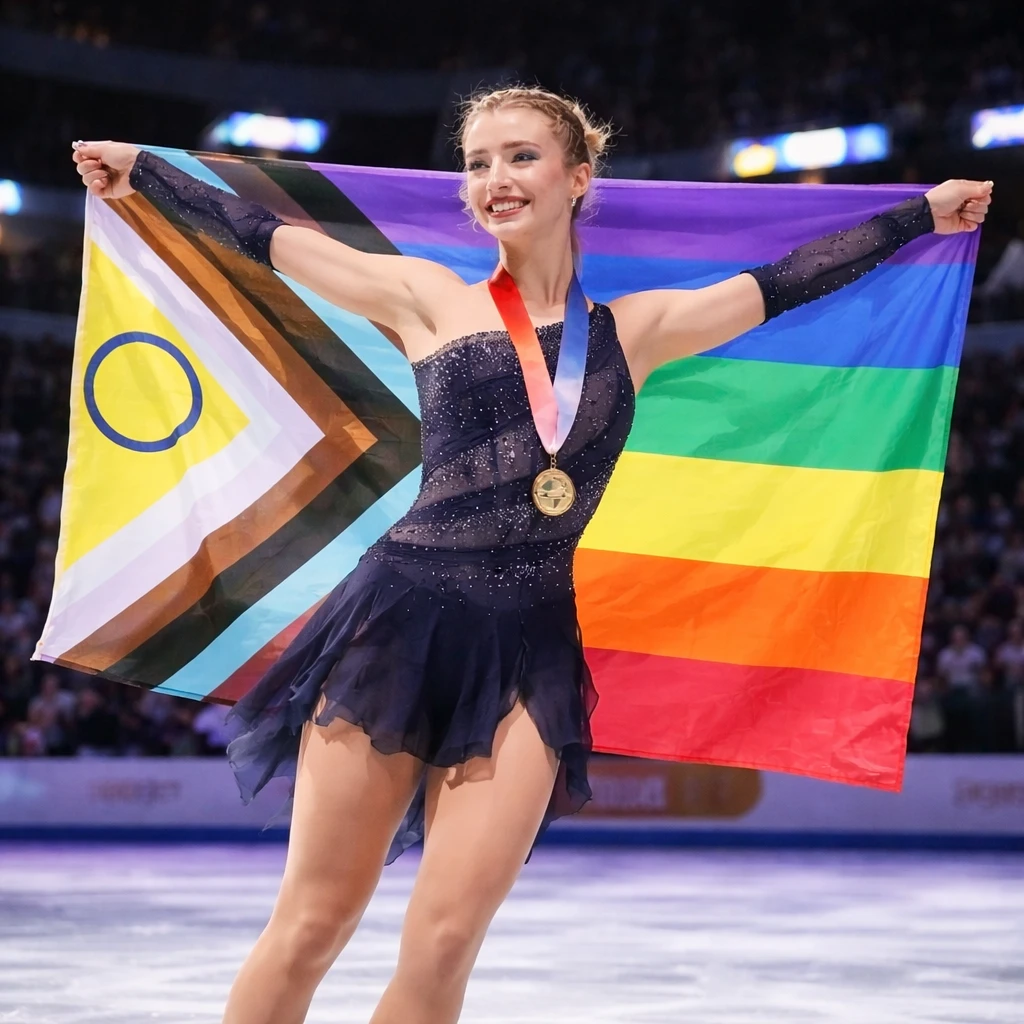

When Amber Glenn took the ice during the figure skating world championships, the atmosphere was charged with patriotic fervor. American flags waved energetically from the lowest seats of the TD Garden arena to the highest rafters, where Boston’s sports heroes are commemorated. The backdrop seemed fitting for Glenn, a three-time U.S. national champion and a celebrated figure in the skating world. Raised as the daughter of a police officer in Texas, her pride in her country resonates deeply.
However, the support for Glenn extended beyond national symbols. Among the sellout crowd attending the final world championships before the Milan Cortina Olympics, vibrant rainbow flags emerged alongside the stars-and-stripes. These flags, emblematic of LGBTQ+ pride for nearly half a century, began appearing at Glenn’s events about a year earlier when she draped one over her shoulders during celebrations after claiming a national title.
Reflecting on the sight, Glenn told reporters, “I saw them, and I was proud to see both of those flags flying.” Openly pansexual, she never aimed to be a symbol for the queer community. In fact, her personal journey involved significant struggles, including mental health challenges such as depression, anxiety, and an eating disorder. Publicly acknowledging her sexuality came only after years of internal processing, and even then, she was apprehensive about sharing it with her deeply religious family.
In an interview, Glenn expressed gratitude for discovering acceptance within the close-knit figure skating community. Traditionally, the sport has served as a progressive haven, providing a space where individuals grappling with their identities can find support and camaraderie. “Growing up in Dallas, Texas — which was somewhat more progressive — and being homeschooled, I had to learn many things independently,” she explained. “But traveling to competitions outside Texas exposed me to a supportive community of coaches and top athletes, which helped me realize that being true to oneself is indeed 'OK.'”
The evolution of acceptance in figure skating is notable, considering the sport’s historical expectations. Throughout much of the 20th century and into the 1980s and 1990s, female skaters were encouraged to portray heightened femininity, while males were urged to embrace traditional masculinity. This rigid framework began to shift notably after Rudy Galindo, who came out publicly before winning the U.S. championship in 1996, challenged existing norms. His openness inspired skaters like Johnny Weir, a three-time national champion and current Olympic analyst, to embrace their identities publicly and authentically.
Other key figures within figure skating followed suit, motivated by a combination of personal conviction, political awareness, and a desire to support the broader community. For example, prior to the 2014 Winter Olympics in Sochi, former Olympic winner Brian Boitano publicly came out amid the Russian government's controversial anti-LGBTQ+ legislation. Recognizing the significance and privacy of this decision, Boitano understood it represented a major personal moment aligned with his role as a U.S. representative.
Figure skating distinguishes itself by the prominent achievements of LGBTQ+ athletes on world stages. In 2018, Adam Rippon became the first openly gay man to make the U.S. Olympic team and to attain a Winter Olympic medal, securing bronze in the team event. Later, Timothy LeDuc marked history as the first non-binary athlete to compete at the Olympics when paired with Ashley Cain-Gribble in 2022. LeDuc attributes much of their personal confidence to the acceptance found within the skating community, contrasting it with a more conservative upbringing and less inclusive adolescent environments.
Despite progress, political developments such as the 2016 U.S. presidential election and subsequent executive orders have fostered concern among LGBTQ+ athletes. Glenn recalled the impact of President Donald Trump’s administration defining “sex” strictly as a binary biological concept, a move perceived as restricting LGBTQ+ rights across education, healthcare, and housing sectors. For Glenn and others, these developments underscored the necessity of solidarity within the community to safeguard their rights and recognition.
The enduring drive toward inclusivity within figure skating is further exemplified by athletes like Jason Brown, a two-time Olympian who publicly identified as part of the LGBTQ+ community to provide reassurance and visibility. Brown emphasized the importance of fostering an environment where skaters, coaches, choreographers, and fans feel secure and embraced. His message highlights the extensive support networks present and the ongoing commitment to nurturing a welcoming atmosphere in the sport.