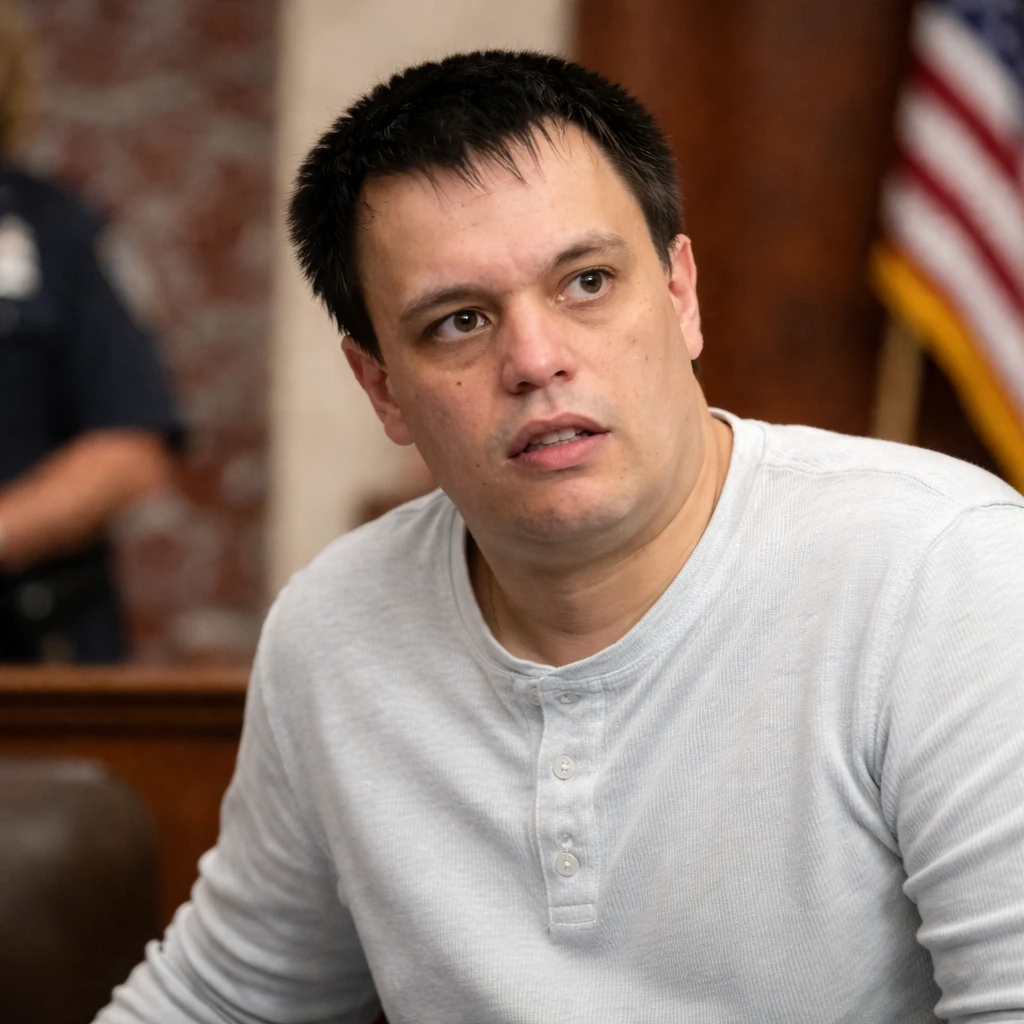

In Clinton, New York, Christopher P. Moynihan, 35, has entered a guilty plea to misdemeanor harassment charges following accusations of threatening House Minority Leader Hakeem Jeffries. This development comes roughly one year after Moynihan received a presidential pardon for his participation in the January 6, 2021, Capitol breach. The plea agreement includes a term of three years probation, with sentencing set for April 2 in the town court.
Moynihan, residing in Pleasant Valley, New York, was alleged to have sent threatening text messages in October related to a public appearance by Jeffries in New York City during that same week. According to a state police investigative report, Moynihan conveyed messages such as "I cannot allow this terrorist to live," and further emphasized in texts that Jeffries "must be eliminated" and "I will kill him for the future." Initially, charges against him were more severe, including a felony count of making a terrorist threat, but the case culminated in a plea to a lesser offense.
The local district attorney, Anthony Parisi, issued a statement stressing that threats aimed at elected representatives transcend political dialogue, constituting criminal actions that jeopardize public safety and the democratic framework. Moynihan's legal troubles are compounded by his prior convictions related to the Capitol riot, for which he was sentenced to nearly two years in prison. Despite serving that sentence, he was among the numerous individuals pardoned by the then-reinstated Republican president on his first day back in office in January 2025.
Efforts to reach Moynihan's public defender or representatives resulted in no immediate comments, and similarly, a spokesperson for Jeffries did not respond to messages seeking a response. Moynihan's contact information listed in public records includes a nonworking phone number, and emails sent to his known addresses have not been returned.
This case exemplifies the continuing legal implications and tensions involving individuals connected to the Capitol riot and the seriousness with which threats against federal lawmakers are treated. It also underscores judicial processes working to hold accountable those issuing violent threats, even when initial offenses were addressed separately or pardoned.