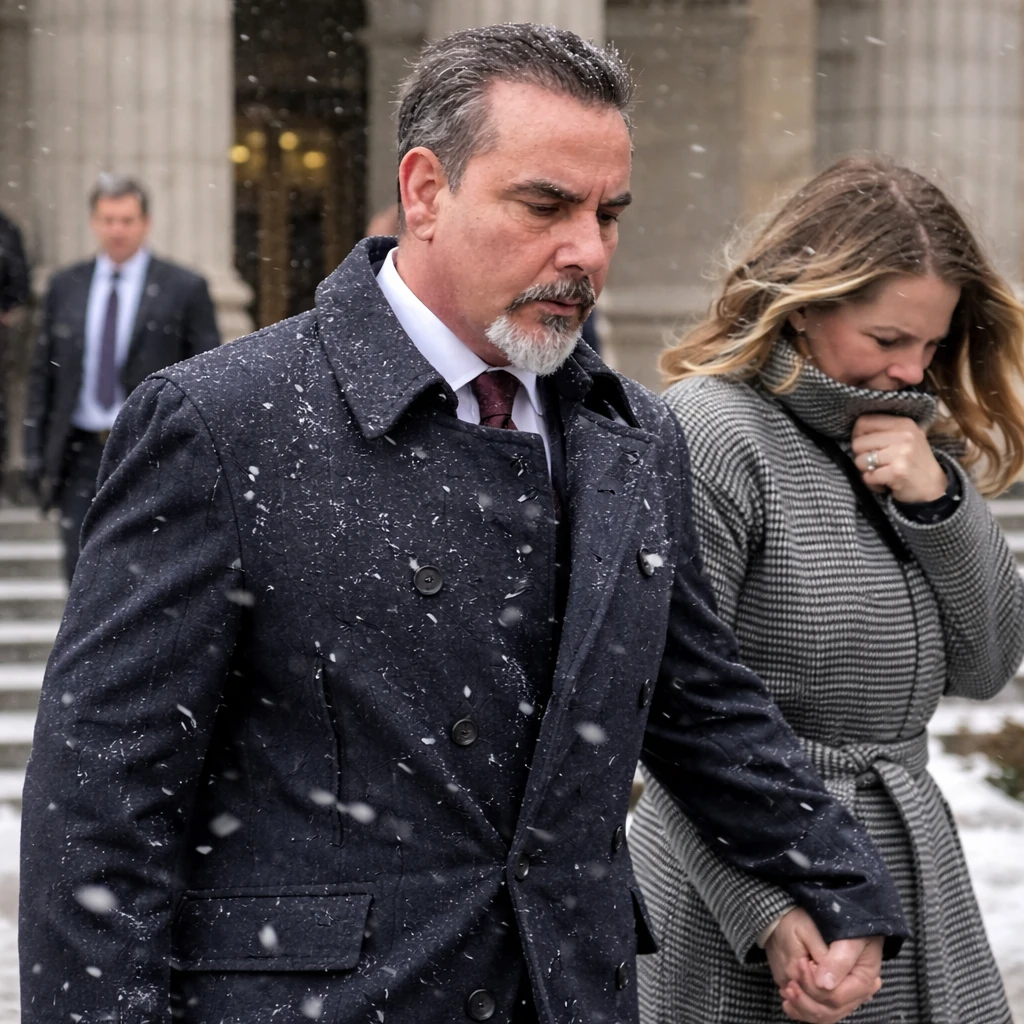
Joseph Bongiovanni, a former agent of the U.S. Drug Enforcement Administration (DEA), stood before a federal judge in Buffalo, New York, as he was sentenced to five years in prison for crimes associated with corruption. During his twenty years with the DEA, Bongiovanni often entered high-risk situations as the initial point of entry during operations. On the day of his sentencing, he expressed a familiar apprehension to the court, mirroring the uncertainty he had felt many times before entering unknown premises during his service.
At 61 years old, Bongiovanni maintained his innocence throughout the proceedings, emphasizing his dedication to his work with statements such as, "I have always been innocent. I loved that job." The presiding federal judge, Lawrence J. Vilardo, handed down the five-year sentence, significantly less than the 15 years sought by prosecutors, despite Bongiovanni’s acquittal on allegations including receiving $250,000 in mafia-related bribes.
Judge Vilardo noted that the sentencing took into account the complex nature of the verdicts that emerged following two lengthy trials and acknowledged Bongiovanni’s extensive undercover efforts, which had earned him numerous commendations throughout his career.
In his tenure, Bongiovanni had undertaken acts such as evacuating residents from a burning building amid dense smoke and securing convictions against drug traffickers, including the initial case in the region involving a fatal overdose due to narcotics.
The judge alluded to the contrasting narratives presented during the trial—"two entirely opposite versions of events and differing accounts of the defendant"—while recognizing the significant challenge Bongiovanni faced entering incarceration for the first time.
Defense attorney Parker MacKay highlighted the judge's acknowledgment of Bongiovanni as a community leader and criticized the government's call for a 15-year sentence as disproportionate to the convictions. MacKay reiterated the former agent’s claim of innocence and an ongoing commitment to proving it.
Earlier in 2024, a jury found Bongiovanni guilty on multiple counts, including obstruction of justice, conspiracy to defraud the United States, conspiracy to distribute controlled substances, and making false statements to law enforcement agents. Prosecutors argued that Bongiovanni's covert misconduct caused immeasurable harm over an 11-year span, likening it to the case of José Irizarry, another ex-DEA agent who received a 12-year sentence for laundering money for Colombian drug cartels.
According to the prosecution, Bongiovanni’s divided loyalty lay not with the DEA but with organized crime figures within Buffalo’s Italian-American community, where he was raised. They detailed instances of both willful inaction and deliberate concealment of criminal activities.
The turning point, prosecutors stated, was in 2008 when Bongiovanni had information that could have led to action against known traffickers who subsequently built a large-scale network stretching connections to California, Vancouver, and New York City. The indictment included allegations that Bongiovanni fabricated DEA reports, stole documents, misled fellow agents, betrayed confidential informants, covered up illicit activity tied to a strip club involved in sex trafficking, and aided a high school English teacher in maintaining a marijuana cultivation enterprise on the side.
Further, prosecutors revealed that Bongiovanni encouraged colleagues to divert investigative focus away from Italian individuals and toward African American and Hispanic populations, a tactic criticized as racially biased. Assistant U.S. Attorney Joseph Tripi described such conduct as a betrayal that deeply shook both law enforcement and the local community.
Bongiovanni’s downfall unfolded amidst a broader legal saga involving sexual trafficking allegations characterized by unusual developments, including the suicide of a judge following an FBI raid, police searches for overdose victims, and intimidation tactics involving dead rodents directed at government witnesses, one of whom allegedly died of a fentanyl overdose.
The Pharoah’s Gentlemen’s Club, a strip club located near Buffalo, factored centrally in the case, with Bongiovanni linked through a childhood friendship to the club’s owner, Peter Gerace Jr. Authorities stated Gerace maintains strong associations with both the Buffalo mafia and the violent Outlaws Motorcycle Club. Gerace was convicted separately for conspiracy to commit sex trafficking and for bribing Bongiovanni.
The case has brought renewed scrutiny to the DEA, which has faced multiple corruption scandals over the past decade implicating at least seventeen agents on federal charges. Most recently, prosecutors filed charges against another former agent accused of conspiring to launder millions and procure military-grade weapons and explosives for a Mexican drug cartel.
The DEA has not yet issued a response concerning Bongiovanni’s sentence.