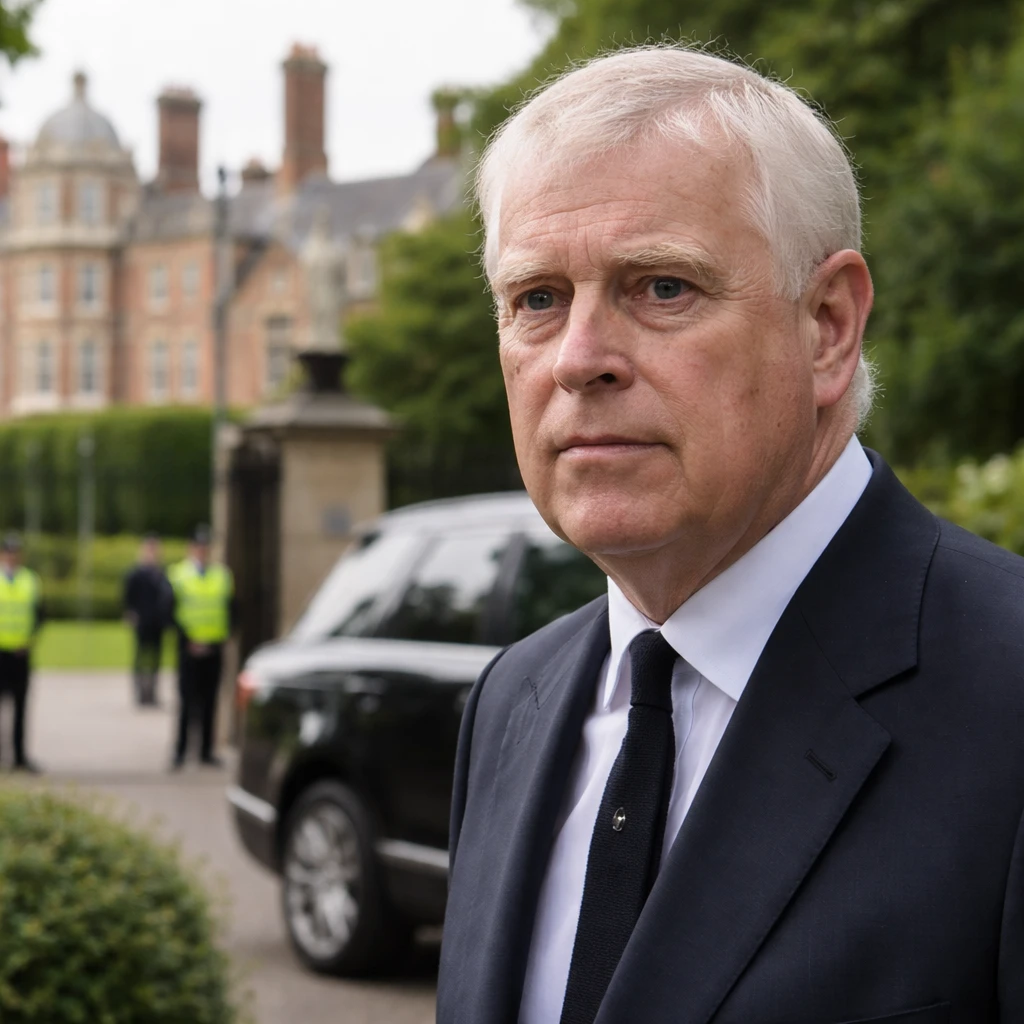

Andrew Mountbatten-Windsor, the former Prince Andrew and sibling to Britain's King Charles III, has departed from his long-term residence near Windsor Castle earlier than initially expected. This development follows the release of extensive U.S. Justice Department documents concerning Jeffrey Epstein, reigniting scrutiny over Mountbatten-Windsor’s association with the convicted sex offender.
The 65-year-old vacated the Royal Lodge on Monday and has taken up residence on the king's private Sandringham estate located in eastern England, according to reports by Britain's Press Association. Media outlets indicated that Mountbatten-Windsor will temporarily reside at Wood Farm Cottage while his permanent accommodation on the Sandringham estate undergoes necessary renovations.
This relocation had been announced in October, coinciding with King Charles III's decision to strip him of his royal titles amid ongoing disclosures about his Epstein connections. Despite this announcement, it was originally anticipated that Mountbatten-Windsor would remain at Royal Lodge, his home for over two decades, until the spring season.
The decision to hasten his departure from Royal Lodge coincided with Thames Valley Police initiating an investigation into allegations that Epstein trafficked a second woman to the United Kingdom with the intent for her to engage in sexual activity with Mountbatten-Windsor. According to the alleged victim's lawyer, this encounter occurred in 2010 at Royal Lodge.
It is critical to highlight that these new allegations differ from claims made by Virginia Giuffre, who asserted she was trafficked to Britain to engage sexually with Mountbatten-Windsor in 2001 when she was 17 years old. Giuffre’s death by suicide was reported last year.
Throughout these controversies, Mountbatten-Windsor has consistently denied any misconduct in relation to his relationship with Epstein. He has not publicly addressed the latest trafficking allegations.
His name appears multiple times within the recently disclosed three million pages of documents from the U.S. Department of Justice, made public last Friday. One particular email dated March 23, 2011, from an attorney representing an exotic dancer, alleges that Epstein and Mountbatten-Windsor solicited her participation in a threesome at Epstein’s Florida residence.
The legal representative for this woman accused both men of coercing her into various sexual acts during an encounter in early 2006, which began with her being hired to perform dance routines. It was stated that she received a payment of $2,000 instead of the $10,000 initially promised. The lawyer proposed resolving the matter confidentially for $250,000, citing the woman's reluctance to pursue claims earlier due to shame. She was engaged as an exotic dancer but described feeling exploited in a manner akin to prostitution.
Additional correspondence exists between Epstein and an individual believed to be Mountbatten-Windsor, wherein Epstein offers to arrange a meeting with a 26-year-old Russian woman. The individual, signing as “A,” later suggests dining together in London, mentioning possible venues including a restaurant or Buckingham Palace.
It should be noted that the documents do not implicate all mentioned parties in wrongdoing. The presence of prominent individuals in these files highlights the extensive reach Epstein maintained during his lifetime.
The Royal Lodge, Mountbatten-Windsor’s former residence, has historically been a contentious issue between him and his brother, King Charles III. Following Charles’s ascension to the throne in 2022, he sought to persuade Mountbatten-Windsor to relocate to a smaller dwelling within the Windsor Castle precincts. The former prince declined, referencing a lease agreement that extends through 2078.
Nevertheless, public and parliamentary scrutiny in October intensified around the favorable lease terms granted to Mountbatten-Windsor regarding the Royal Lodge – a substantial 30-room mansion with extensive grounds, managed by the Crown Estate. The Crown Estate oversees properties owned nominally by the monarchy but managed to benefit British taxpayers.
In contrast, the Sandringham Estate in Norfolk is privately owned by King Charles III, indicating a distinction between properties held by the Crown and those owned personally by the monarch.