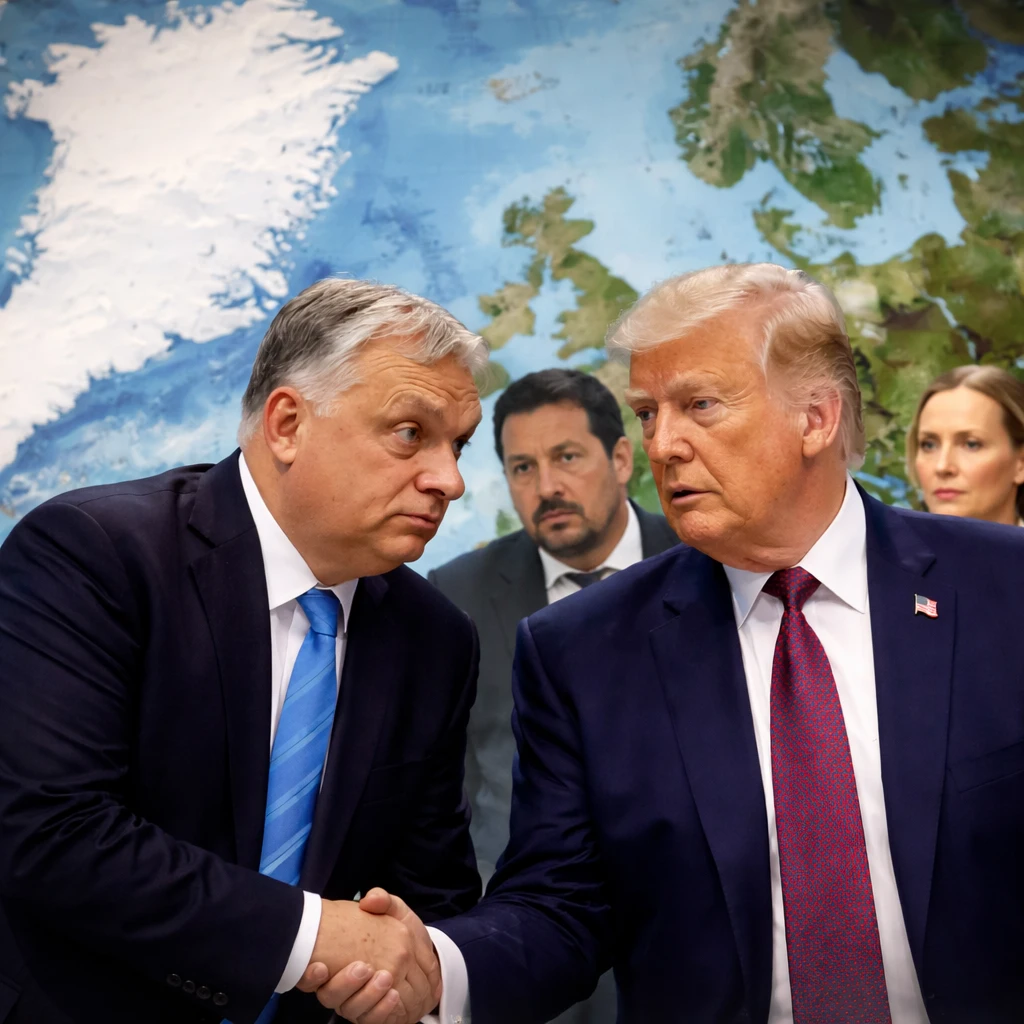

In recent months, U.S. President Donald Trump's intention to pursue control over Greenland has exposed fractures within the alliance previously considered robust between his MAGA movement and far-right parties across Europe. This divergence underlines that ideological similarities alone may not suffice to alleviate apprehensions among European nationalist figures regarding American intervention in foreign affairs.
Prominent right-wing leaders from Germany’s Alternative for Germany (AfD), Italy’s nationalists, and France’s National Rally have publicly condemned the Greenland initiative. Nigel Farage, leader of Reform UK and a longstanding Trump associate, labeled the U.S. president's actions concerning Greenland as "a very hostile act." Furthermore, in a European Parliament debate held on a recent Tuesday, lawmakers usually supportive of Trump overwhelmingly backed suspending the EU-U.S. trade agreement. Their positions were grounded in discomfort with Trump's tactics, which they described as "coercion" and threats to their sovereign autonomy.
The rift between Trump and his European counterparts was unexpected by some, given the surge of far-right influence in the European Union during 2024. These parties have made significant electoral gains, unsettling traditional power structures among the bloc’s 27 countries, from Spain through Sweden. According to data from the German Institute for International and Security Affairs, combined far-right groups currently hold roughly 26% of the seats in the European Parliament.
Less than a year before, many of these parties coalesced in Madrid, celebrating Trump's election with slogans such as "Make Europe Great Again." Esteemed figures like Elon Musk formerly amplified far-right voices on social media platforms, including Germany's Alternative for Germany, before distancing themselves from Trump. In February, U.S. Vice President JD Vance attracted criticism across Germany and Europe when he met with AfD leader Alice Weidel. AfD, firmly rejected by the country's mainstream parties, nearly doubled its Bundestag representation to become Germany’s second-strongest political formation.
Nonetheless, noticeable intra-MAGA disagreements on America’s foreign policy approach have echoed through Europe. Actions taken by Trump concerning Greenland, Venezuela, and Iran have compelled his European allies to prioritize nationalistic and ideological principles over allegiance to the U.S. president.
France’s National Rally, which has intermittently emphasized its close ideological ties to Trump particularly on immigration, illustrates this tension. One year ago, Louis Aliot of the party attended Trump's inauguration, and Trump himself characterized Marine Le Pen’s embezzlement conviction as a "witch hunt." Jordan Bardella, the National Rally president and Member of the European Parliament, previously praised Trump’s nationalist agenda, referring in an interview to a "wind of freedom, of national pride" sweeping Western democracies.
Recent rhetoric from Bardella, however, showcases a shift. In his New Year’s message, he criticized U.S. intervention in Venezuela, which aimed to replace then-President Nicolás Maduro, describing it as "foreign interference" motivated by commercial interests tied to American oil firms. On a more immediate note, Bardella also condemned Trump’s Greenland policy as "commercial blackmail," cautioning against allowing their territories to become subjugated, which he deemed "a historic mistake."
Italian Prime Minister Giorgia Meloni, a Trump supporter, echoed reservations in a televised interview, recounting that she expressed to Trump her view that his threat of tariffs over Greenland was "a mistake."
Responses from Europe’s right-wing leaders vary by region. Hungarian Prime Minister Viktor Orbán, a key figure in populist politics and a known Trump admirer, has refrained from criticizing the president. With an upcoming and challenging election, Orbán leverages his association with Trump, presenting their relationship as advantageous for Hungary and a symbol of commitment to national sovereignty. In public statements, Orbán has described the Greenland situation as primarily a NATO concern, dismissing it as internal to that alliance and thus outside broader bilateral tensions. Additionally, Orbán praised U.S. intervention in Venezuela, labeling the country a "narco state" and suggesting Maduro’s removal could yield economic benefits for Hungary via reduced oil prices.
This cautious stance is indicative of similar reactions among far-right leaders in Eastern Europe. In Davos, Polish President Karol Nawrocki—aligned politically with Orbán and Trump—recommended resolving Greenland tensions diplomatically between Washington and Copenhagen without escalating them among European countries. He further urged Western European leaders to soften criticisms of Trump’s conduct.
Meanwhile, Czech Prime Minister Andrej Babis, another Trump ally, declined public commentary on U.S. threats to Greenland, warning against any EU confrontations with Trump over the matter. Slovakian Prime Minister Robert Fico remained silent on Greenland but openly condemned the U.S. actions in Venezuela, describing the operation against Maduro as "kidnapping" and characterizing it as an American quest for oil-related profit.
Analysts indicate that despite current disagreements, the shared political ideology linking MAGA and European nationalist parties may persist by emphasizing common grievances such as opposition to Brussels’ policies. Recent legislative actions by far-right European lawmakers, including votes against the EU's leadership on the migration pact and attempts to halt the Mercosur trade deal, underline continued cooperation on certain issues.
Nevertheless, observers like Daniel Hegedüs of the German Marshall Fund warn that if Trump's approach, particularly concerning sovereignty challenges like Greenland, continues, it risks fragmenting the European radical right. The durability of this division remains uncertain, and future alignment might depend on cooperation over other impactful issues facing the European Union.