
France Detains Suspected Russian Oil Tanker in Mediterranean with UK Aid
January 22, 2026
News & Politics

France Detains Suspected Russian Oil Tanker in Mediterranean with UK Aid

Efforts intensify against Russia’s shadow fleet circumventing sanctions amid ongoing conflict with Ukraine

Summary

France’s naval forces, leveraging intelligence shared by the United Kingdom, intercepted an oil tanker operating under a false flag in the Mediterranean Sea, suspected of circumventing sanctions imposed on Russia. The tanker, originating from Murmansk, Russia, is part of a broader shadow fleet essential to Russia’s wartime financing. Authorities continue to clamp down on these vessels to enforce international law and sanctions related to the conflict in Ukraine.

Key Points

French navy, aided by UK intelligence, intercepted a suspicious oil tanker in the Mediterranean likely circumventing Russia sanctions.
The intercepted tanker, named Grinch, sailed from Murmansk, Russia, but operated with a false flag from the Comoros islands and staffed by an Indian crew.
Russia’s shadow fleet, estimated at more than 400 vessels, plays a significant role in sustaining oil revenues crucial for funding its military campaign in Ukraine.

In a coordinated operation combining French naval power and British intelligence, French authorities intercepted an oil tanker named the Grinch in the Mediterranean Sea on Thursday. The tanker, which departed from Murmansk in northwestern Russia, is under suspicion for employing a false flag strategy as part of Russia’s sanctioned shadow fleet, French maritime officials overseeing the Mediterranean confirmed.

This vessel was located near the southern Spanish coast, off Almeria, in the western Mediterranean. The French navy has since detained and is escorting the tanker to anchorage for detailed examination. The crew aboard the Grinch is reportedly Indian, and the ship was operating under the flag of the Comoros islands, a recognized tactic to obscure ownership and operational control.

Oil exports constitute a vital monetary stream for Russia, fueling President Vladimir Putin’s campaign to finance the ongoing war against Ukraine. Revenues from oil help maintain economic stability in Russia by preventing severe inflation and sustaining the ruble’s value amidst international sanctions.

Western nations including France have intensified efforts to disrupt the shadow fleet, a network estimated to include over 400 vessels. These ships, often aged and registered in countries that avoid sanction engagement, evade detection through nontransparent ownership and false flagging, which complicates enforcement. France and allies are pursuing agreements with flag states to secure authority to board and inspect such vessels.

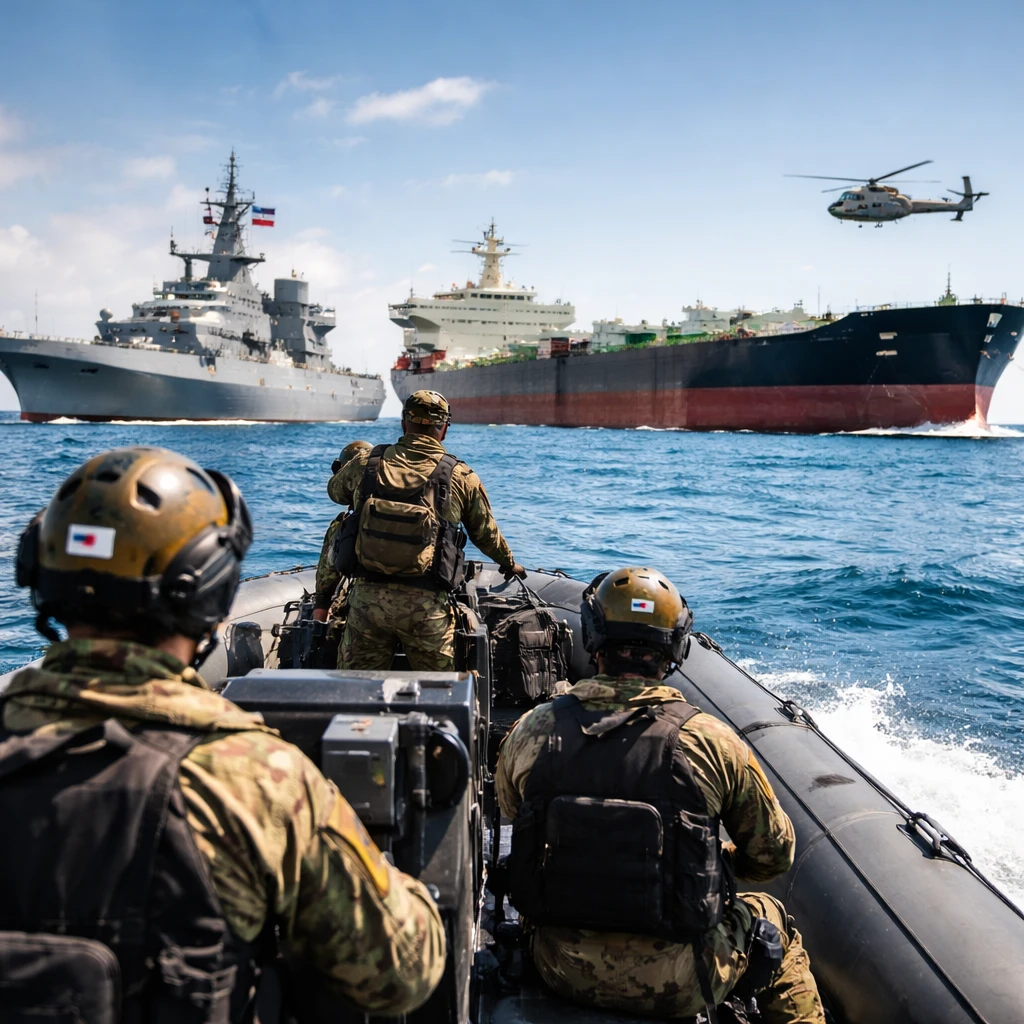
French President Emmanuel Macron publicly condemned the shadow fleet’s activities, emphasizing their role in financing the aggression against Ukraine. Macron shared a photo illustrating a French helicopter over the ship, underscoring France’s commitment to upholding international law and sanction enforcement.

The success of this naval operation was made possible due to intelligence collaboration with the United Kingdom. French military officials, speaking anonymously due to operational sensitivities, confirmed intelligence sharing was crucial in identifying and intercepting the Grinch.

This incident follows a similar French naval intervention in September when forces boarded another tanker off the French Atlantic coast, also linked to the shadow fleet. That vessel, known variably as Pushpa or Boracay and sailing under Benin’s flag, sailed from Russia's Primorsk oil terminal near Saint Petersburg. Russian President Putin labeled that action as piracy, suggesting domestic motives for the interception, while French authorities proceeded to prosecute the tanker’s captain for non-cooperation, scheduling a trial in February.

Risks
  • Continued operation of Russia’s shadow fleet undermines the effectiveness of sanctions aimed at restricting Russia’s war financing, impacting energy and geopolitical stability markets.
  • Potential escalation of naval enforcement actions may increase regional maritime tensions, influencing shipping and insurance industries in Mediterranean trade routes.
  • Ongoing prosecutions and maritime interdictions could provoke diplomatic disputes, possibly affecting France-Russia relations and broader international cooperation on sanctions enforcement.
Disclosure
This article is based solely on publicly available information regarding the French navy's interception of a suspected Russian oil tanker and related sanction enforcement efforts. No additional speculative information or external data beyond the provided reports has been included.
Search Articles
Category
News & Politics

News & Politics

Related Articles
Equinor (EQNR): A Dividended, Buyback-Supported Long with Reserve and Licensing Upside

Equinor combines scale (2.1 mmboe/d production in 2024, 6.1 billion barrels proven reserves) with gr...

FDA Initiates Review of BHA Food Additive Safety

The U.S. Food and Drug Administration (FDA) has announced plans to conduct a comprehensive reassessm...

Partisan Divide Deepens as White House Excludes Democratic Governors from NGA Meeting

The longstanding bipartisan forum of the National Governors Association (NGA) is facing disruption a...

Using Fireplace Ashes in Your Garden: Benefits and Considerations

Amidst a notably cold winter leading to increased fireplace use, many homeowners are seeking sustain...