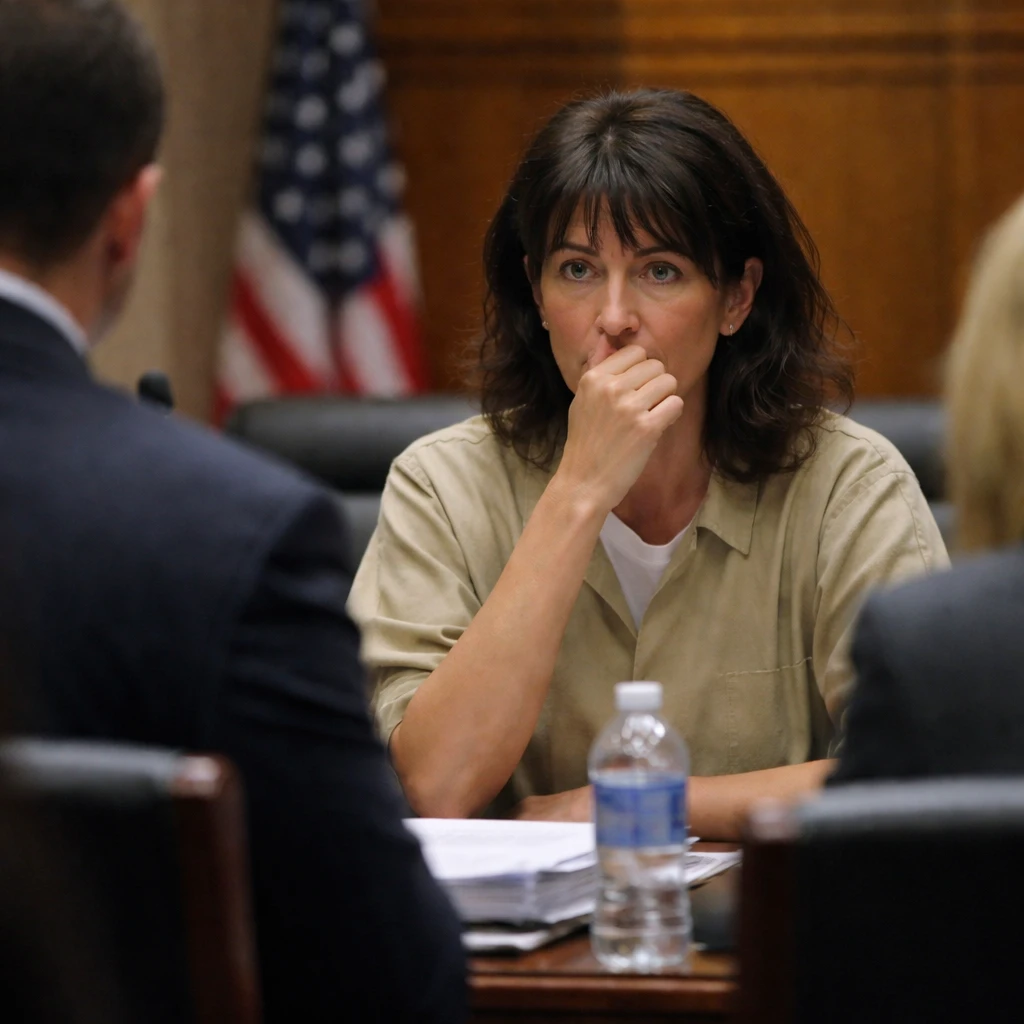

Ghislaine Maxwell, once a close associate of financier Jeffrey Epstein, refused to respond to inquiries during a House Oversight Committee video deposition conducted on Monday. Speaking remotely from the federal prison camp in Texas where she serves a 20-year sentence on sex trafficking charges, Maxwell relied on her Fifth Amendment right against self-incrimination to decline giving testimony.
This deposition forms part of ongoing congressional investigations aimed at uncovering the network that enabled Epstein to sexually exploit underage girls over an extended period. Epstein's connections spanned multiple countries, and lawmakers are determined to identify individuals who may have facilitated his activities.
In addition to questioning Maxwell, several committee members intend to thoroughly examine unredacted documents pertaining to Epstein, which the Department of Justice has released in compliance with newly enacted congressional legislation. These materials may provide insight into Epstein's relationships and the extent of his abuse.
Maxwell continues her legal battle seeking to overturn her conviction on claims of procedural irregularities during her trial. Although the Supreme Court dismissed her appeal last year, she filed a petition in December requesting a federal judge in New York to review what her legal team describes as substantial new evidence pointing to constitutional violations in her case.
Representatives familiar with the closed-door deposition reported that Maxwell’s attorneys have notified the committee of her willingness to testify that neither former President Donald Trump nor former President Bill Clinton engaged in wrongdoing in relation to Epstein. Both Democratic and Republican members relayed this position after attending the session.
Democratic lawmakers criticized Maxwell's posture, interpreting her statements as a strategic bid for clemency from Trump, who has the authority to grant pardons. Representative Melanie Stansbury of New Mexico remarked that Maxwell's approach is evidently aimed at securing a reduction or termination of her sentence. Another Democrat, Representative Suhas Subramanyam, described Maxwell’s demeanor during the deposition as robotic and lacking remorse.
Committee Chairman Representative James Comer, a Republican from Kentucky, expressed disappointment over Maxwell’s refusal to participate substantively in the deposition. He had issued a subpoena for her testimony last year, but Maxwell's legal representatives have consistently declined to cooperate. Despite this, Comer pushed forward, leveraging the deposition to press other high-profile individuals tied to Epstein.
Comer intensified efforts to compel former President Bill Clinton and former Secretary of State Hillary Clinton to testify. After warning of possible contempt of Congress charges, he secured their agreements to appear for depositions scheduled for later in the month. Discussions are ongoing regarding the format of these sessions, with Comer advocating for private hearings followed by the public release of transcripts and recordings.
This unfolding chapter in the Epstein investigation illuminates the complexities facing congressional investigators as they seek accountability and clarity regarding the high-profile network surrounding Epstein. Maxwell’s invocation of constitutional protections underscores the legal challenges inherent in this process.