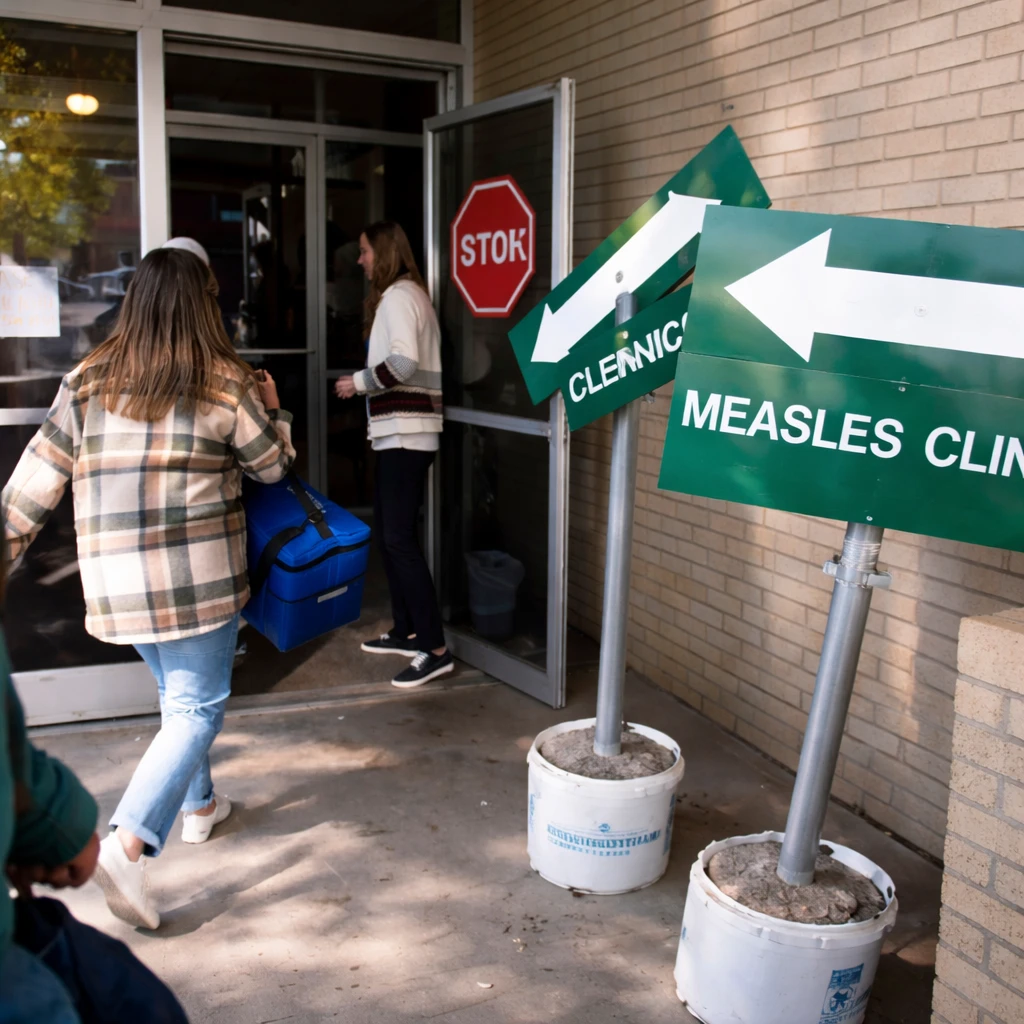

In April, global health experts are scheduled to convene to evaluate whether the United States retains its official status as a country free of measles. This review marks a significant point of concern since an outbreak that began in West Texas one year ago has triggered alarm among international health authorities regarding the virus's resurgence.
The meeting aims to determine if measles transmission occurred continuously within the U.S. for a period exceeding 12 months—a decisive factor in upholding the elimination credential. This reassessment possesses largely symbolic weight but holds implications for public health tracking and policy.
Current investigations focus on determining connections between the Texas outbreak and ongoing cases in states such as Utah, Arizona, and South Carolina. Despite varying opinions on whether the outbreaks are epidemiologically linked, medical and scientific experts agree that North America, including the U.S., is contending with a serious measles issue.
Dr. Jonathan Temte, a Wisconsin-based family physician involved with the 2000 certification of U.S. measles elimination, described the debate as primarily semantic—pointing to conditions conducive to measles outbreaks as the core problem. He emphasized the critical role of vaccination, noting that reduced emphasis on the vaccine’s importance contributes to the current vulnerability.
Last year, the Centers for Disease Control and Prevention reported 2,144 confirmed measles cases scattered across 44 states, representing the highest number since 1991, with nearly 50 distinct outbreaks recorded nationwide.
The rising incidence is attributed to compounding factors, such as increasing parental exemptions from routine childhood vaccinations, limitations in healthcare access, and widespread misinformation undermining vaccine confidence. Additionally, efforts to promote vaccination have been stymied in part due to federal budget cuts and public skepticism fostered during prior administrative periods.
Jennifer Nuzzo, director of Brown University’s Pandemic Center, highlighted vaccination as the paramount preventative measure. She underscored the lack of sufficiently clear public messaging urging unvaccinated individuals to receive immunization.
A spokesperson for the Department of Health and Human Services affirmed that Secretary Robert F. Kennedy Jr. has consistently endorsed vaccination as the principal strategy against measles. The spokesperson noted ongoing CDC efforts to contain outbreaks and enhance vaccination uptake. As of the latest update, there is no evidence indicating a single uninterrupted chain of measles transmission extending for a full year in the U.S.
Measles presents unique challenges due to its extreme contagiousness—about 90% of exposed unvaccinated persons contract the virus. Achieving community protection requires vaccination coverage of approximately 95%. Current U.S. nationwide vaccination levels stand near 92.5% but vary significantly between communities, with many falling below the protective threshold.
The initial Texas case was identified with symptoms around January 20, 2025. The subsequent outbreak burgeoned swiftly, ultimately affecting 762 confirmed individuals, predominantly in rural Gaines County, resulting in two pediatric fatalities. These figures likely underestimate true infection counts, as 182 suspected cases in children went unconfirmed in March 2025 alone, reflecting a potential underreporting of 44% within that locality.
Such discrepancies are common in outbreak data, hindered by factors including distrust in healthcare systems, resistance to government engagement, and logistical difficulties associated with tracking numerous cases—particularly in marginalized communities. Public health officials face substantial expenses in outbreak management, with each measles case requiring considerable resources.
Despite CDC's comprehensive surveillance being among the global best, shifts in public health funding have diminished the capacity for thorough contact tracing and outbreak analysis.
Genetic sequencing assists in connecting cases but has limitations. Measles viruses mutate less frequently than others, resulting in genetically indistinguishable strains within an outbreak, complicating attempts to confirm transmission chains definitively.
Experts anticipate that the Pan American Health Organization (PAHO) will weigh these data gaps carefully in their final deliberations. Dr. Andrew Pavia of Utah expressed skepticism that elimination status might be maintained, citing tenuous evidence against continuous transmission and a tendency toward conservative classification by international bodies.
PAHO reported the same measles strain found across multiple U.S. states and North American countries, including Canada and Mexico. The presence of cases with unknown origins in regions with ongoing outbreaks typically leads to attributing these to uninterrupted national transmission chains.
Mexico's status will also undergo review. Its largest measles outbreak is linked to the Texas incident through an 8-year-old visiting family in Texas. Since last February, Mexico has seen 6,000 infections and 21 deaths in Chihuahua state alone.
While PAHO's criteria for elimination consider national borders key, experts note that cross-border infection reversals would represent new outbreaks under this framework—an approach some consider outdated.
Throughout 2025, measles infiltrated numerous environments across the U.S., including educational institutions, healthcare facilities, places of worship, and detention centers. Multiple states such as New Mexico, Kansas, Ohio, Montana, North Dakota, and Wisconsin reported substantial outbreaks with associated deaths.
Currently, Utah, Arizona, and South Carolina are grappling with over 800 cases collectively, experiencing ongoing transmission with no clear endpoint.
Behavioral scientist Noel Brewer framed 2025 as a pivotal year for measles in the U.S., expressing uncertainty about whether 2026 will witness escalating or declining case numbers.
Note: This report underscores the complex interplay of public health infrastructure, vaccination policy, community trust, and international surveillance in disease control efforts.