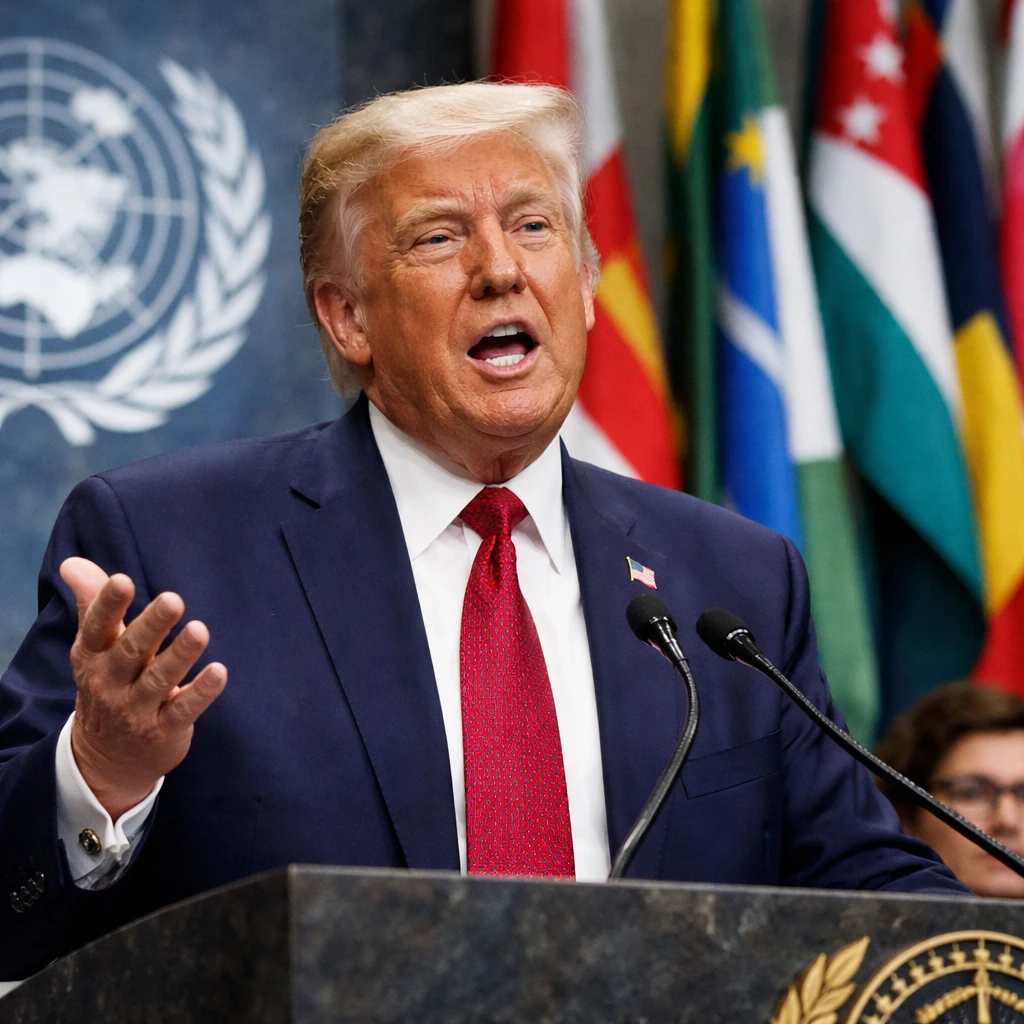
At the United Nations headquarters, the introduction of a new Board of Peace led by President Donald Trump, originally designed to supervise initiatives related to the ceasefire in Gaza, has unexpectedly reinforced global support for the UN rather than diminishing it. The board's mandate, initially narrow in scope focusing on Gaza, has been broadened by Trump to cover mediation of conflicts worldwide. This approach is perceived internationally as an attempt to supplant the United Nations Security Council, which maintains the primary responsibility for maintaining international peace and security.
The board’s founding charter stipulates that President Trump will serve as its chair indefinitely with authority to veto decisions and control membership, causing unease among global stakeholders. Marco Rubio, the US Secretary of State, sought to assuage trepidations by emphasizing that the board's immediate focus remains confined to advancing the Gaza ceasefire stages. Rubio remarked, "This is not a replacement for the U.N., but the U.N. has served very little purpose in the case of Gaza other than the food assistance," during a congressional hearing.
However, Trump's advocacy for an expanded global role for the Board of Peace, coupled with suggestions that it could eventually replace the United Nations, has alienated crucial international partners and provoked rebuttals from UN officials. UN Secretary-General Antonio Guterres reaffirmed the UN Security Council’s primacy in international peacekeeping, noting, "Only the Security Council can adopt decisions binding on all." He insisted no alternative entity holds the legal capacity to enforce peace decisions universally.
Prominent Security Council members including China, France, Russia, and the United Kingdom have either refrained from joining the board or have not indicated intentions to participate. Additional significant economies such as Japan and Germany have also declined. These rejections coincided with Trump's controversial remarks concerning territorial acquisitions, including proposals involving Greenland, heightening tensions with allies in NATO and beyond. Notably, the United Kingdom's Prime Minister, Keir Starmer, expressed steadfast support for the UN and the international rules-based order during a meeting with Guterres, underscoring the organization's indispensable role in addressing global challenges.
France publicly opposed the board, highlighting conflicts with UN principles and structures. French President Emmanuel Macron articulated concerns that the board’s scope exceeded Gaza's remit and questioned its legitimacy relative to established UN frameworks. Similarly, Spain declined participation, citing exclusion of the Palestinian Authority and operations outside the UN’s umbrella. Other countries have voiced comparable reservations, emphasizing the importance of preserving the UN's authority.
The United States has faced criticism from both allies and adversaries, including China, which asserted that no single nation should dominate global peace processes or bypass the UN. China’s UN Ambassador Fu Cong advocated for strengthening the Security Council’s role, emphasizing its irreplaceable status. Fu warned against creating alternative mechanisms that fragment international cooperation.
Currently, approximately 26 countries from an initial invitation pool of about 60 have joined Trump's Board of Peace. Around nine European nations have declined, and India's position remains undecided. Criticism from human rights groups highlighted concerns over the board serving more as a forum for authoritarian regimes rather than a credible international organization. Organizations like Human Rights Watch call for investment in reinforcing the United Nations instead of supporting parallel initiatives.
A coalition of eight Muslim-majority countries, including Turkey, Saudi Arabia, and Egypt, expressed support for the board’s objectives in Gaza and Palestinian statehood advancement. Nonetheless, these countries have not endorsed the broader global peace agenda proposed by Trump. Observers suggest their engagement might represent a strategic entry point to influence Gaza-related deliberations rather than support for the wider ambitions of the board.
Analysts like Richard Gowan from the International Crisis Group note that while the initiative has encountered diplomatic pushback, it does not currently pose a substantial threat to the UN's established role. Initial enthusiasm for the board appeared to wane as the expanded mandate alienated potential participants, diminishing prospects for it evolving into a comprehensive global mediator. The ongoing uncertainty surrounding its influence leaves the United Nations as the principal platform for international peace and security governance.