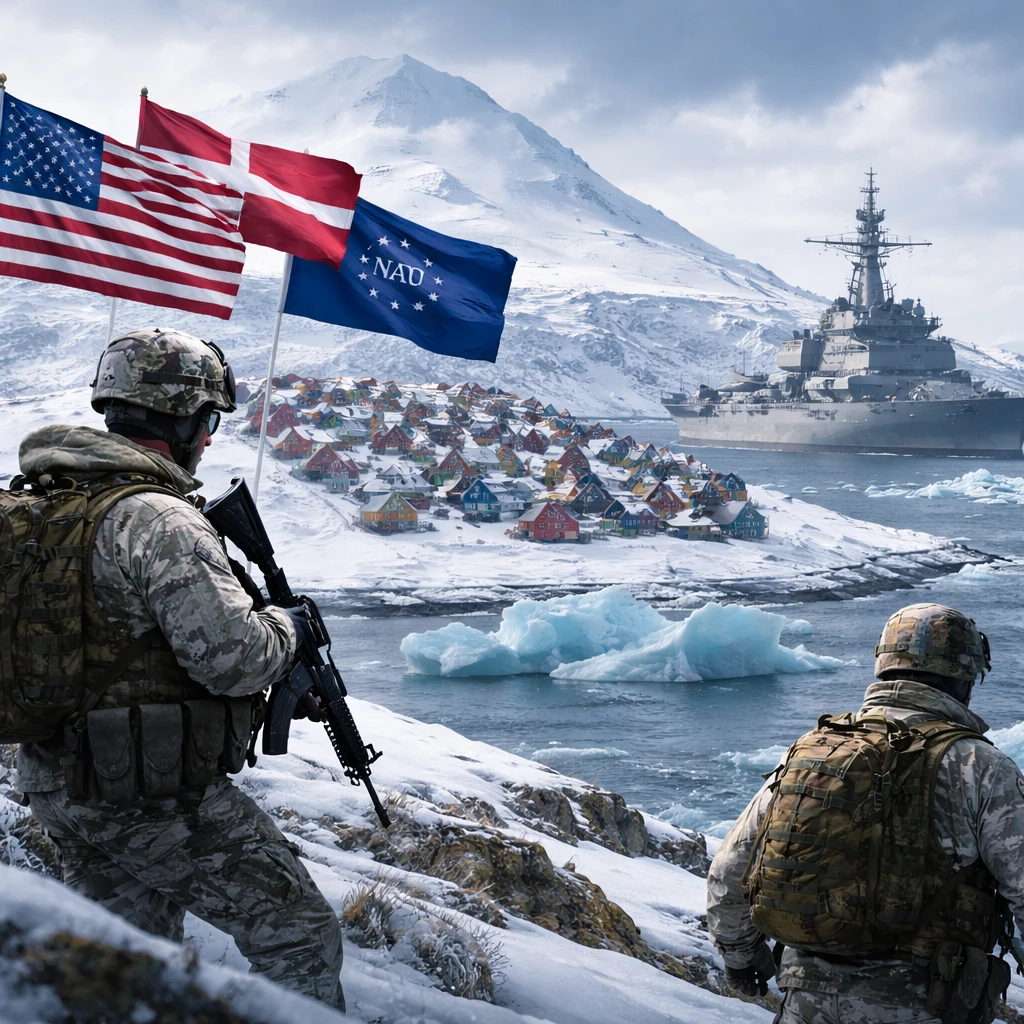

BRUSSELS - The United States, under President Donald Trump’s administration, has brought to light a new and significant challenge to the NATO alliance through its expressed interest in Greenland, a mineral-rich island with strategic importance. This territory is a semi-autonomous part of Denmark, which holds NATO membership, and the administration's contemplation of options, including military force to assume control over Greenland, has the potential to unsettle decades of established alliance norms.
NATO, conceived in 1949 as a collective defense mechanism against Soviet threats during the Cold War, has since positioned itself as a bulwark maintaining European stability. The alliance’s operational foundation is the mutual commitment under Article 5, which ensures that an attack on one member prompts a unified response from all. This security guarantee has effectively deterred Russian aggression on allied soils for many years.
However, the contemplation of a U.S. takeover of Greenland introduces an atypical and direct intra-alliance threat, a scenario alien to NATO’s historic adversarial focus. Unlike internal discord such as tensions between Greece and Turkey, which have simmered for decades without fracturing the alliance's overall integrity, a unilateral initiative by the United States targeting a fellow member’s territory undermines the unanimity and collective trust essential to NATO’s function.
President Trump’s social media remarks emphasize this strain, noting that "Russia and China have zero fear of NATO without the United States," underscoring perceived disparities in commitment among allies. His assertion that the U.S. will persist in supporting NATO "even if they won’t be there for us" further highlights underlying tensions regarding burden-sharing within the alliance.
Official White House statements have escalated the discourse by affirming Greenland’s designation as a national security priority and explicitly not ruling out deployment of U.S. military forces. The administration is reported to be actively assessing a spectrum of strategies to advance this policy objective, placing military intervention squarely within the realm of possibility.
Experts on NATO, such as Ian Lesser of the German Marshall Fund, have characterized these developments as "very striking," reflecting the gravity of shifting U.S. posture toward alliance partners. Given the island’s geographic positioning and resource potential, these moves contribute not only to military but also economic and geopolitical uncertainties within the transatlantic framework.