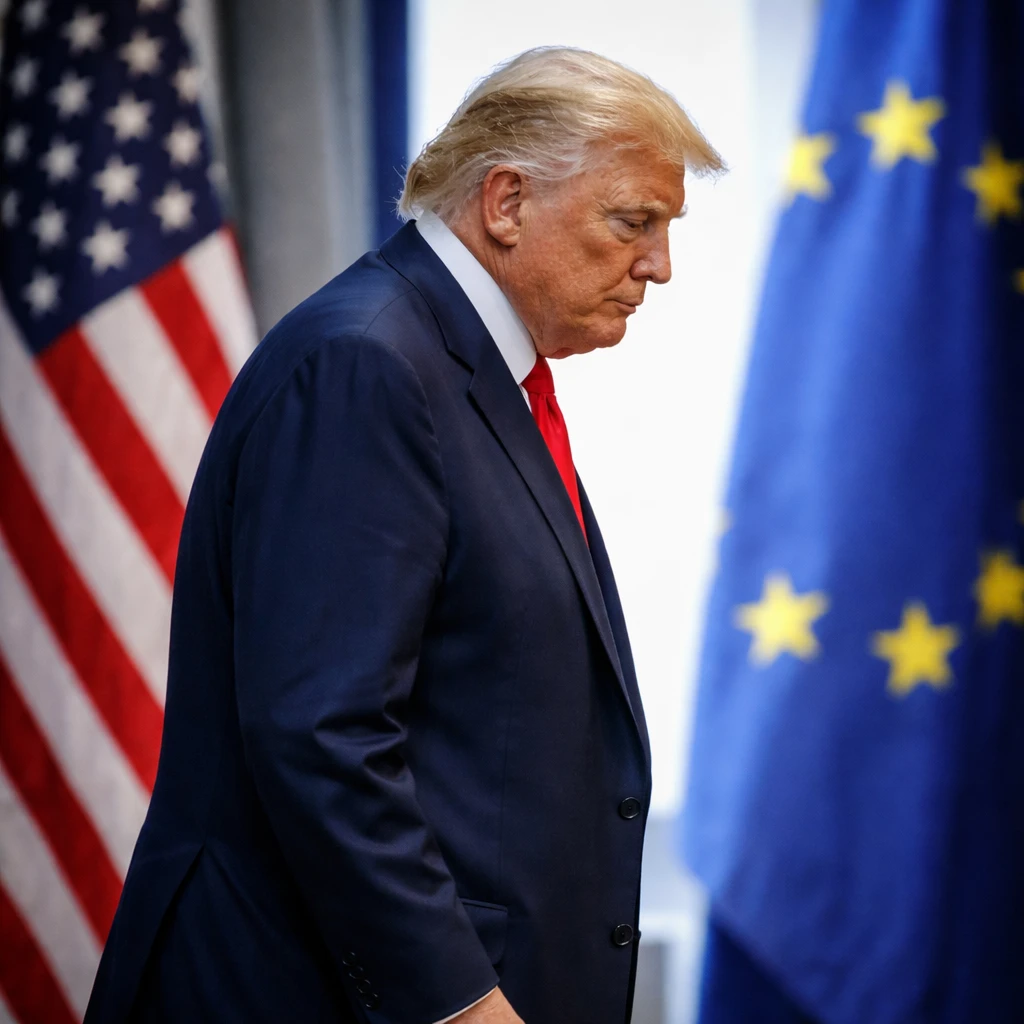

As the calendar flipped to 2026, President Donald Trump began the year endorsing an ambitious plan to resolve the Israel-Hamas conflict, buoyed by a U.N. Security Council resolution advocating the establishment of a "Board of Peace" to supervise Gaza’s transition and recovery. This endorsement placed him at the forefront of a coalition aimed at stabilizing the volatile region and bolstered his self-image as a peacemaker on the global stage.
However, the momentum surrounding the Gaza peace effort has been compromised by several contentious moves from the president. Early January saw the initiation of a military operation targeting the capture of ex-Venezuelan President Nicolás Maduro. Additionally, Trump publicly threatened to annex Greenland, part of Denmark and a NATO ally, sparking diplomatic uproar. These actions have called into question the feasibility of advancing the Gaza ceasefire plan as well as expanding the Board of Peace’s purview to other international crisis areas.
Just days before the planned announcement during the World Economic Forum in Davos, Switzerland, the Board of Peace appeared to be moving forward with minimal resistance. Trump was to lead a select group of global leaders in focusing on Gaza's peace process. Nonetheless, a sudden pronouncement from Trump on imposing tariffs on European nations defending Greenland and Denmark interrupted this trajectory, generating controversy and furthering diplomatic strain.
Following tariff threats, the president amplified tensions with a series of provocative social media posts advocating for Greenland's acquisition. Notably, he directed an accusatory message towards Norway’s prime minister, alleging interference by the Norwegian government in preventing his receipt of the Nobel Peace Prize. This confrontation suggested a potential deprioritization of peace efforts in favor of more personal or strategic pursuits.
Of the more than 60 invitations dispatched for participation in the Board of Peace, fewer than 10 confirmations have thus far been received. Intriguingly, a fraction of the acceptances come from leaders identified with authoritarian regimes, raising questions about the coalition's cohesion and democratic stature. Meanwhile, principal Western partners such as the United Kingdom, France, and Germany have either declined participation or remain noncommittal. This development signals a fracture within NATO, directly undermining the unity necessary for coordinated global peace initiatives, including efforts to halt Russia’s invasion of Ukraine and to stabilize Gaza.
European apprehension over the Board of Peace is pronounced. High-profile leaders, including Russia’s Vladimir Putin, China’s Xi Jinping, and Belarus’s Alexander Lukashenko, have been invited to join, generating criticism and suspicion. French Foreign Minister Jean-Noel Barrot explicitly rejected the prospect of creating a new body that would supplant the United Nations. Similarly, British and German officials have expressed reservations and are reviewing the proposal's framework. The British prime minister's representative articulated concerns about the composition and intentions of the group.
The prospect of the Board of Peace competing with or potentially replacing the United Nations has been acknowledged by Trump. In remarks made at a White House press briefing, he conceded that the UN has underperformed historically, as per his experience, yet he maintained that its potential significance necessitates its continuation. Nevertheless, he left open the possibility that the Board could supplant the UN’s role, a stance that adds to allied unease.
Regarding Greenland, Trump’s rhetoric has slightly moderated at times, suggesting negotiations wherein NATO and the United States would ultimately be satisfied. Nevertheless, he remains defiant against European criticism over his pursuit of Greenland, alluding cryptically to undisclosed plans and the extent to which he is prepared to assert American claims on the resource-abundant island.
The White House is reportedly attempting to navigate this diplomatic minefield by finalizing the Board of Peace's charter, aiming to unveil the initiative formally at Davos. Officials are considering a strategic approach whereby the charter is signed promptly to establish the concept’s legitimacy while postponing announcements concerning membership selections until later in January. This tactic seeks to mitigate potential embarrassment or leadership challenges amid the Greenland controversy.
Experts specializing in defense and international relations warn that the disputes involving Greenland and NATO pose consequential obstacles not only to the Board of Peace's immediate mission concerning Gaza but also to broader U.S. peacemaking ambitions, including resolutions for the ongoing conflict in Ukraine. The unresolved tensions may compromise the cohesion required for effective multilateral problem-solving.
Observing the current trajectory, scholars note President Trump’s approach favors individualized, transactional deals over unified, comprehensive foreign policy strategies. The desire to maintain control appears paramount, with tendencies to supplant existing structures perceived as limiting his authority. The Board of Peace itself is described as an unprecedented initiative born of this mindset, lacking precedent in international diplomacy.