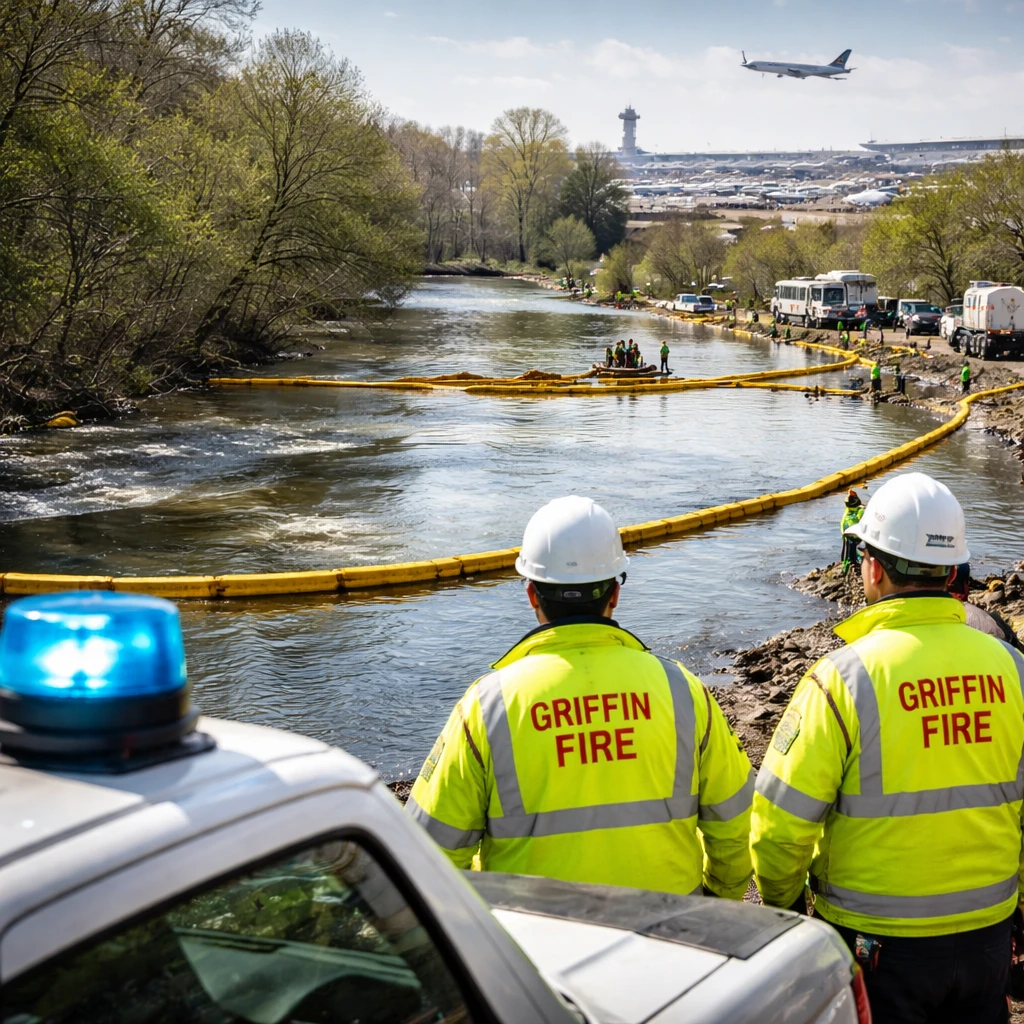

The municipality of Griffin, located southward of Atlanta, has alerted its community to avoid ingesting tap water due to possible contamination stemming from a fuel spill at Hartsfield-Jackson Atlanta International Airport. The spill, which occurred Friday morning, has prompted city authorities to question the safety of water drawn from the Flint River, which supplies the local water system serving over 20,000 residents.
Authorities in Griffin have advised that even boiling the water may not guarantee safety, recommending instead the exclusive use of bottled water for drinking, cooking, and oral hygiene until further notice. This precautionary stance follows swift action to halt water intakes from the Flint River, despite no confirmation that polluted water has directly reached Griffin's supply lines.
Officials from the airport have acknowledged the occurrence of the fuel leak but have yet to disclose the volume of fuel discharged or the causes behind the incident. Concurrently, environmental management and cleanup operations are in progress at the site.
The Flint River's headwaters originate proximate to the airport, with substantial portions of its upper reaches routed through subterranean piping beneath the airport's expansive grounds. From there, the river courses southwest, constituting a significant waterway in Georgia before eventually joining the Apalachicola River in Florida.
Griffin's water authorities noted the historical susceptibility of the Flint River's headwaters to contamination incidents, including prior fuel and sewage spills associated with the airport operations. To mitigate risk, the city has established a temporary water supply arrangement drawing from a reservoir located in neighboring Pike County. Additionally, fire hydrants throughout Griffin have been opened to facilitate the flushing of the municipal water distribution system.
Comprehensive testing of the water supply is currently underway to assess potability and confirm when it will be safe to resume normal usage. Meanwhile, residents are urged to adhere strictly to the advisory to avoid potential health hazards from consuming or using potentially compromised water.