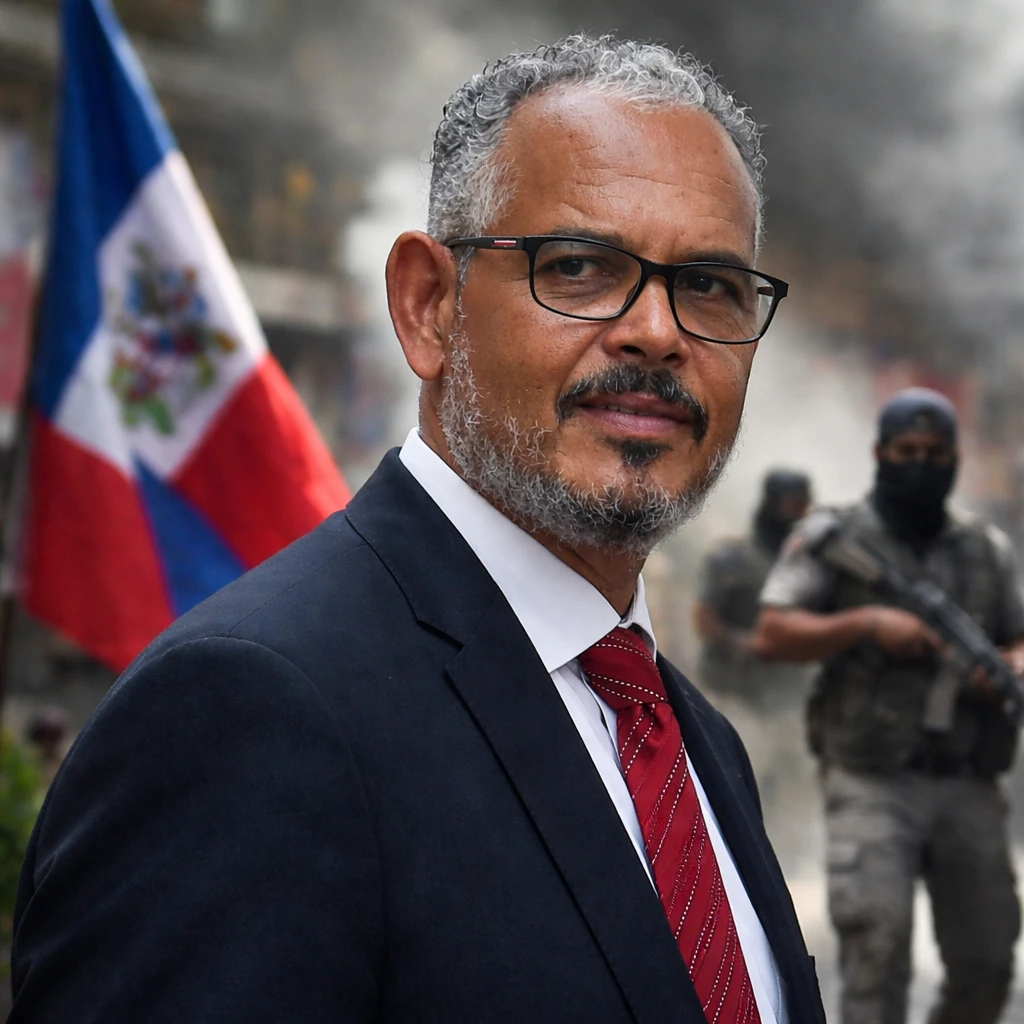
In Port-au-Prince, Haiti, the nine-member presidential council resigned on Saturday after leading the country through a challenging period alongside Prime Minister Alix Didier Fils-Aimé, who is expected to continue governing as the nation prepares for its first general elections in a decade. This development unfolds against a backdrop of significant gang control over 90% of the capital, with the U.S. recently deploying a warship and two Coast Guard vessels near Haitian waters, signaling Washington's readiness to influence regional politics through military presence, according to Diego Da Rin of the International Crisis Group.
Earlier in January, the council faced internal discord when two prominent members revealed that a majority had voted to remove Prime Minister Fils-Aimé, a move that went against the U.S. government's stance on maintaining fragile political stability. However, this attempt to oust the Prime Minister did not materialize as planned. Shortly after this announcement, the U.S. government imposed visa restrictions on four anonymous council members and a Cabinet minister, underscoring diplomatic tension surrounding Haiti's leadership dynamics.
Despite the internal vote to dismiss Fils-Aimé, the council conducted an official dissolution ceremony on Saturday without reinstating that effort. Laurent Saint-Cyr, the council's outgoing president, emphasized the necessity of prioritizing national progress and security over personal interests and explicitly rejected the push to remove the Prime Minister. Fils-Aimé acknowledged the council's role in laying groundwork for governance attentive to security and election matters and indicated he would address the nation later that day.
Later that evening, in a rare public address for a Haitian Prime Minister, Fils-Aimé committed to enhancing security, conducting elections, and implementing an emergency humanitarian plan to support the country's vulnerable populations. He recognized the urgent suffering of the Haitian people and advocated for national unity. Surrounded by police and military representatives, Fils-Aimé pledged to pursue gang members rigorously, reclaim all occupied territories, and ensure safe school access for every child. He also acknowledged Haiti's precarious situation, describing imminent days as difficult and cautioning that he could not promise extraordinary solutions.
Ongoing discussions aim to establish the future governing body to succeed the dissolved council, especially in light of an upcoming multinational security mission intended to replace the under-resourced United Nations contingent led by Kenyan police. Diego Da Rin highlighted the importance of clear governance legitimacy for countries contributing to the multinational force.
The political landscape is complicated by the failed general elections, originally planned for early February—a date symbolizing democratic governance after decades of authoritarian rule. These elections were postponed amidst rampant gang violence impacting much of Port-au-Prince and central regions, with tentative rescheduling set for August and December. Widespread doubts persist regarding the feasibility of these elections within the current year.
Formed in April 2024, the presidential council was created after the assassination of President Jovenel Moïse left the country in turmoil. Its establishment followed an international meeting in Jamaica addressing political transition after former Prime Minister Ariel Henry stepped down. However, the council encountered significant challenges, including a powerful gang coalition's attack on vital infrastructure that led to the closure of Haiti's main international airport for months.
Throughout its tenure, the council's promises to reduce gang influence and improve living conditions remained largely unfulfilled. The International Crisis Group observed the council's failure to regain control over Port-au-Prince and surrounding areas from criminal gangs. Moreover, allegations of corruption emerged in late 2024 when an investigative government agency accused three council members of bribery.
The dissolution ceremony took place amid public frustration. André Joseph, a 42-year-old candy vendor residing in a temporary shelter—one of 1.4 million displaced by violence—expressed hope for future governance. He criticized the council's ineffective tenure and stressed the need for a government capable of steering Haiti towards a more promising path.