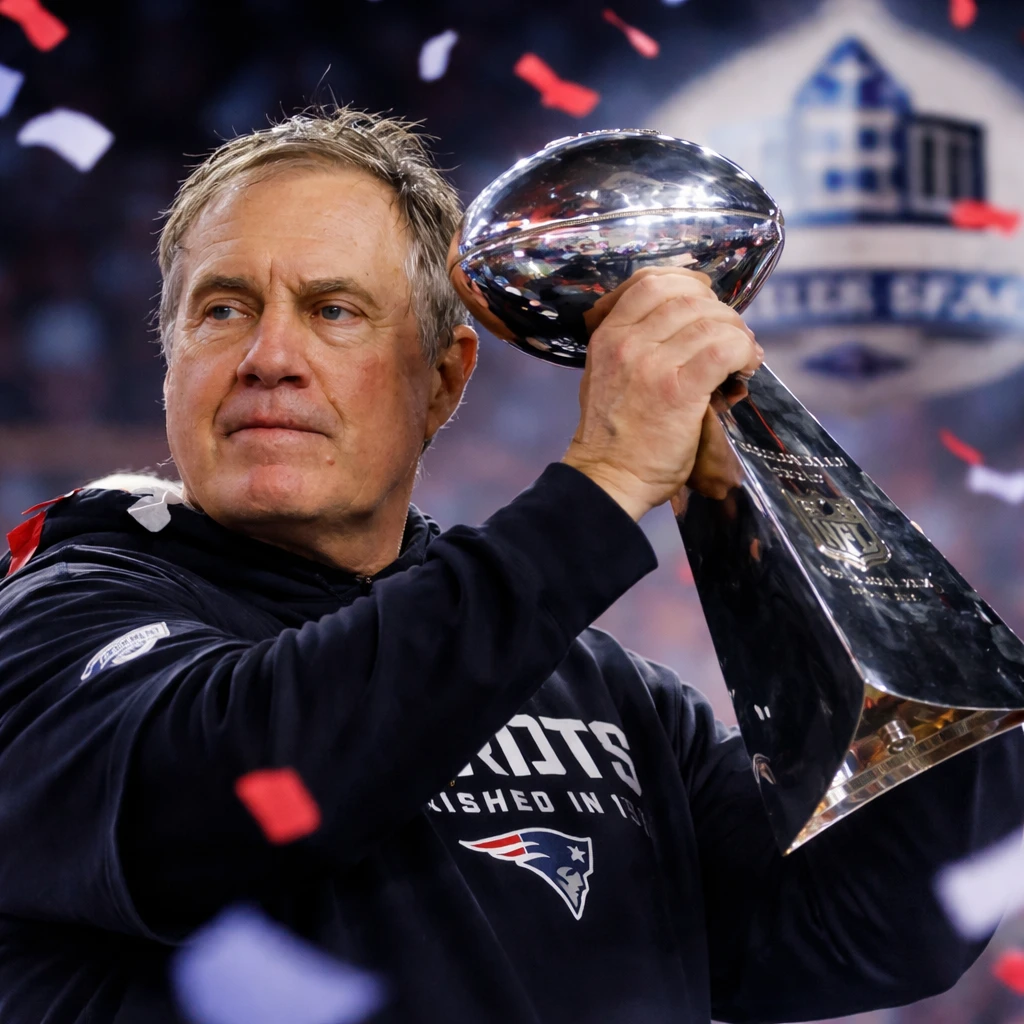

Bill Belichick, who has amassed an unparalleled career in the National Football League, securing six Super Bowl titles as the head coach of the New England Patriots and two more as an assistant coach with the New York Giants, remains without induction into the Pro Football Hall of Fame on his initial ballot. This surprising outcome was revealed in a report citing four confidential sources familiar with the Hall's voting process.
To gain first-ballot induction, Belichick required a minimum of 40 votes out of the 50 individuals on the selection panel, which includes media members and former Hall of Famers. Nevertheless, the votes fell short of this threshold, leaving many within the football community stunned.
The reaction to this development was immediate and emphatic. Kansas City Chiefs quarterback Patrick Mahomes described the snub as "insane," while NBA star LeBron James criticized it as "impossible, egregious, and quite frankly disrespectful." Such widespread astonishment calls into question the standards applied for a Hall of Fame career in professional football.
The Hall of Fame organization has abstained from commenting on the matter ahead of the official announcement of the class of 2026 during the NFL Honors event scheduled for February 5 in San Francisco. Meanwhile, several members of the voting panel have publicly stated their support for Belichick’s induction and encouraged those who voted against him to disclose their identities.
Among the vocal supporters is Armando Salguero, senior NFL writer for OutKick and a Hall of Fame voter himself, who actively championed Belichick’s candidacy during both the subcommittee meeting and the full 50-member voters' session held on January 13. Salguero urged transparency from the dissenting voters, asserting that they should reveal themselves and accept responsibility for preventing Belichick's first-ballot induction.
He emphasized the embarrassment the outcome brings to the Hall of Fame and expressed confidence, based on discussions with numerous selectors, that a majority agreed with his support of Belichick. Salguero highlighted that the "Spygate" scandal remains a significant factor deterring some voters from awarding Belichick induction.
In 2007, Belichick was fined $500,000 after the Patriots were found guilty of illicitly recording defensive signals from the New York Jets, a controversy which has continued to affect perceptions of his legacy. Salguero noted that some selectors felt this incident tarnished Belichick’s accomplishments, impacting their willingness to support his Hall of Fame bid.
In rebuttal, Salguero pointed out during his presentation that Belichick’s winning percentage actually improved following the incident, rising to .693 from .580. Furthermore, post-Spygate, Belichick secured three Super Bowl victories and six conference titles, achieved 14 seasons with at least ten wins, and amassed more regular-season victories since the scandal than most inducted coaches.
Nevertheless, these arguments failed to secure the required votes. Belichick was one of five Hall of Fame finalists comprising coaches, contributors, and senior players with careers that ended in 2000 or earlier. Patriots owner Robert Kraft was the contributor finalist, joined by players Roger Craig, Ken Anderson, and L.C. Greenwood.
The Hall of Fame selection process, restructured in 2025, involves each of the 50 voters selecting three of the five finalists, with induction requiring at least 40 votes. A newly instituted policy also reduced the eligibility waiting period for coaches from five years after retirement to one. Belichick retired after 24 seasons with the Patriots in 2023 and recently completed a 4-8 season coaching college football at North Carolina.
Mike Sando, an NFL writer with The Athletic and a voter for Belichick, explained that the results likely reflect criticism of the recent changes to the voting rules rather than the candidates themselves.
Belichick’s NFL tenure includes time as a defensive assistant under Bill Parcells with the Giants, head coaching the Cleveland Browns from 1991 to 1995, a brief assistant role with the Patriots in 1996, a stint with the Jets, and his renowned Patriots head coaching period starting in 2000.
During his New England tenure, he and quarterback Tom Brady secured six Super Bowl titles with nine appearances and managed an undefeated 16-0 regular season in one year. Belichick’s cumulative 333 regular-season and playoff victories rank second only to Don Shula’s 347. He has also won the Associated Press NFL Coach of the Year Award three times.
Jarrett Bell, an NFL columnist for USA Today and a fellow Hall of Fame voter, publicly expressed his bewilderment and disappointment regarding the selection. Bell disclosed that at least 11 of the 50 voters opposed Belichick’s induction this year and called for greater transparency in the selection process to prevent casting doubt on the entire voters’ panel.
This development has sparked intense debate throughout the football community concerning the criteria for Hall of Fame induction and the influence of off-field controversies on voters' decisions. The forthcoming official announcement will clarify whether the Hall of Fame's class of 2026 includes Belichick or whether this highly debated exclusion will persist.