MINNEAPOLIS – In a significant federal immigration action unfolding in Minnesota's Twin Cities area, agents forcefully entered a private home on Sunday as part of what the Department of Homeland Security (DHS) identifies as its largest immigration enforcement effort to date. The dramatic operation occurred amidst already heightened unrest following the deadly police shooting of 37-year-old Renee Good by an immigration officer earlier in the week.
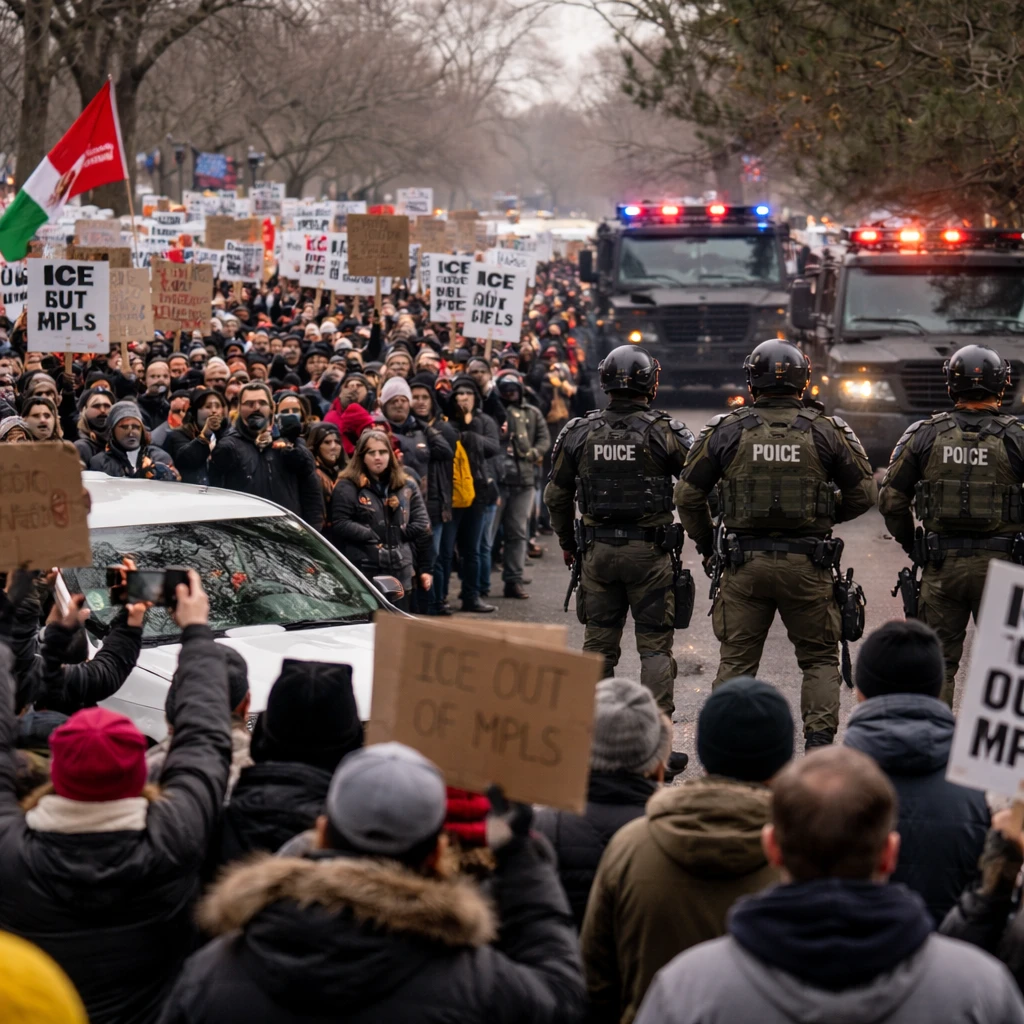
Federal agents, heavily armed, broke down the door of a residence in a single-family home neighborhood, confronting protests outside. Demonstrators expressed their opposition by honking car horns, banging drums, and blowing whistles to disrupt the enforcement activities.
During the confrontation, video captured officials pepper spraying protesters who confronted the agents. Shortly after forcefully entering the home, agents detained a man inside within minutes and led him away in handcuffs.
Notably, the document presented by federal officers to justify the arrest had been signed by an immigration official, rather than a judge. Such an authorization permits arrest in a public place but does not legally sanction forced entry into a private home, a detail that immigrant rights organizations have emphasized in their awareness campaigns. Advocates have been urging residents to not open their doors to immigration agents unless presented with a warrant signed by a judge, as part of extensive "know-your-rights" efforts across communities.
The enforcement operation has led to a remarkable level of activity, with more than 2,000 arrests reported by Homeland Security since early December, according to spokesperson Tricia McLaughlin. DHS Secretary Kristi Noem announced plans to deploy additional federal agents to safeguard immigration officers and sustain the enforcement actions in Minnesota.
Amid this backdrop, Minneapolis remains on edge. City Council member Jason Chavez, himself the child of Mexican immigrants and representing an area with a growing immigrant demographic, acknowledged the visible presence of federal agents sweeping through neighborhoods. He also noted ongoing community efforts to track enforcement locations through communication groups, advocating transparency about agent activities.
Community responses have included organized vigilance, such as individuals positioned at street corners with whistles, particularly in the neighborhood where Renee Good was fatally shot. These "observers" volunteer to monitor immigration enforcement, supporting neighbors and documenting federal operations. Luis Argueta of Unidos MN indicated that over 20,000 people had undergone training to serve in this capacity since the 2024 elections.
Despite mostly peaceful protests, residents are coping with those tensions, prompting Minneapolis public schools to switch to remote learning for a month to address safety concerns for students amidst unrest. Several schools previously closed following the sheeting and subsequent disturbances.
The shooting death of Renee Good by an immigration officer has provoked controversy over investigative jurisdiction. Prominent state Democrats, including Minneapolis Mayor Jacob Frey and U.S. Senator Tina Smith, have advocated for state authorities to participate in the investigation alongside federal officials. They expressed skepticism about the impartiality of a solely federal inquiry, pointing to statements made by Homeland Security early in the investigation that outlined their perspective on the incident.
The Trump administration defended the shooting, asserting that the officer acted in self-defense and to protect colleagues, further describing Good's vehicle as being "weaponized." Acting U.S. Immigration and Customs Enforcement Director Todd Lyons reiterated these points, emphasizing the rapid decision-making required by the officer. Lyons additionally noted that stronger cooperation from local jurisdictions in transferring individuals deemed public safety threats could reduce the need for such federal enforcement operations.
The incident in Minneapolis, alongside other federal enforcement actions such as shootings in Portland, Oregon, have sparked protest demonstrations nationwide, including in New York, Los Angeles, Washington D.C., and Oakland, California, signaling widespread public disquiet.