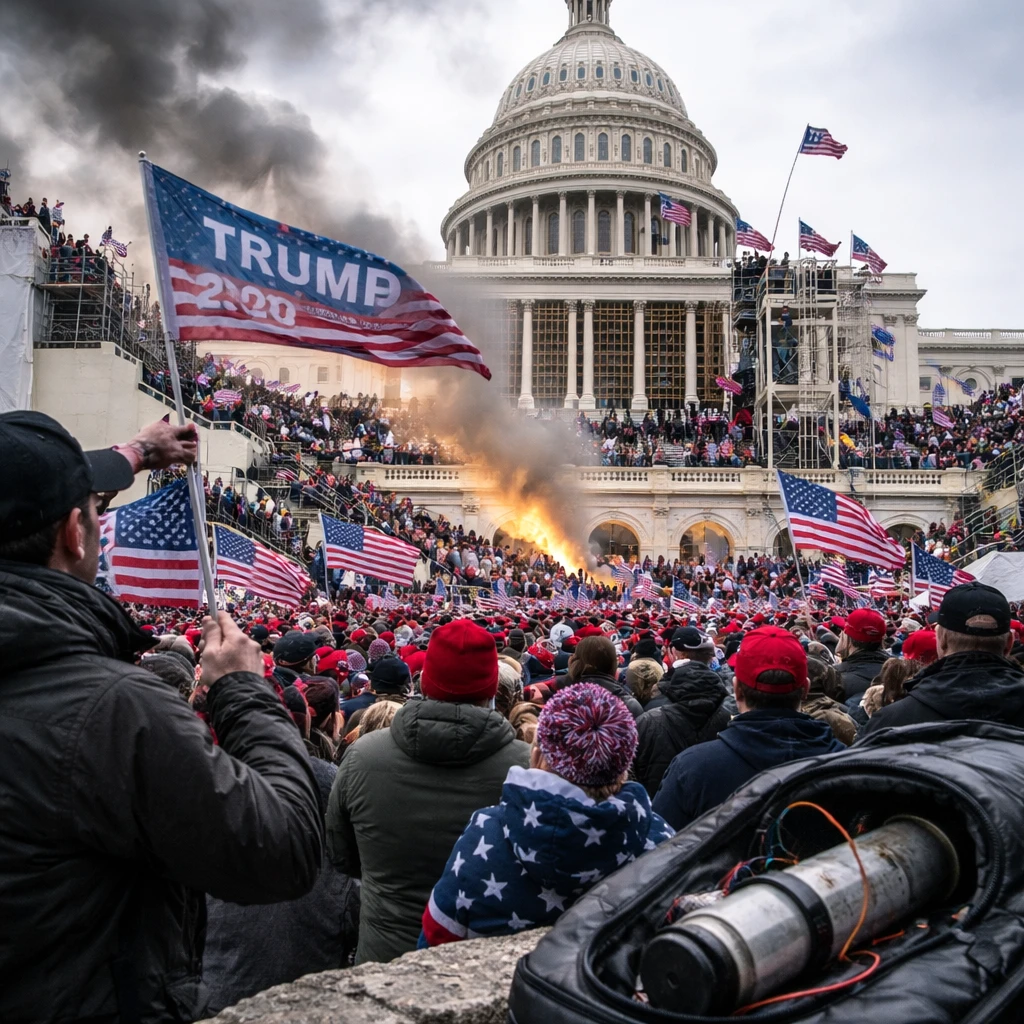

One week following the fifth anniversary of the January 6, 2021, Capitol breach, the interpretation of the day's events is undergoing renewed scrutiny under the direction of the current congressional majority. The House Republican-led Select Committee devoted its inaugural hearing on Wednesday to exploring the Federal Bureau of Investigation's handling of the pipe bombs placed outside the Democratic and Republican national committee headquarters on that day. Despite the devices being found amid the riot, a significant lapse occurred before the suspect's arrest last month.
The hearing, intended to focus on this law enforcement investigation, evolved into a venue where Republican members advanced conflicting explanations regarding the motivations behind the violent actions of then-President Donald Trump’s supporters. Assertions were made implying that those involved were deceived into participating in the Capitol assault witnessed globally. Stewart Rhodes, the founder of the Oath Keepers militia group and a convicted participant in seditious conspiracy, was present in the hearing room, underscoring the hearing's charged atmosphere.
Chairman Barry Loudermilk, Republican of Georgia, acknowledged the presence of competing narratives by stating, "There’s been a lot of talk about conspiracy theories and narratives," while affirming his intent to uncover the truth amid the session’s tension-filled proceedings.
Conversely, Rep. Jamie Raskin of Maryland, the panel’s leading Democrat, firmly opposed efforts to revise the established historical account. He declared a refusal to tolerate the distribution of falsehoods and conspiracy-driven distortions within the subcommittee, asserting that, "The truth is a resilient thing." This confrontation encapsulated the enduring national trauma lingering from the January 6 attack, a trauma that continues to permeate both legislative processes and societal reflection.
This new panel represents the GOP's second effort since assuming control of the House to establish a committee examining the Capitol riot, directly challenging the conclusions of the initial bipartisan entity formed under then-Speaker Nancy Pelosi. The prior committee’s 2022 report attributed responsibility for inciting the violence to former President Trump, framing the riot as an extension of his prolonged attempts to overturn the 2020 presidential election outcome favoring Joseph Biden.
The former president faced impeachment on grounds of incitement to insurrection but was ultimately acquitted by the Senate. Further, a special counsel-led Justice Department indictment comprising four counts against Trump was discontinued post his 2024 reelection victory, aligning with departmental policies precluding prosecution of a sitting president.
Among Republicans, skepticism about the original committee’s findings remains pronounced. Representative Troy Nehls of Texas, who was observed at barricaded doors during the Capitol events, denounced the prior inquiry as a "total sham," questioning the testimonies of injured police officers as rehearsed fabrications by adversaries of Trump. Other Republicans sought to attribute the violence chiefly to specific instigators and portrayed militia participants as victims of government entrapment, despite convictions of some like Rhodes for seditious conspiracy and subsequent pardons issued by Trump upon his return to office.
Democratic lawmaker Jasmine Crockett from Texas expressed palpable frustration with the proliferation of conspiracy theories impeding constructive discourse, lamenting the distress such misinformation causes to the nation.
The committee also scrutinized the delayed investigative progress concerning the pipe bomb placed near party headquarters. The arrest of Brian Cole Jr. last month, charged with planting these devices, prompted lawmakers to question the FBI’s prolonged timeframe in pursuing and resolving this aspect of the January 6 incident.
Representative Morgan Griffith of Virginia voiced concerns regarding the inadequate detection measures on the day of the attack, specifically why bomb-sniffing dogs did not identify the device. Cole’s post-arrest statements indicated a desire to "speak up" for those questioning the 2020 election results and dissatisfaction with President Biden’s victory. Meanwhile, Wyoming Representative Harriet Hageman challenged the investigative response and the oversight of critical leads.
Former FBI special agent John Nantz testified before the committee, suggesting that the FBI's focus during the Biden administration, under Director Christopher Wray, was placed elsewhere, contributing to resource allocation issues. Hageman dismissed this as a significant understatement, emphasizing the gravity of the investigative shortcomings.
The committee also revisited the issue of presidential pardons granted to individuals convicted of involvement in the January 6 violence. Rep. Raskin highlighted concerning trends where pardoned individuals have engaged in further criminal activities. Former Justice Department prosecutor Mike Romano described these pardons as "ill-advised," noting that recipients have continued to express pride in their actions and attempted to misrepresent the facts.
When questioned about the uncertain scope of any pardon covering Brian Cole if convicted for the pipe bomb offenses, Romano acknowledged the ambiguity, describing the matter as lacking a definitive answer and problematic for the broader implications of justice and accountability.