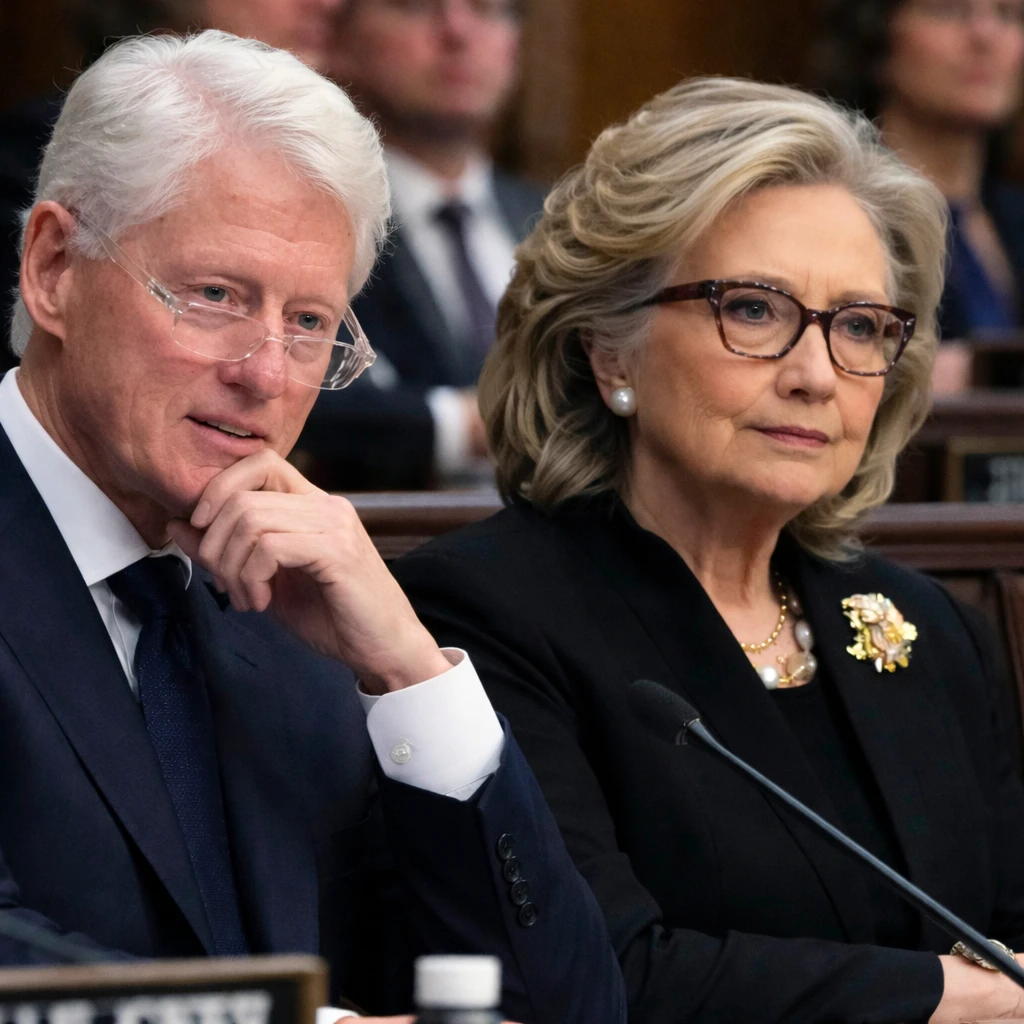

WASHINGTON — In an unusually high-profile move, the Republican-led House Oversight Committee voted Wednesday to advance resolutions charging former President Bill Clinton and former Secretary of State Hillary Clinton with contempt of Congress in connection with the investigation into Jeffrey Epstein’s sexual abuse allegations. The bipartisan action raises the prospect of the House exercising one of its sternest penalties against a former president – an unprecedented step.
The committee’s approval was bipartisan, with several Democratic members breaking ranks to support the contempt measures. Progressives among them emphasized the need for comprehensive transparency as the congressional investigation delves deeper into the late financier Epstein's extensive history of abusing dozens of teenage girls over a prolonged period.
Chairman Rep. James Comer articulated the committee's position during the session: "No witness, not a former president or a private citizen, may willfully defy a congressional subpoena without consequence. But that is what the Clintons did and that is why we are here." His comments underscored the committee's intent to hold the former political figures accountable for allegedly ignoring congressional subpoenas.
Potential consequences of contempt charges are severe and may include substantial fines and imprisonment. Despite this, some indications suggest the Clintons might seek a way to avoid a standoff with Congress by cooperating. However, the advancement of contempt charges to the full House remains uncertain, as it requires a majority vote — a hurdle for Republicans given the current political dynamics.
The Clintons have consistently maintained their innocence regarding involvement with Epstein, stressing that their connections date back decades without recent interactions. They have expressed a desire to resolve the dispute and have offered for Bill Clinton to be interviewed by committee leadership and staff in New York. Chairman Comer declined this offer, insisting that any such interview must be officially transcribed.
The investigation seeks detailed information on the Clintons’ interactions with Epstein, as lawmakers aim to clarify the nature of their relationships within a broader inquiry into Epstein’s ability to engage in systematic sexual abuse. While Bill Clinton, Donald Trump, and others connected to Epstein have not faced accusations of wrongdoing, Congress is attempting to ascertain who merits the most scrutiny.
Clinton spokesperson Angel Ureña stated that the Clintons are cooperating with the investigation and highlighted that they have been out of public office for over a decade, emphasizing their long-standing distance from Epstein.
Behind the scenes, Clinton’s long-time attorney David Kendall has been negotiating with the committee for months, proposing possible testimony dates around Christmas. The Clintons argue the subpoenas lack valid legislative purpose and have offered written statements outlining their interactions with Epstein.
Democrats on the committee have placed their priority on furthering the Epstein investigation rather than defending the Clintons, agreeing that Bill Clinton should provide any pertinent information he might have about Epstein’s abuses. Notably, Epstein contributed financially to Bill Clinton's 1992 presidential campaign and Hillary Clinton's 2000 Senate fundraising efforts.
Rep. Robert Garcia, the committee's top Democrat, remarked, "No president or former president is above the law," affirming the importance of accountability.
During committee deliberations, some Democrats attempted to exclude Hillary Clinton from contempt charges, citing her limited personal interaction with Epstein. Others proposed redefining the contempt offense as civil rather than criminal. Democrats also criticized Chairman Comer for focusing on the Clintons while the Justice Department has missed congressional deadlines to release case files on Epstein. Comer permitted statements from several former attorneys general attesting to limited knowledge of the investigation.
The committee also subpoenaed Ghislaine Maxwell, Epstein's former confidante and convicted sex trafficker, who is currently imprisoned. However, Chairman Comer chose not to pursue an interview since Maxwell’s attorneys indicated she would invoke the Fifth Amendment.
Rep. Garcia pointed out the selective focus of subpoenas, questioning why this one had drawn disproportionate Republican attention.
Comer announced plans to interview Maxwell next month and noted that Attorney General Pam Bondi is scheduled to testify before the House Judiciary Committee in February.
Ultimately, nine Democrats joined Republicans in advancing contempt charges against Bill Clinton, while three Democrats voted alongside Republicans to advance charges against Hillary Clinton. These votes reflect bipartisan support for transparency concerning Epstein’s case, especially following renewed pressure after former President Trump’s return to the White House and delays in the Justice Department's release of unredacted Epstein files.
The bipartisan subpoena issued by the committee demanded the release of documents from the Justice Department and Epstein’s estate. Republicans quickly extended the subpoena to include the Clintons. Chairman Comer has insisted on a transcribed deposition from Bill Clinton, emphasizing the seriousness with which the committee views compliance.
They are expected to have a two-week window before the bill is presented on the House floor.
Historically, contempt of Congress proceedings are quite rare and generally serve as last-resort measures to compel testimony during high-profile investigations, such as during McCarthy-era inquiries or President Nixon’s impeachment process. Most recently, Trump aides Peter Navarro and Steve Bannon were convicted on contempt charges for defying subpoenas in the January 6 Capitol riot investigation, resulting in jail time for both.
The January 6 committee also subpoenaed former President Trump, who resisted appearing on legal grounds protecting ex-presidents from compulsory congressional appearances; the subpoena was withdrawn in the absence of enforcement.
No former president has ever been compelled to testify before Congress, although some have done so voluntarily. Still, some Republicans argue that former presidents should face equal consequences for ignoring subpoenas.
Rep. Andy Biggs of Arizona remarked in social media posts that failure to subject the Clintons to accountability would equate to a failure to serve the American people.