
In a closely contested vote on Thursday, the House of Representatives declined to pass a resolution proposed by Democrats designed to prohibit President Donald Trump from dispatching U.S. military personnel to Venezuela. The vote ended in a tie, falling just short of the necessary majority for approval.
This deadlock illuminated the precarious control House Speaker Mike Johnson holds over Republican lawmakers, as well as evidence of increasing resistance within the GOP-led Congress against the president's assertive posture in Latin America. Notably, a parallel resolution in the Senate experienced a similar stalemate last week, only being resolved when Vice President JD Vance cast the deciding vote.
Republican leaders on the House floor had to extend the voting period by over 20 minutes while Representative Wesley Hunt hurried back to Washington from his Texas Senate campaign to provide the critical vote that broke the tie in favor of defeating the resolution.
During the proceedings, Democrats vociferously objected, accusing Republican leadership of breaching chamber protocol, while two Republican members, Don Bacon of Nebraska and Thomas Massie of Kentucky, aligned with Democrats to support the legislation.
The resolution in question would have mandated the removal of U.S. troops from Venezuela if deployed, although the Trump administration clarified last week that no American troops are currently stationed on Venezuelan soil and pledged to obtain Congress's consent before initiating significant military actions in the country. Nonetheless, Democrats argue the resolution remains essential given the recent U.S. raid to apprehend Venezuelan leader Nicolás Maduro and the president’s expressed intent to control Venezuela’s oil industry over an extended period.
Thursday's vote represented the latest test of Republican willingness to limit the president's military authority in alignment with his campaign promise to reduce foreign military engagements, despite an evident shift towards more aggressive measures in the Western Hemisphere. To date, most Republican lawmakers have resisted imposing such checks.
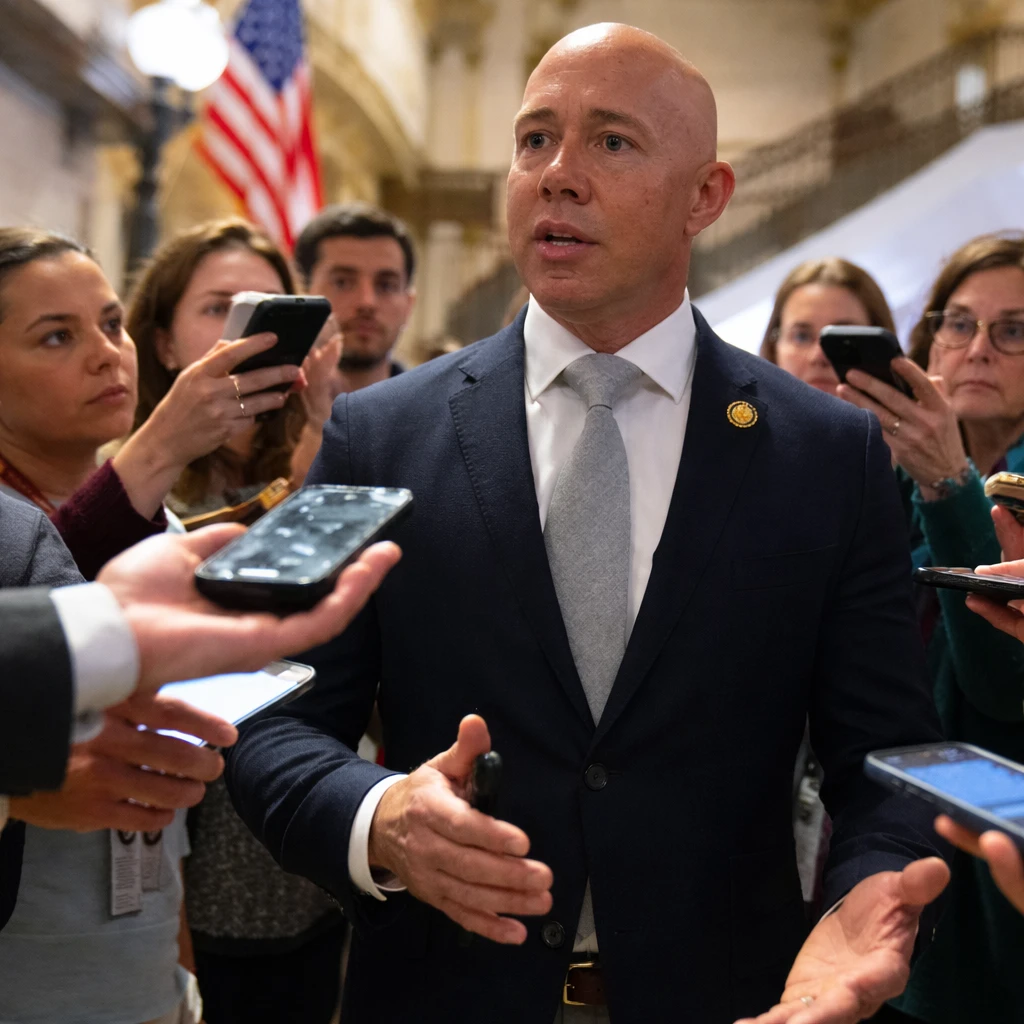
Representative Brian Mast, chair of the House Armed Services Committee and a Republican, denounced the Democratic resolution as politically motivated, characterizing it as a spiteful effort against the president's actions, notably the operation to capture Maduro, which he described as "possibly the most successful law enforcement operation in history."
Conversely, Democratic representatives maintained that Congress must assert its constitutional role in authorizing wartime measures, emphasizing that their efforts to bring these votes forward respond to the administration’s escalating military endeavors against Maduro and rising international conflicts involving U.S. interests.
According to Representative Gregory Meeks, ranking member on the House Foreign Affairs Committee, President Trump’s strategy diminishes America's global standing by alienating allies and cultivating adversaries, thereby undermining U.S. influence and strength in the region.
Previously, the Senate narrowly rejected a similar resolution after the administration convinced two Republicans to reverse previous support, accompanied by a promise from Secretary of State Marco Rubio to brief the Senate Foreign Relations Committee in the near future.
Furthermore, the president’s insistence on acquiring Greenland — a NATO ally's territory — raised concerns among some Republicans, marking one of the more pronounced intra-party criticisms of his foreign policy since taking office. This week, the president moderated earlier military and trade threats against European allies, revealing ongoing negotiations with NATO on an Arctic security framework. Nonetheless, members like Representative Bacon expressed frustration with the president's confrontational approach, supporting the war powers resolution despite it focusing solely on Venezuela.
The renewed military undertakings and threats directed by the president have reignited discussions surrounding the War Powers Act, originally enacted in the early 1970s as a legislative mechanism to reclaim Congressional authority over troop deployments during wartime. The resolution mechanism empowers Congress to demand the withdrawal of U.S. forces engaged in hostilities absent a formal declaration of war, a system which presidents, including the current administration, have tested extensively.
Upcoming debates scrutinize the Trump administration’s actions, including the clandestine operation to capture Maduro and subsequent unilateral strikes on suspected drug trafficking vessels and sanctioned oil shipments near Venezuela, activities undertaken without prior Congressional notification.
In parallel, Senate Democrats have expressed concerns about transparency regarding financial benefits stemming from U.S.-administered Venezuelan oil licenses. Early transactions include a license valued at approximately $250 million granted to Vitol, an independent global oil broker, whose senior partner contributed significant sums to pro-Trump political entities during the presidential race. A letter from thirteen Democratic senators, led by Senator Adam Schiff of California, called on White House Chief of Staff Susie Wiles to provide comprehensive disclosure of any arrangements pertaining to Venezuelan assets that may advantage presidential donors or political allies.
The White House maintains it is safeguarding Venezuela's oil resources in a manner that serves both the Venezuelan populace and U.S. interests.