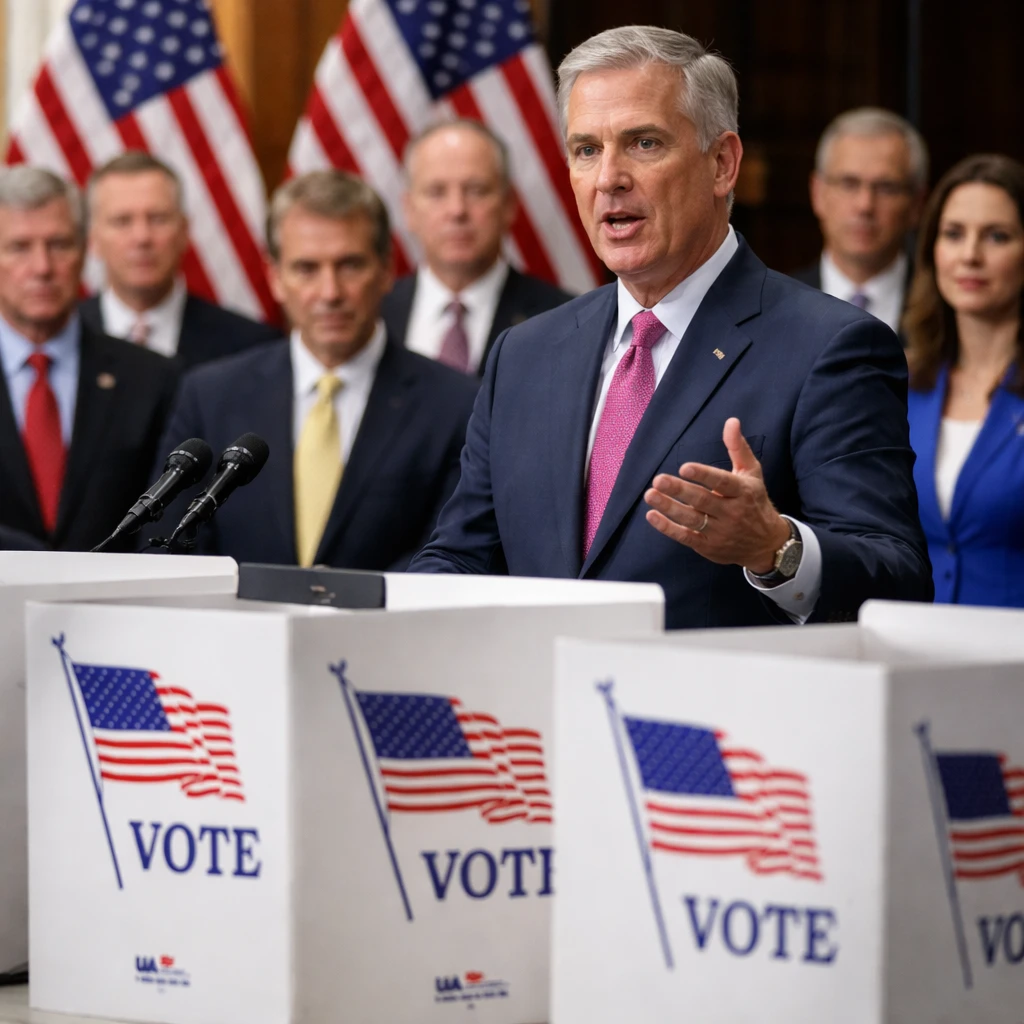

In a decisive move ahead of the fall midterm elections, House Republicans presented a comprehensive legislative proposal focused on tightening voting procedures across the United States. The initiative is a key priority supported by former President Donald Trump and includes a series of measures targeting voter identification and registration protocols.
One of the central components of the legislation mandates the presentation of government-issued photo identification prior to casting a ballot, alongside a verification process for voters' citizenship status. These requirements are slated for implementation by 2027.
Other significant elements of the bill would take immediate effect. These include prohibitions on universal mail-in voting systems, which enable ballots to be distributed to all registered voters regardless of request, and a ban on ranked choice voting—a system currently operational in states like Maine and Alaska.
The Republican leadership contends that these adjustments are necessary to ensure public confidence in electoral outcomes, particularly in the wake of the 2020 presidential election, which former President Trump has repeatedly claimed was compromised, despite no conclusive evidence supporting such allegations.
Rep. Bryan Steil, chairman of the House Administration Committee, emphasized the objective of the proposal: "These reforms will improve voter confidence, bolster election integrity, and make it easy to vote, but hard to cheat," he said. Steil also highlighted features like maintaining accurate voter rolls and citizenship verification as cornerstones of the bill.
However, the bill's prospects in Congress are uncertain. The narrowly divided chamber faces strong opposition from Democrats who argue that the proposed changes would impose burdensome requirements on voters, especially affecting registration and identification processes, potentially disenfranchising legitimate voters.
In the current political climate, election oversight has been propelled to the forefront, with federal authorities recently conducting raids related to the 2020 election ballots in Fulton County, Georgia. This aligns with the administration's increased focus on election-related issues ahead of congressional contests.
Democratic Rep. Joe Morelle, ranking member of the House Administration Committee, criticized the Republican proposal as an attempt to manipulate the electoral system. "This is their latest attempt to block millions of Americans from exercising their right to vote," Morelle stated, vowing to oppose the legislation at every legislative stage.
The bill, titled the "Make Elections Great Again Act," spans over 120 pages and proposes several key changes. Notably, it requires states to utilize "auditable" paper ballots by this fall, a standard largely in place; forbids the use of universal vote-by-mail; and outlaws ranked choice voting outright. States failing to comply risk losing federal funding allocated for election administration.
Another provision demands states to establish cooperative agreements with the Department of Justice to share information about potential voter fraud, with federal election funding at stake starting in 2026. Additionally, voting registration rolls would need to be updated more frequently, specifically every 30 days, under the new rules.
The bill has drawn criticism for its approach to federalism. Stephen Richer, a Republican former recorder in Maricopa County, Arizona, expressed that the legislation diminishes states' autonomy over their election laws. "It flattens federalism, and takes away many rights from the states," he commented on social media.
Voting rights organizations have raised concerns that the proposed requirements, such as proof of citizenship, could disenfranchise certain groups of voters. Prior attempts to mandate citizenship verification have been challenged on grounds that they may disadvantage individuals whose legal documents do not align perfectly with registration information, including some married women. Studies estimate 9% of U.S. citizens of voting age lack readily accessible proof of citizenship, and nearly half do not possess a U.S. passport.
The initiative follows previous efforts by former President Trump to reshape election administration, including a 2022 executive order that introduced citizenship verification among other provisions. While a related House bill aimed at codifying these changes stalled in the Senate, momentum appears to be building for renewed legislative attention.