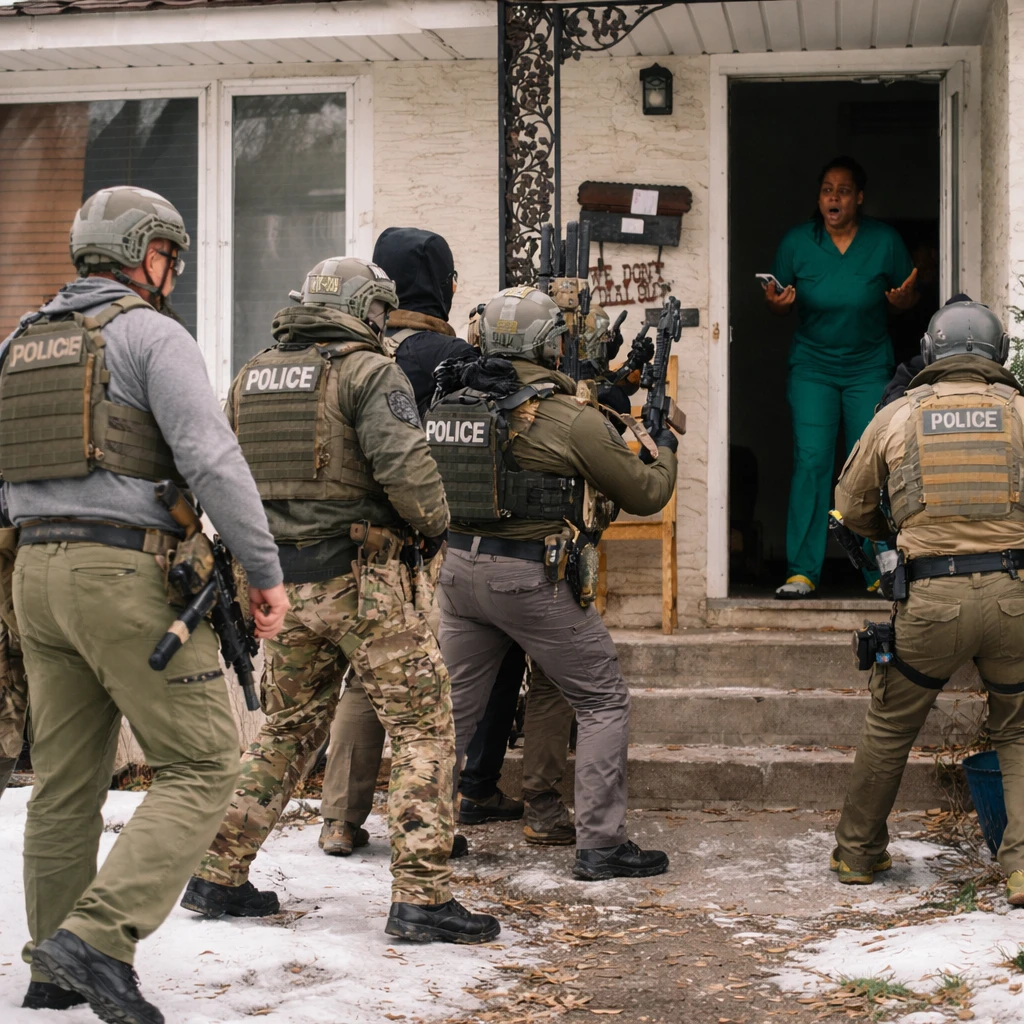

Federal immigration officials under Immigration and Customs Enforcement have been granted authority to forcibly enter private residences using administrative warrants alone, according to a confidential internal memo obtained by the Associated Press. Traditionally, entry into homes to execute arrests has been conditioned upon a full judicial warrant, consistent with protections outlined by the U.S. Constitution's Fourth Amendment. This policy update represents a stark shift from earlier guidelines designed to limit government overreach.
The new directive, formalized in a memo dated May 12, 2025, and signed by ICE's acting director Todd Lyons, asserts that administrative warrants are sufficient for agents to breach homes when arresting individuals with final removal orders. These administrative warrants, which are narrower in scope and used internally, do not require judicial endorsement. Advocates warn that this change undermines constitutional safeguards and conflicts with established Supreme Court rulings, which generally prevent warrantless home entries by law enforcement.
This policy adjustment coincides with an intensified effort by the current administration to escalate immigration enforcement nationwide. Thousands of ICE agents are being deployed in cities like Minneapolis as part of an aggressive deportation campaign, prompting a reevaluation of standard operating procedures concerning arrests and home entries.
For years, immigrant rights organizations and legal counsel have urged community members to deny entry to immigration officers without presentation of a judicial warrant. This practice is grounded in Supreme Court precedent, which typically prohibits law enforcement from entering a residence without explicit judicial approval. The internal ICE memo effectively contradicts this guidance at a time when deportation raids are increasing in frequency and scope.
According to a whistleblower complaint, the memo has not been widely circulated within ICE but has been used to instruct new officers. Recruits and officers still undergoing training are reportedly advised to adhere to this memo's guidance even though it contradicts existing written training materials. This training shift signals a transformation in arrest protocols for ICE personnel nationwide.
The extent of the directive's enactment in ongoing enforcement operations remains unclear. The Associated Press witnessed an intense incident on January 11 in Minneapolis where ICE agents forcibly entered a Liberian man's home using only an administrative warrant. Agents arrived wearing tactical gear and brandishing rifles as they breached the residence without a judge's order.
This policy shift will likely provoke legal challenges and criticism from immigrant advocacy groups and government entities that prioritize constitutional rights. These groups have invested significant effort educating the public to require judicial warrants before consenting to searches.
The personnel who provided the memo to Congressional officials did so anonymously to avoid repercussions. The Associated Press has verified the authenticity of the documents and testimonies described in the complaint.
The memo cites a recent determination by the Department of Homeland Security's Office of the General Counsel stating that administrative warrants do not violate the U.S. Constitution, the Immigration and Nationality Act, or immigration regulations regarding arrests in a residence. However, the memo does not explain the basis for this legal interpretation or address potential constitutional consequences.
In response to inquiries, DHS spokeswoman Tricia McLaughlin emphasized that targets served with administrative warrants have already undergone due process and possess final removal orders. She claimed that the officers issuing these warrants establish probable cause and suggested that both the Supreme Court and Congress have recognized the legitimacy of administrative warrants in immigration cases. Nevertheless, McLaughlin declined to specify whether ICE agents have entered homes solely relying on administrative warrants following the memo or to quantify such instances.
The whistleblower complaint, issued by Whistleblower Aid, represents two unnamed government employees asserting that the directive constitutes a secretive and apparently unconstitutional policy shift. This comes amid increased public scrutiny triggered by highly visible arrests occurring at private residences and workplaces, which are often recorded and widely disseminated. Analysis of immigration arrest procedures highlights that most are conducted under administrative warrants, which typically do not authorize forced home entry without occupant consent. In contrast, judicial warrants are required to permit such actions legally.
All law enforcement operations in the U.S., including those by ICE and Customs and Border Protection, fall under the Fourth Amendment protections that bar unreasonable searches and seizures. Individuals retain the right to deny entry to federal immigration agents presenting only administrative warrants, with limited exceptions.
In one instance, ICE agents breached a Minneapolis home to detain a Liberian man with a deportation order issued in 2023, armed solely with an administrative warrant. Documents reviewed confirm these agents lacked judicial authorization to conduct a forced home entry, challenging existing legal interpretations.
The memo mandates that ICE agents first announce their presence and purpose before entry, restricting operations to between 6 a.m. and 10 p.m., ensuring occupants receive a fair opportunity to respond lawfully. If access is refused, the directive authorizes the use of reasonable force to enter the premises. The policy requires agents to limit force to necessary levels, always after proper notification of their identity and intent.
Distribution of the directive within ICE is limited; only select Department of Homeland Security officials have been permitted access. Those viewing the memo are instructed to return it post-review without taking notes. Some officers received the directive during training and were advised to adhere strictly to its provisions.
Although issued months ago, the memorandum's existence was publicly revealed only recently after whistleblowers sought a secure and lawful method to disclose it to legislators and the American public.
The agency’s ongoing recruitment rapidly expands its deportation workforce, with thousands of newly hired officers trained at federal facilities such as the Law Enforcement Training Center in Brunswick, Georgia. During an Associated Press visit, ICE representatives highlighted adherence to Fourth Amendment principles in training. However, whistleblowers detail discrepancies wherein new officers are instructed to rely exclusively on administrative warrants for home entries, a practice contrary to official homeland security training literature. Typically, officers await the arrival of targets in public spaces to avoid constitutional conflicts related to private residence searches.
Legal advocates have labeled the new policy a profound departure from established law, threatening the fundamental rights safeguarded by the Fourth Amendment and increasing uncertainty regarding lawful enforcement boundaries.