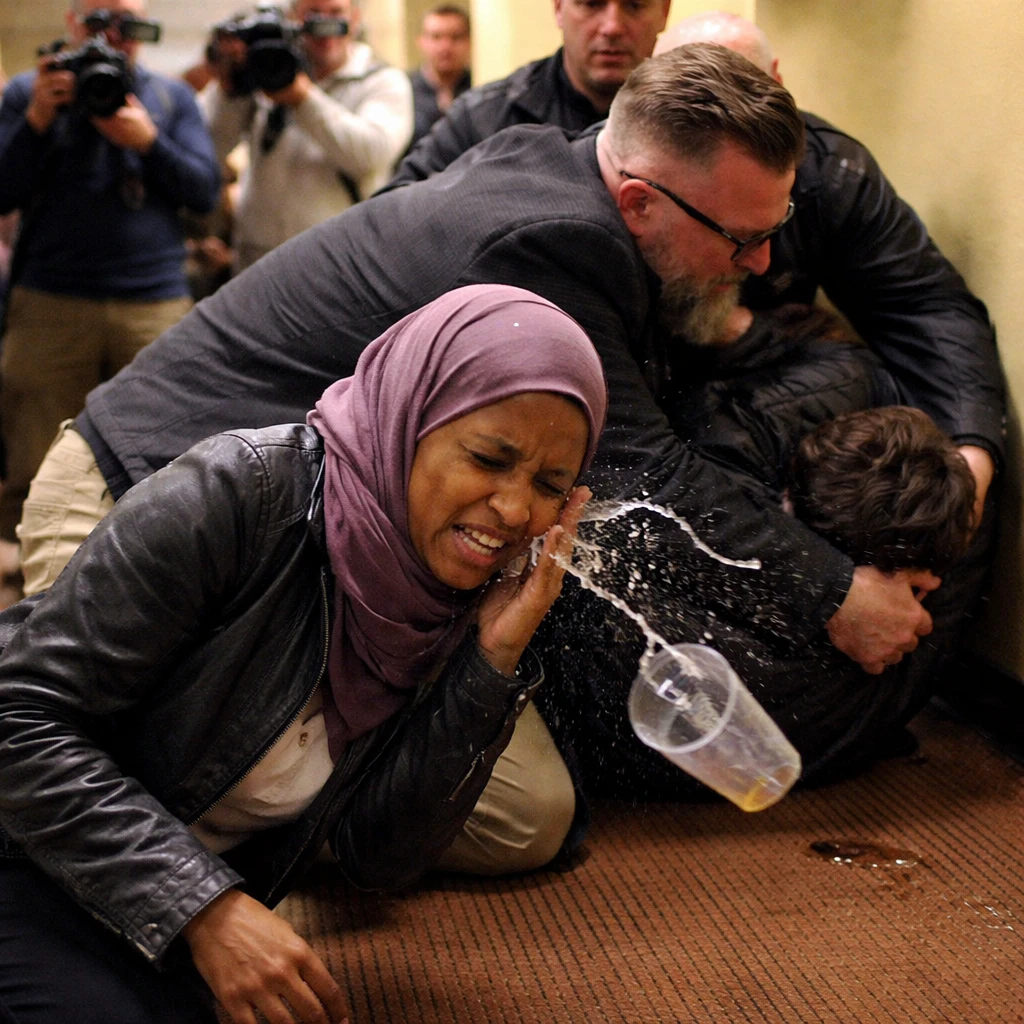

Democratic Congresswoman Ilhan Omar publicly attributed threats against her to President Donald Trump following an attack at a Minneapolis event where a man squirted an unknown liquid on her. The suspect, apprehended immediately after the incident, has a history of criminal offenses and financial troubles, along with online posts endorsing Trump. At a Wednesday news conference, Omar remarked that whenever President Trump uses disparaging language against her or her constituency, death threats directed at her escalate sharply. Despite such intimidation, she affirmed her resilience, stating that fear does not deter her from public appearances.
The attack unfolded at a particularly volatile moment for Minneapolis, a city witnessing federal agents fatally shoot two individuals amidst a stringent immigration enforcement campaign initiated by the White House. Having emigrated from Somalia, Omar has frequently been the focus of Trump's anti-immigrant narratives. Upon her election seven years prior, Trump famously told her to "go back" to her country and has recently referred to her derogatorily, calling her "garbage" and suggesting investigations into her conduct. Trump’s most recent public remarks criticized immigrants and singled out Omar as a negative example during a speech in Iowa just before the incident.
Jeremy Slevin, a former spokesperson for Omar and senior advisor to Senator Bernie Sanders, stressed the apparent correlation between Trump’s personal attacks on Omar and the intensifying threats and hostility in her city. The White House declined to comment on the incident, with Trump dismissing the event as staged by Omar herself during an interview with ABC News.
The hostile political climate has prompted some legislators to limit public engagements or avoid seeking reelection due to safety concerns. Representative Pramila Jayapal recounted her own experience of being threatened at her residence, underscoring the urgent need for leadership to condemn and restrain inflammatory rhetoric that precipitates such violence.
The assailant, Anthony Kazmierczak, 55, has an extensive record including a felony auto theft conviction from 1989 and multiple arrests related to driving under the influence and traffic violations. Court records also highlight notable financial challenges, evidenced by two bankruptcy filings. Police reports indicate Kazmierczak used a syringe to inflict the attack after Omar advocated for dismantling U.S. Immigration and Customs Enforcement and called for the removal or impeachment of Homeland Security Secretary Kristi Noem following recent fatal shootings tied to the immigration crackdown. The substance expelled from the syringe was a light-brown liquid, though authorities have not publicly disclosed its nature. As of the latest updates, formal charges have not been filed, and the case remains under FBI investigation without an assigned defense counsel.
Kazmierczak’s social media presence reveals criticism of President Joe Biden, accusations against Democrats, and supportive statements regarding former President Trump’s vision for a stronger United States. In one post, he controversially questioned when descendants of slaves would make reparations to Union soldiers' families.
Omar’s security has been a longstanding concern. Following initial attacks from Trump during her first congressional year, House leadership requested increased security measures, resulting in permanent protective details. In 2021, she exposed an audio recording of a death threat characterized by racist and anti-Muslim language. The following year, a man received probation on hate crime charges after threatening her via email.
Trump’s escalated criticism has centered on Minneapolis, home to a significant Somali-American population, linking immigration enforcement with fraud cases involving primarily East African defendants. Omar attributes the heightened security response and threats against her to Trump’s fixation on her and his administration’s aggressive policies.
The assault on Omar aligns with a trend of increasing threats against lawmakers. Just days earlier, in Utah, a man allegedly assaulted Representative Maxwell Frost and made threats regarding deportation. Threat levels toward members of Congress peaked in 2021, dipped slightly, and have trended upward again, reflecting ongoing political volatility. Fellow lawmakers, including Representative Greg Casar, urge the cessation of violent rhetoric and emphasize resilience in the face of intimidation. Casar, who chairs the Congressional Progressive Caucus, described Omar as remarkably steadfast and called on Trump to moderate his inflammatory comments that contribute to these tense conditions.