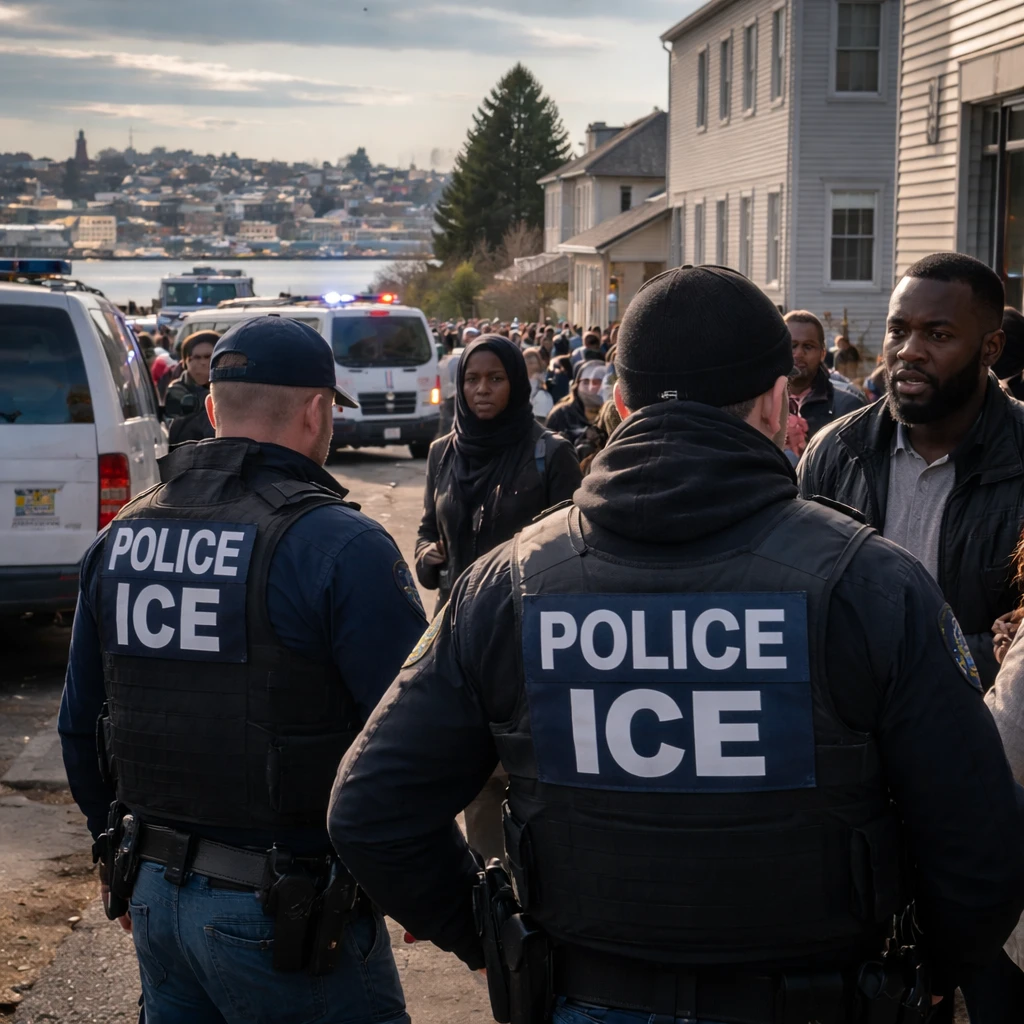
In a renewed surge of immigration enforcement, the Department of Homeland Security has launched an operation named “Catch of the Day” targeting undocumented individuals in the state of Maine. Despite Maine having a relatively small undocumented population, the campaign has caused significant unrest, particularly among immigrant communities in the cities of Portland and Lewiston, both of which have sizeable African refugee populations.
The name of the operation draws a connection to Maine’s well-known seafood industry, following a pattern of similar enforcement initiatives in other states such as Minnesota's “Metro Surge” and Chicago's “Midway Blitz.” The campaign commenced on a Tuesday with a focus on apprehending non-citizens convicted of serious crimes, including aggravated assault, false imprisonment, and child welfare endangerment.
This enforcement activity has generated palpable fear among immigrants, many of whom work in essential roles within hospitals, schools, and hospitality sectors. Reports indicate that school attendance has dropped by approximately 25% among immigrant students, highlighting the community's apprehension. City council member Pious Ali, originally from Ghana, emphasized the traumatic impact of aggressive tactics used during arrests and advocated for more considerate approaches from federal agents.
Portland’s Mayor Mark Dion and local officials have publicly challenged the paramilitary style of these enforcement efforts, expressing solidarity with immigrant residents. At a press conference, Mayor Dion stated the city's commitment to standing alongside their immigrant communities during this unsettling period.
Maine’s political leadership has also been vocally critical. Governor Janet Mills and other Democrats have condemned the raids, asserting that they undermine civil rights and foster an atmosphere of fear rather than safety. Mills explicitly characterized the enforcement actions as unwelcome within the state.
Compounding local resistance, Maine’s Secretary of State Shenna Bellows declined a federal request to issue undercover state license plates to Immigration and Customs Enforcement (ICE) vehicles. Known for opposing federal administration policies, Bellows demanded assurances that Maine plates would not be misused following reports of license plate alterations by ICE agents in other states. Her decision to pause issuing new plates for ICE vehicles has drawn criticism from Maine Republicans, who argue that it could compromise public safety and place the state at odds with federal law enforcement objectives.
The new enforcement operation arrives as federal immigration officers face heightened scrutiny elsewhere, notably following a fatal shooting by an ICE agent in Minnesota. While ICE has not detailed its enforcement strategy for Maine, officials have noted that they possess approximately 1,400 targets in the state, focusing on individuals with criminal convictions.
Community response has been robust. Neighborhood networks have formed to alert residents of ICE presence and provide food to those who may be sheltering at home. Portland’s public school system, which serves a diverse student population with a majority of non-white pupils, has developed contingency plans for online learning amidst the tensions. Some businesses have also displayed signs indicating that ICE agents are not welcome.
Maine’s top federal prosecutor, U.S. Attorney Andrew Benson, appointed by the current administration, echoed calls for peaceful conduct during any demonstrations connected to enforcement activities and cautioned that interference with federal agents could result in prosecution.
Lewiston’s Mayor Carl Sheline acknowledged the widespread anxiety and uncertainty stirred by the intensified ICE presence, while reiterating that there is no evidence supporting the need for such an aggressive federal footprint aimed at unchecked criminal activity within the community.
Portland Public Schools took precautionary measures by temporarily locking down two schools during reports of ICE activity, though no direct threat to students was confirmed. The district acknowledged the heightened tensions as rumors and reports of immigration enforcement mounted.
Representatives of the Maine Democratic Party framed the deployment of ICE agents as politically motivated actions designed to instill fear rather than ensuring public safety. This perspective aligns with broader opposition to the enforcement surge across the state.