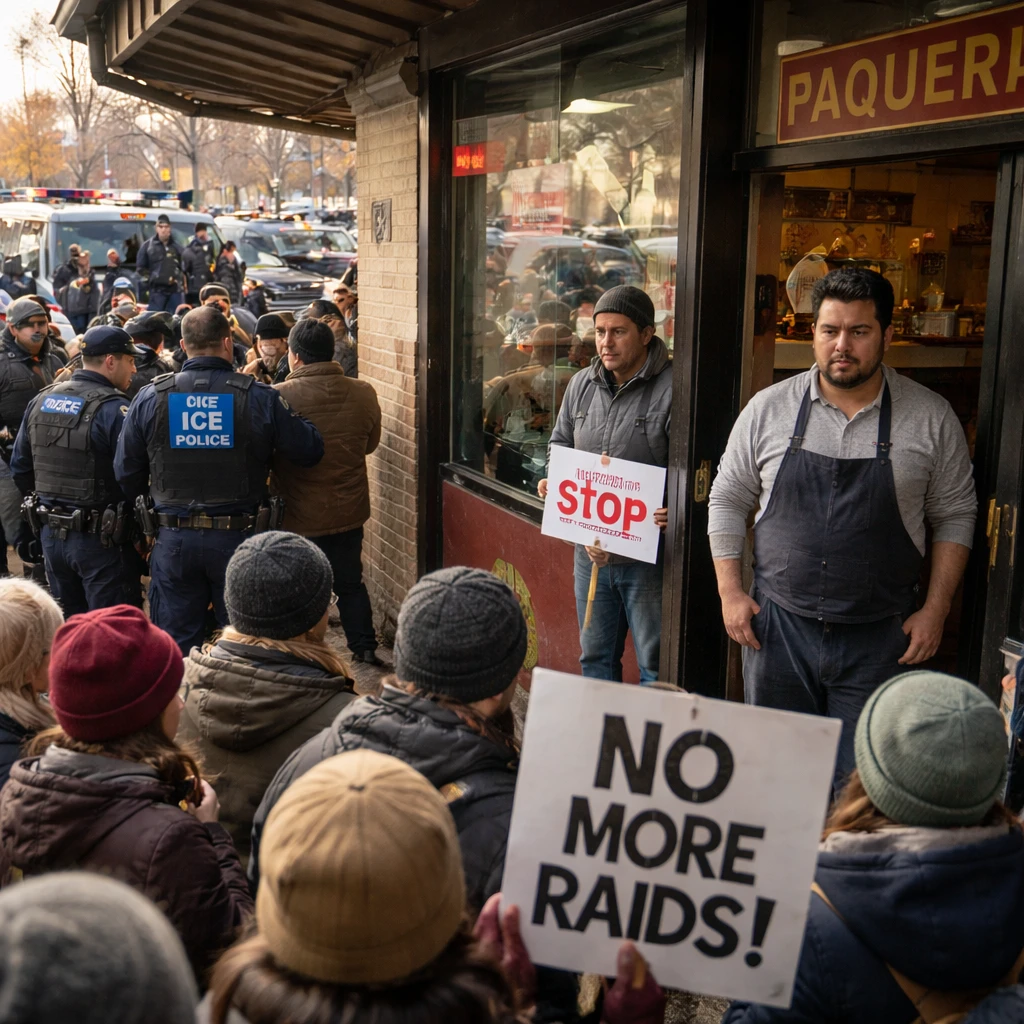

In the Minneapolis neighborhood with a significant East African immigrant presence, Taste of East African restaurant now operates with only its manager and owner attending work daily. The restaurant serves a changing customer base, many of whom are unfamiliar with the region's traditional cuisine but are motivated by a desire to support a business facing challenges due to intensified federal immigration enforcement activities.
The prevailing apprehension extends beyond the workforce to typical patrons, many of whom hesitate to visit establishments in neighborhoods heavily populated by immigrant residents targeted by enforcement efforts. Delivery drivers, part of the gig economy, have often declined orders fearing entanglement with immigration authorities. According to the restaurant’s manager, Hibaq Nimale — a U.S. citizen who grew up as a refugee from Somalia — “Even if you tell ICE you’re a citizen they won’t listen, so everyone is scared.”
Across Minneapolis, businesses situated in areas deeply affected by the enforcement sweep have witnessed diminished foot traffic and cancelled events. Many shops have temporarily ceased operations or shortened business hours. The hospitality sector, notably hotels that provided housing for federal immigration personnel, has encountered severe disruptions, with some establishments halting reservations entirely. Moreover, major retail corporations headquartered in Minneapolis, such as Target Corporation, have become focal points of protests.
The state and city of Minneapolis have quantified the economic repercussions, filing a lawsuit to stop the immigration actions, citing substantial declines in retail sales—some reporting decreases up to 80%. Preceding the influx of over 2,000 federal immigration agents in the Twin Cities, an October report from the Minneapolis Federal Reserve had already identified economic sluggishness. Subsequent documentation in January highlighted that fears induced by immigration enforcement contributed to reduced sales and diminished local employment, with nearly one in five businesses noting staff reductions linked to these concerns.
Adam Duininck, CEO of the Minneapolis Downtown Improvement District, noted the economic strain is extensive, stating, “I’m seeing it impact everybody, just because of the lower levels of people traveling and spending discretionary income.” The negative ramifications transcend small businesses; executives like Fred Haberman, co-founder and CEO of a Minneapolis marketing company, described interruptions to employee-dependent support systems such as schools and daycare, which in turn destabilize workforce productivity.
Haberman voiced apprehension regarding potential long-term structural changes to Minneapolis' business landscape if federal immigration policies remain unchanged, emphasizing the limited financial resilience of many affected enterprises. Meanwhile, a Department of Homeland Security spokesperson attributed economic disturbances to protests and limitations imposed by sanctuary policies that hinder cooperation between federal and local agencies.
Hotels in Minneapolis are navigating a precarious balance between operational viability and safety considerations. Several prominent chains, including Hilton and IHG, have modified reservation policies, with at least three hotels in the area reportedly suspending room bookings amid safety concerns triggered by persistent demonstrations targeting accommodations for immigration officials. Some hotels have temporarily closed, while others remain open but reject new reservations. Front desk staff at affected properties have cited staff safety as a justification for closures but have refrained from providing detailed explanations. Hospitality employees, many belonging to minority groups, face anxiety about potential profiling by enforcement authorities, further complicating staffing challenges.
Duininck highlighted the complex decisions hotel operators must make, caught between protecting staff and avoiding government retaliation or activist opposition. He suggested this dilemma epitomizes the broader political tensions confronting Minneapolis and the nation.
Community groups — including faith leaders, labor unions, and activists — have mobilized calls for boycotts and economic protests to compel cessation of Immigration and Customs Enforcement (ICE) actions. Planned initiatives encourage residents of the Twin Cities to refrain from work, shopping, or school attendance, underscoring the use of economic leverage as a form of political expression in the region. Target Corporation, previously targeted for discontinuing diversity, equity, and inclusion programs, has recently faced protests accusing it of collaborating with federal immigration activities by allowing operations on its premises.
Legal experts clarify that while immigration agents have the right to enter public business areas like dining rooms, parking lots, or store aisles to conduct questioning or make arrests, they require employer consent or a judicial warrant to access private spaces such as offices or restricted areas. Warrants must be specific and time-limited. Workers and customers retain certain rights, including refusing to speak, declining searches, and requesting legal counsel. However, allegations have surfaced regarding ICE entering non-public areas without appropriate authorization and detaining individuals unlawfully. Legal advisors recommend documenting all encounters with immigration officials to protect rights.
Despite immense challenges, local business owners like Nimale report an influx of support from neighbors outside the immigrant community offering some temporary relief through patronage of their establishments. Before the enforcement escalation, Nimale estimated that Somali customers comprised nearly 80% of their clientele; currently, non-Somali customers have increased to approximately 90% though service capabilities remain strained by the limited staff. While appreciative of this support, Nimale expresses concern about the sustainability of this newfound customer base given ongoing economic hardships.