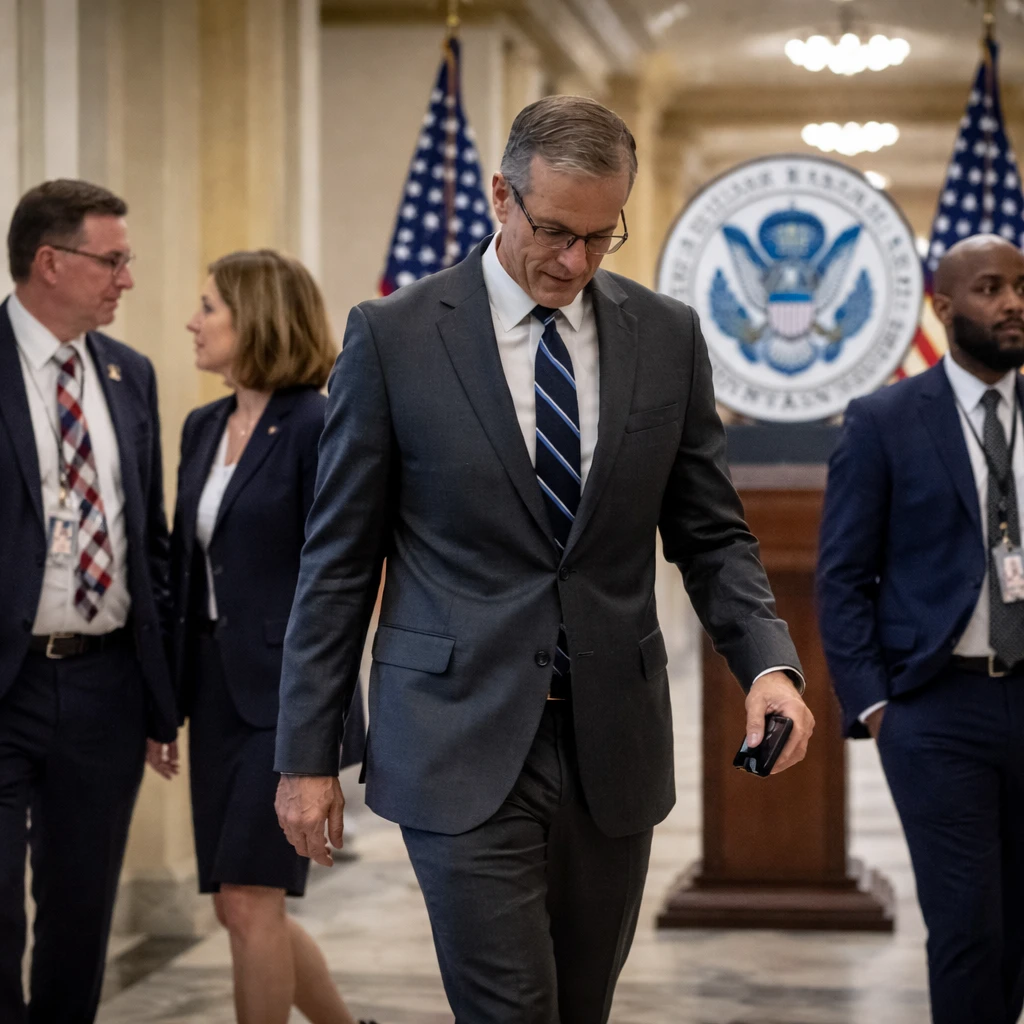
As the expiration date for federal funding approaches, tensions have escalated in Washington regarding the Department of Homeland Security’s (DHS) budget. Senate Majority Leader John Thune expressed on Thursday that the Democratic Party's conditions for imposing further limits on immigration officers are "unrealistic." He cautioned that without bipartisan cooperation, DHS may face a shutdown next week.
Democrats have made it clear they will withhold their votes on any DHS appropriations bill unless there are significant reforms within U.S. Immigration and Customs Enforcement (ICE) and other federal law enforcement bodies. Their stance follows the recent, tragic shootings of two protesters in Minneapolis, fueling demands for change. On Wednesday evening, Senate Majority Leader Chuck Schumer and House Minority Leader Hakeem Jeffries outlined an expanded set of 10 detailed measures aimed at curbing President Donald Trump’s assertive immigration enforcement strategy. Key provisions include mandating judicial warrants before certain actions, improving DHS officers’ identification, instituting more rigorous use-of-force guidelines, and prohibiting racial profiling.
Responding to these demands, Thune described most as "very unrealistic and unserious," calling on Democratic leaders to engage in earnest negotiation. He emphasized that "this is not a blank check situation where Republicans just agree to a list of Democrat demands." To effectuate changes to ICE, he asserted that both parties must agree upon legislation.
Schumer, representing New York, expressed surprise at Republicans’ characterization of his party’s proposals as political maneuvering or impractical. He framed the issue as one of protecting fundamental rights and public safety, urging Republicans to justify their opposition if they disagree with the suggestions.
With blame shifting between the parties, the probability of a DHS funding lapse has increased, potentially beginning February 14, when current appropriations expire. Thune acknowledged that "we aren’t anywhere close to having any sort of agreement" as negotiations reach an impasse. The DHS funding package covers multiple agencies, including not only ICE and Customs and Border Protection but also the Federal Emergency Management Agency (FEMA) and the Transportation Security Administration (TSA). Thune warned that a shutdown could precipitate "more travel problems," akin to effects experienced during the 43-day government closure last year.
Democrats’ demands include significant alterations to DHS operations. Schumer and Jeffries have called for several enhanced safeguards, such as requiring officers to wear masks only with identification visible, securing judicial warrants for enforcement actions, and fostering stronger coordination between federal and local law enforcement. The latest list of demands further proposes a stricter use-of-force policy, legal protections within detention centers, and prohibiting the use of body cameras to monitor protesters.
The party advocates for ending indiscriminate arrests, improving warrant protocols and standards, and legally restricting officers from entering private properties without a judicial warrant. Additionally, they call for confirmation procedures to ensure that detainees are non-citizens before detention. Measures to eradicate racial profiling include banning stops or searches based on an individual’s presence at particular locations, profession, language, accent, race, or ethnicity. Democrats also seek uniform regulations for officers conducting immigration enforcement, standardizing their identification and equipment to align with other law enforcement standards.
Republican leaders have dismissed the Democratic proposals. Senate Minority Whip John Barrasso criticized them as "radical and extreme," branding the demands "a far-left wish list." Senator Katie Britt labeled the collection "a ridiculous Christmas list of demands" that fail to represent the interests of the general public. She accused Democrats of prioritizing political posturing over American safety.
Following President Trump's agreement last week to respond to Democratic requests by isolating the DHS spending bill from a larger funding package and extending existing funding for two weeks, intense negotiations are underway. However, with nearly a week elapsed, a shutdown remains a looming possibility. Thune urged Democrats and the White House to continue dialogue but it remains unclear if substantive compromises will emerge.
Republican demands remain part of the broader debate, including legislation requiring proof of citizenship for voter registration and placing restrictions on certain cities alleged not to enforce immigration laws effectively. Senator Chris Murphy argued that, since Republicans control Congress, they bear responsibility for preventing a shutdown and asserted the public’s desire to end the current system’s "abuse."
In efforts to mitigate shutdown impacts, some lawmakers propose selectively funding parts of DHS such as the Coast Guard, TSA airport operations, and FEMA disaster assistance separately from funding for immigration enforcement. Senator Thom Tillis from North Carolina supported this approach, especially given his state's dependency on FEMA aid following recent disasters. This alternative strategy could allow ICE to continue operating without standard federal funds, as it received a substantial budget — expected to be around $10 billion — in last year's appropriations, a fraction of the overall $175 billion homeland security budget allocated for the administration’s immigration enforcement initiatives.