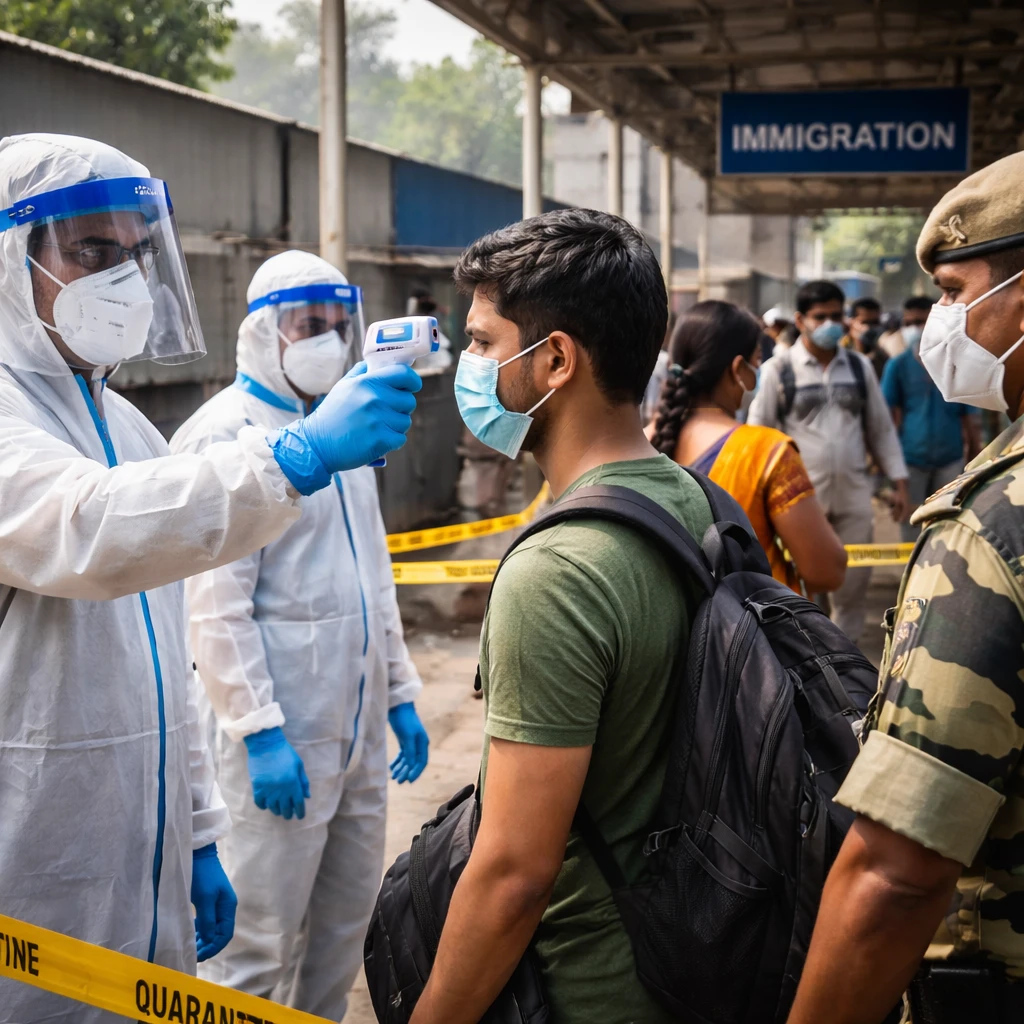

Indian health authorities have declared the containment of a recent Nipah virus outbreak following the confirmation of two cases in the eastern state of West Bengal. These developments have prompted heightened health monitoring and airport screening efforts across various Asian countries receiving travelers from India.
The Health Ministry of India disclosed on Tuesday that since December, two instances of Nipah virus infection have been identified. Authorities traced and quarantined 196 individuals who came into contact with the infected patients. All those contacts have undergone testing, with negative results reported to date. Aside from the number of contacts, the ministry refrained from releasing personal or clinical details concerning the two patients.
The ministry emphasized that the situation is under continuous surveillance and that comprehensive public health protocols remain actively enforced to prevent further spread.
Nipah virus is a zoonotic pathogen initially detected during an outbreak in Malaysia in the 1990s. Transmission occurs through fruit bats, pigs, and human-to-human interactions. There is presently no vaccine available for Nipah virus infection. Clinical presentation often includes severe symptoms such as high fevers, convulsions, and vomiting. Management consists primarily of supportive treatment aimed at mitigating complications and ensuring patient comfort.
This virus carries a significant case fatality rate, estimated by the World Health Organization to range from 40% to 75%, rendering it considerably more lethal than the coronavirus that caused the recent global pandemic.
At present, no Nipah virus infections have been reported outside of India. Nonetheless, various Asian nations have augmented screening and monitoring at airports as a precautionary measure. These health safety enhancements include health declarations, temperature checks, and visual observation of passengers arriving from India.
Initial media coverage from India had suggested a surge in Nipah virus cases; however, Indian health authorities have classified these figures as speculative and inaccurate.
Indonesia and Thailand have implemented enhanced screening procedures at their principal airports. For instance, Thailand's Department of Disease Control reported the installation of thermal scanners at Bangkok's Suvarnabhumi Airport for direct flights originating from West Bengal. Passengers are now subject to both temperature checks and health declarations.
Myanmar's Ministry of Health issued advisories recommending against nonessential travel to West Bengal and has called for travelers to promptly seek medical attention if symptoms develop within 14 days of arrival. Further, fever surveillance, instated during the COVID-19 pandemic, has been intensified for arrivals from India. The ministry has also ensured that laboratory testing resources and medical supplies are sufficiently prepared to respond.
Meanwhile, Vietnam's Health Ministry instructed strict adherence to food safety measures and called upon local authorities to increase vigilance at border points, healthcare facilities, and community settings, as reported by state media.
China has also bolstered preventative protocols in border regions. State media disclosed that Chinese health authorities commenced risk assessments, enhanced medical staff training, and improved monitoring and diagnostic testing capabilities to prepare for potential cases.
Historically, Nipah outbreaks have been recorded in West Bengal during 2001 and 2007, with more recent incidents primarily occurring in the southern state of Kerala. Notably, Kerala suffered a severe Nipah outbreak in 2018 that resulted in at least 17 fatalities.
The situation remains dynamic, and health authorities continue to prioritize containment and prevention measures to mitigate the virus's impact on public health.