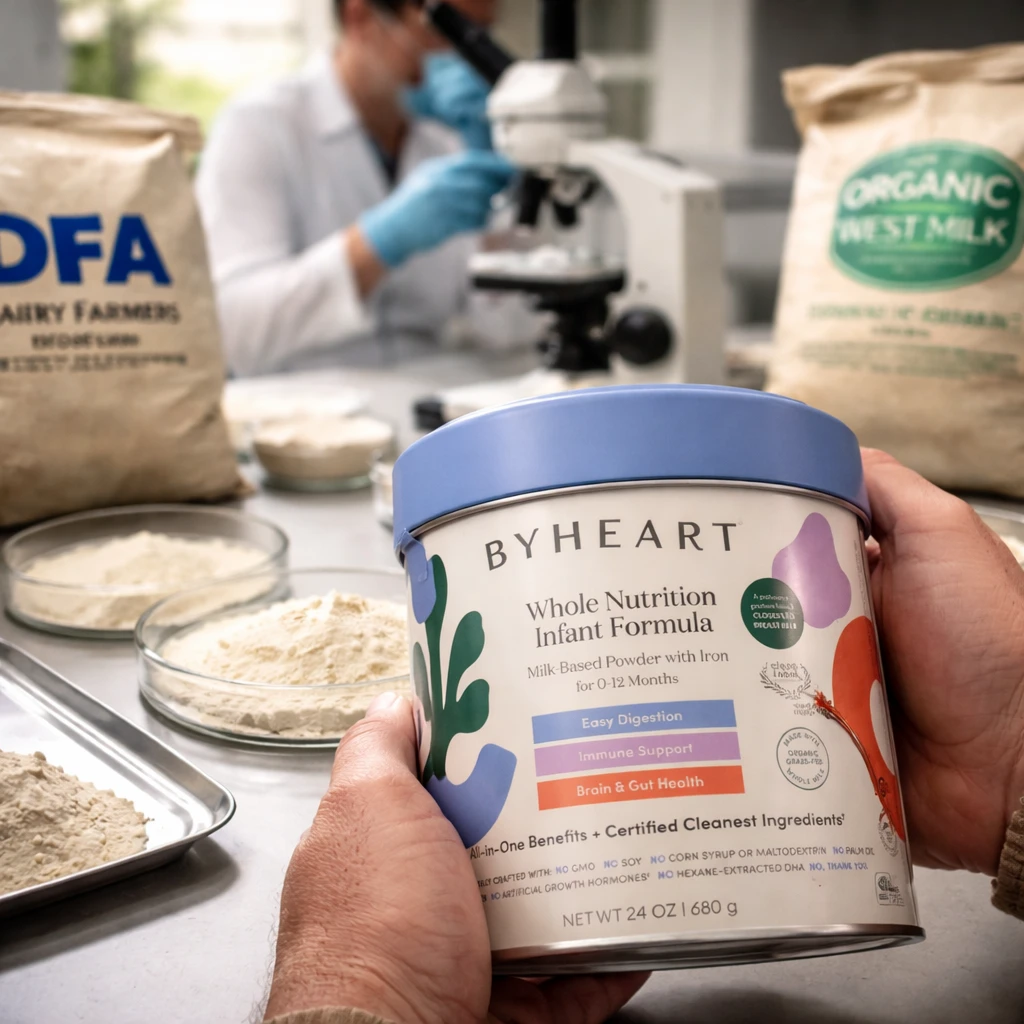

Two entities involved in producing milk powder are now part of a probe regarding a botulism outbreak allegedly linked to an infant formula brand, ByHeart, which has led to illnesses in dozens of babies. Organic whole milk powder that yielded positive test results for the bacteria responsible for botulism originated from milk supplied by Organic West Milk Inc., a California-based company. This milk was later processed at a Dairy Farmers of America facility located in Fallon, Nevada, according to statements from company representatives.
Despite these test outcomes, both Organic West Milk and Dairy Farmers of America, alongside the U.S. Food and Drug Administration (FDA), have conveyed that the detailed investigation remains in progress and that no definitive source of contamination has been established yet. The botulism outbreak has so far affected 51 infants spanning 19 states, marking an unprecedented public health concern.
Bill Van Ryn, who holds ownership stakes in Organic West Milk, disclosed that the FDA collected a milk powder sample from his company last week, which subsequently tested positive for the bacteria causing botulism. Nevertheless, Van Ryn was clear to state that this finding does not confirm the milk powder as the direct cause of the outbreak. He suggested that the contamination might have occurred during subsequent processing stages—from turning the milk into powder to its final conversion into infant formula.
Organic West Milk, which aggregates milk from 55 farmers, confirmed that it had sold organic whole milk powder exclusively to ByHeart for infant formula production. The company has proactively ceased selling this organic milk powder for any products intended for babies and children until further clarity is achieved concerning the outbreak's origin.
The process of powdering milk involves pasteurizing liquid milk, then concentrating it through evaporation, followed by spraying the concentrated milk into a heated chamber. This operation evaporates water content completely, resulting in fine, dry milk powder particles. The Dairy Farmers of America, a worldwide dairy cooperative, manages the Nevada plant that processes approximately 1.5 million pounds of raw milk per day, which is transformed into about 250,000 pounds of whole milk powder. The cooperative confirmed that the sample FDA examined, which tested positive for botulism bacteria, originated from Organic West Milk's supply. Despite this, the powder met all regulatory quality tests prior to sale. Subsequently, Organic West sold this milk powder to ByHeart for formula production.
A statement from Dairy Farmers of America underscored that manufacturers bear the responsibility of ensuring the safety of ingredients during production. The FDA reported on January 23 that an organic whole milk powder sample from a supplier had tested positive for botulism bacteria, though it did not disclose the supplier's identity. Genetic analysis matched this sample to bacteria found in a finished can of ByHeart formula.
Further investigations revealed that the bacteria detected in an unopened can of ByHeart formula were genetically identical to samples taken from an infant who had fallen ill, as well as to milk powder samples used in making ByHeart formula, which the manufacturer themselves had collected and tested. Nonetheless, ByHeart has not publicly identified the supplier of those milk powder samples. The company has recalled all infant formula products amid the health concerns.
Experts note that spores of Clostridium botulinum, the bacterium in question, are widespread in the environment and can be present in many foods at extremely low levels. Kristin Schill, a specialist in botulism at the University of Wisconsin-Madison, explained that while healthy adults regularly ingest these spores without adverse effects, infants’ developing digestive systems are more vulnerable. This can allow spores to germinate and produce toxin, which can cause paralysis or death.
According to Schill, botulism spores, including those found in milk and processing environments, are generally found at low levels. Importantly, pasteurization does not eliminate these spores. Although botulism spores have been detected previously in infant formula, this incident represents the first substantial outbreak linked to the product. The risk of contamination has typically been regarded as very low, resulting in no formal requirements for botulism testing in infant formula manufacturing, although some companies choose to conduct voluntary microbiological screenings designed to detect potential contaminants.