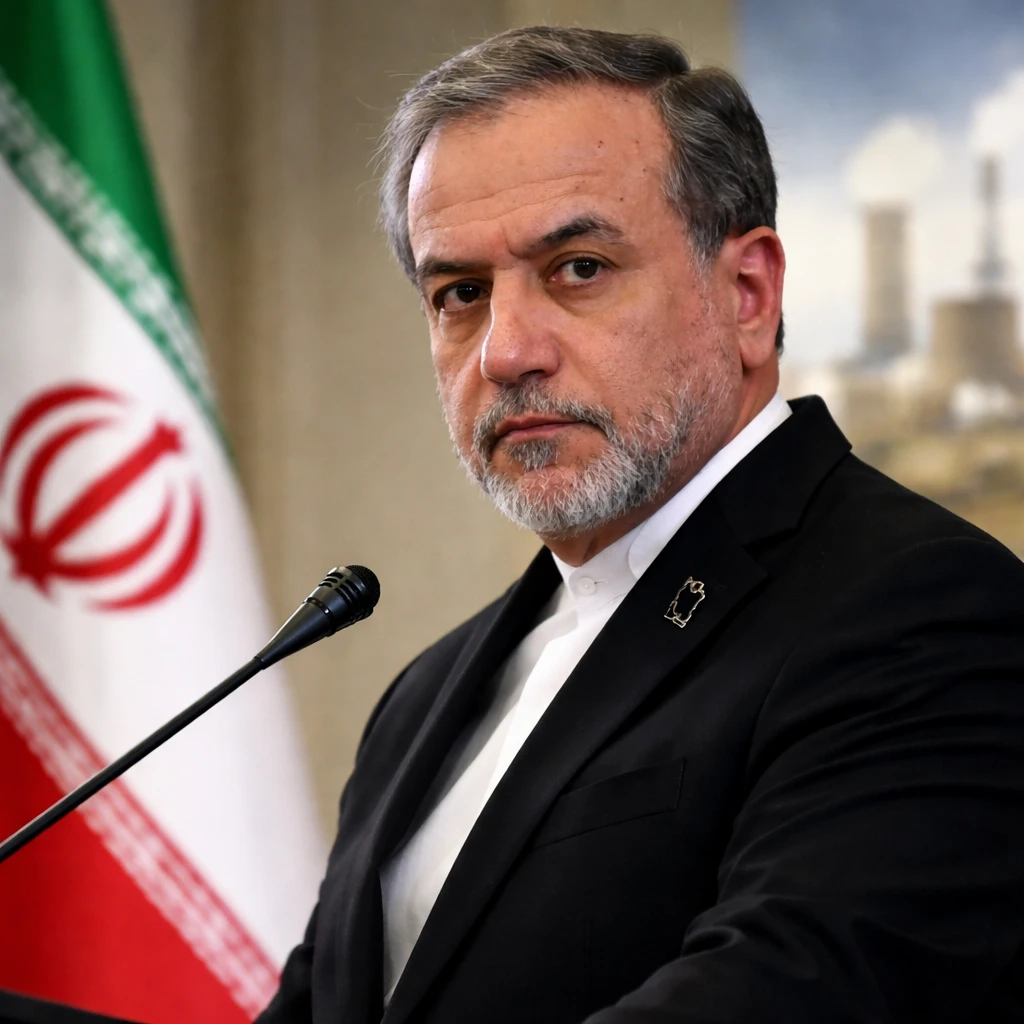

In the midst of ongoing diplomatic engagements and regional tensions, Iran’s leading diplomat emphasized the country's resilience and unwillingness to acquiesce to international pressures, particularly from dominant global actors. Speaking before a gathering of diplomats in Tehran, Foreign Minister Abbas Araghchi articulated a robust position on Iran’s right to enrichment of uranium, highlighting this as a non-negotiable element of national sovereignty.
Araghchi characterized Iran’s power as rooted in its capacity to “say no to the great powers,” directly addressing the complexities surrounding its nuclear ambitions. This stance follows recent negotiations with the United States and emerges in the context of widespread protests within Iran. The foreign minister’s comments underscore the ongoing challenges in discussions about Iran’s nuclear program, a central issue for the U.S. administration under President Donald Trump, whose military actions in June included strikes on Iranian atomic installations during conflict involving Israel.
Anticipation is growing around Israeli Prime Minister Benjamin Netanyahu’s scheduled trip to Washington, where Iran’s nuclear dossier is expected to dominate the agenda. The Israeli government has flagged these talks as crucial in addressing the security concerns posed by Iran’s activities.
Meanwhile, President Masoud Pezeshkian expressed cautious optimism about recent meetings held in Oman with American officials, describing them as a progressive step in dialogue. Despite this, the overtly firm rhetoric from Araghchi suggests persistent hurdles in reconciling positions. This backdrop has prompted the United States to bolster its military presence in the Middle East, deploying the aircraft carrier USS Abraham Lincoln along with supporting vessels and aircraft to exert pressure and maintain readiness for possible escalation should the situation deteriorate.
Foreign Minister Araghchi articulated what he framed as the fundamental secret to Iran’s power: a steadfast resistance to coercion and external domination. He stated, “They fear our atomic bomb, while we are not pursuing an atomic bomb. Our atomic bomb is the power to say no to the great powers. The secret of the Islamic Republic’s power is in the power to say no to the powers.” This rhetorical use of the term “atomic bomb” highlights the symbolic assertion of strength rather than a literal armament pursuit, aligning with Iran’s longstanding claims of a peaceful nuclear program.
While the international community, including the International Atomic Energy Agency, acknowledges Iran’s previous nuclear activities which may have had military dimensions up to 2003, Tehran continues to stress its adherence to a religious decree, or fatwa, from Supreme Leader Ayatollah Ali Khamenei forbidding nuclear weapons development. Nevertheless, Iranian officials have, at times, indicated a potential to seek weapons-grade capability, complicating the dialogue with Western nations.
President Pezeshkian, who reportedly received endorsement from Khamenei to engage in talks with the United States, communicated through official channels that the recent negotiations, facilitated by friendly regional governments, marked progress toward peaceful resolution. He emphasized that Iran seeks respectful interaction and rejects any dialogue framed by force or intimidation.
Details regarding the scheduling or location of subsequent negotiation rounds remain undefined. President Trump expressed a tentative positive outlook following the Oman discussions, suggesting that Iran appears eager to reach an accord.
During the diplomatic meetings, U.S. Navy Admiral Brad Cooper, commander of the American Central Command, was present in Oman, signaling a demonstration of U.S. military capabilities alongside diplomatic efforts. Following the talks, Cooper accompanied senior U.S. officials, including special envoy Steve Witkoff and Jared Kushner, to the USS Abraham Lincoln located in the Arabian Sea. The visible military presence reinforced the U.S. readiness to act, a reality underscored by Araghchi’s reference to prior U.S. strikes during negotiations, highlighting the precarious nature of the talks and the uncertainty regarding their future trajectory.