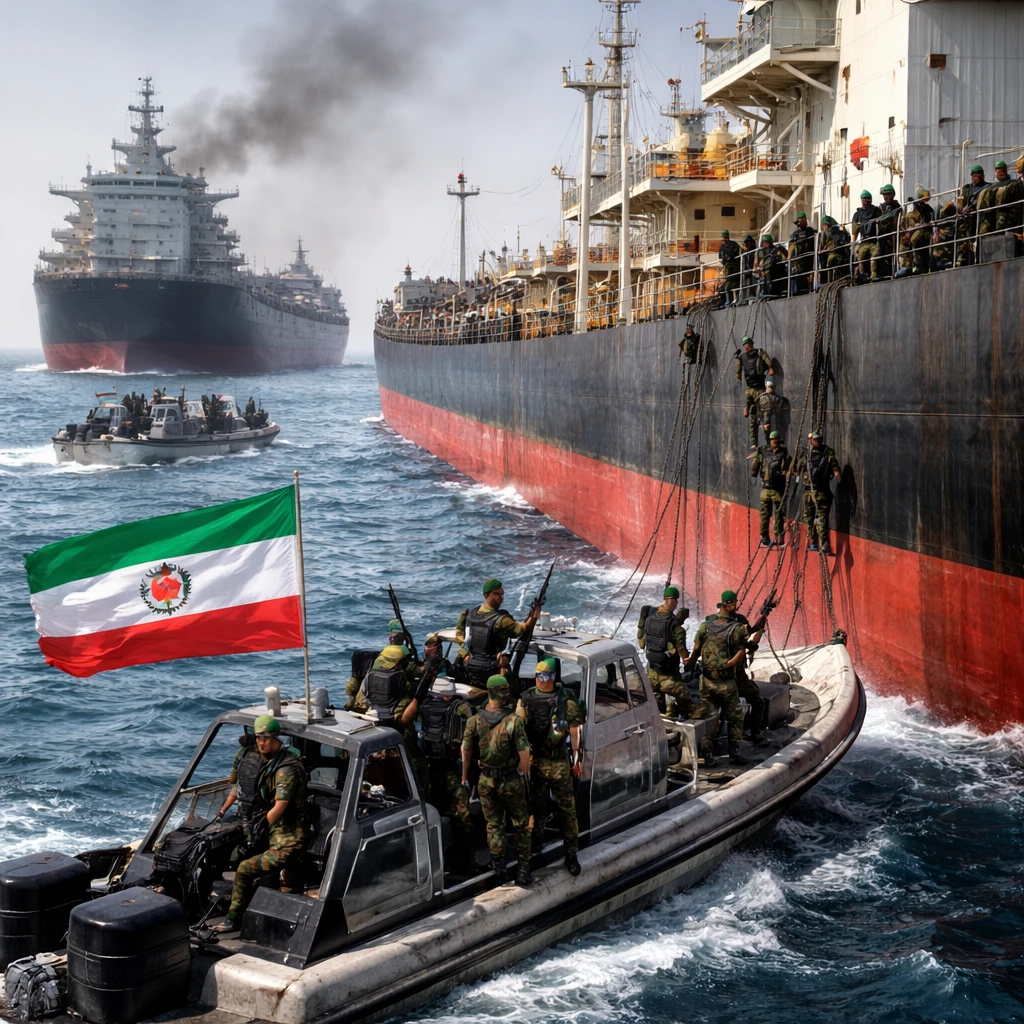

On Thursday, Iranian authorities confiscated two oil tankers operating in the Persian Gulf, asserting that the ships were engaged in unauthorized fuel smuggling activities. This information was disseminated via Iranian state television, though officials refrained from disclosing the nationalities or flags of the vessels involved.
General Heidar Honarian Mojarrad, representing the Revolutionary Guard's naval command in the region, reported that these tankers were transporting around 1 million liters (roughly 6,300 barrels) of fuel, including diesel. The interception occurred close to Farsi island, from which the vessels were escorted to the port city of Bushehr. Regarding the crews, 15 individuals aboard these tankers remain detained under judicial oversight, with no further identification of their citizenship disclosed.
This event is part of a pattern of Iranian actions targeting maritime vessels, particularly those carrying oil, on suspicions of illicit activity within the region. Notably, in the previous months of November and December, Iran captured separate foreign oil tankers while navigating the strategically critical Strait of Hormuz, resulting in detention of their respective crews.
Regional and international observers have attributed a series of maritime aggressive acts to Iranian forces, including limpet mine attacks damaging several tankers in 2019 and a lethal drone strike in 2021 against an Israeli-affiliated oil tanker, which resulted in casualties among European crew members. These hostilities unfolded subsequent to the United States’ unilateral withdrawal from the 2015 nuclear agreement with Iran during President Donald Trump's administration.
The timing of these seizures is significant, occurring just prior to scheduled nuclear diplomacy talks between the United States and Iran set to take place in Muscat, Oman. These negotiations are colored by elevated tensions stemming from Iran’s recent violent suppression of widespread protests within its borders.