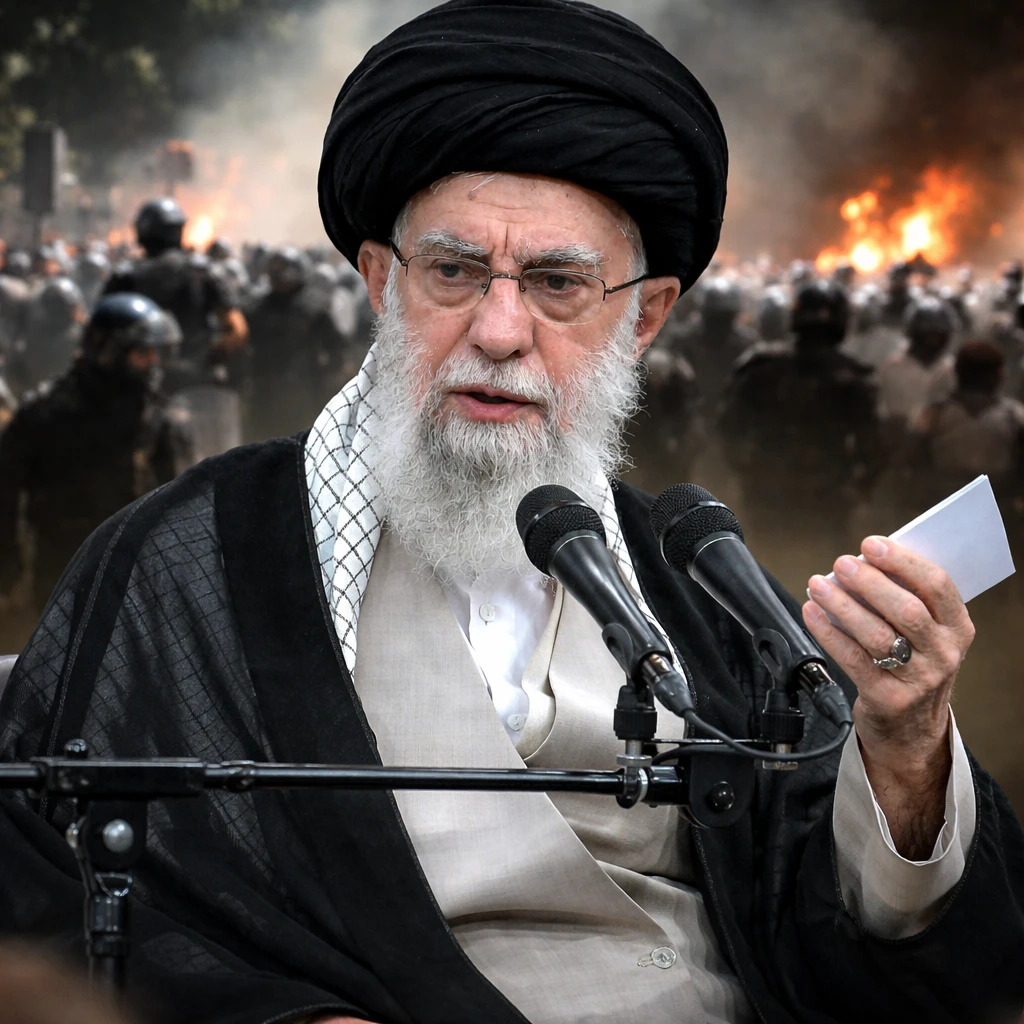

Iran’s top judicial authority declared on Wednesday that suspects detained during the widespread protests would face accelerated trials and executions, a stance maintained despite recent cautions from U.S. President Donald Trump. Gholamhossein Mohseni-Ejei emphasized the urgency for swift judicial action in a video circulated on Iranian state media platforms, underscoring the necessity of prompt measures to retain impact.
The decree comes amidst severe unrest across Iran, originally sparked on December 28 by the collapse of the national currency, the rial. The deteriorating economic conditions, exacerbated by international sanctions targeting Iran’s nuclear initiatives, have fueled widespread discontent.
Security forces’ efforts to suppress these protests have been brutal, resulting in at least 2,571 deaths as reported by the U.S.-based Human Rights Activists News Agency. This figure surpasses prior unrest in recent history, rivaling turmoil last seen during the Islamic Revolution of 1979. The majority of fatalities, numbering over 2,400, are alleged protestors; the remainder includes security personnel and uninvolved civilians, including children.
A mass funeral ceremony for approximately 100 security force members who perished during the demonstrations was held on Wednesday, drawing tens of thousands of mourners. Attendees carried Iranian flags and portraits of Supreme Leader Ayatollah Ali Khamenei, while caskets draped with the national flag were stacked several layers high and adorned with flowers and images of the deceased.
Despite the significant security presence, including plainclothes operatives and paramilitary forces barred from active patrols, fear persists among citizens. Many neighborhoods remain tense, with reports of gunfire and sporadic protests contributing to a climate of apprehension. Schools remain closed as parents express concern over sending children back to classes.
Individuals such as Ahmadreza Tavakoli, 36, who witnessed the demonstration in Tehran, describe the scene turning chaotic when security forces brandished firearms in response to initially peaceful protests. "The people do not have guns," he remarked, contrasting the protestors' intent with the lethal response by authorities.
In response to the unrest, Iran imposed a near-total shutdown of internet and international telephone services on January 8. The government partially restored outbound calling within Iran starting Tuesday, but incoming international calls remain blocked. In defiance of these restrictions, activists report that the satellite internet company Starlink has been offering complimentary access to Iranians, enabling some to bypass government-imposed communication blackouts. Mehdi Yahyanejad, a Los Angeles-based activist active in facilitating Starlink access inside Iran, confirmed the operability of these services through recent tests. However, state security personnel appear to have intensified efforts to locate and confiscate Starlink equipment, particularly satellite dishes, during raids on residences in northern Tehran.
An anonymous diplomat from an Arab Gulf nation indicated that several key Middle Eastern governments have counseled the United States against initiating military conflict with Iran at this juncture, citing apprehensions over the potentially catastrophic repercussions for regional stability.
U.S. President Donald Trump has issued stern warnings of severe consequences should Iranian authorities carry out executions of detained protestors, pledging substantive responses to such actions. Nonetheless, Iranian judicial authorities maintain their commitment to expeditious legal proceedings and capital punishments, asserting these as necessary to quell unrest decisively and promptly.
The present crackdown and judicial declarations represent a critical juncture for Iran’s sociopolitical environment. Beyond the direct human toll, the ongoing protests, communications shutdowns, and judicial measures create significant uncertainty impacting economic sectors reliant on regional stability, such as energy and infrastructure. Communication disruption complicates independent verification of casualty figures and obscures the full scope of the unrest.