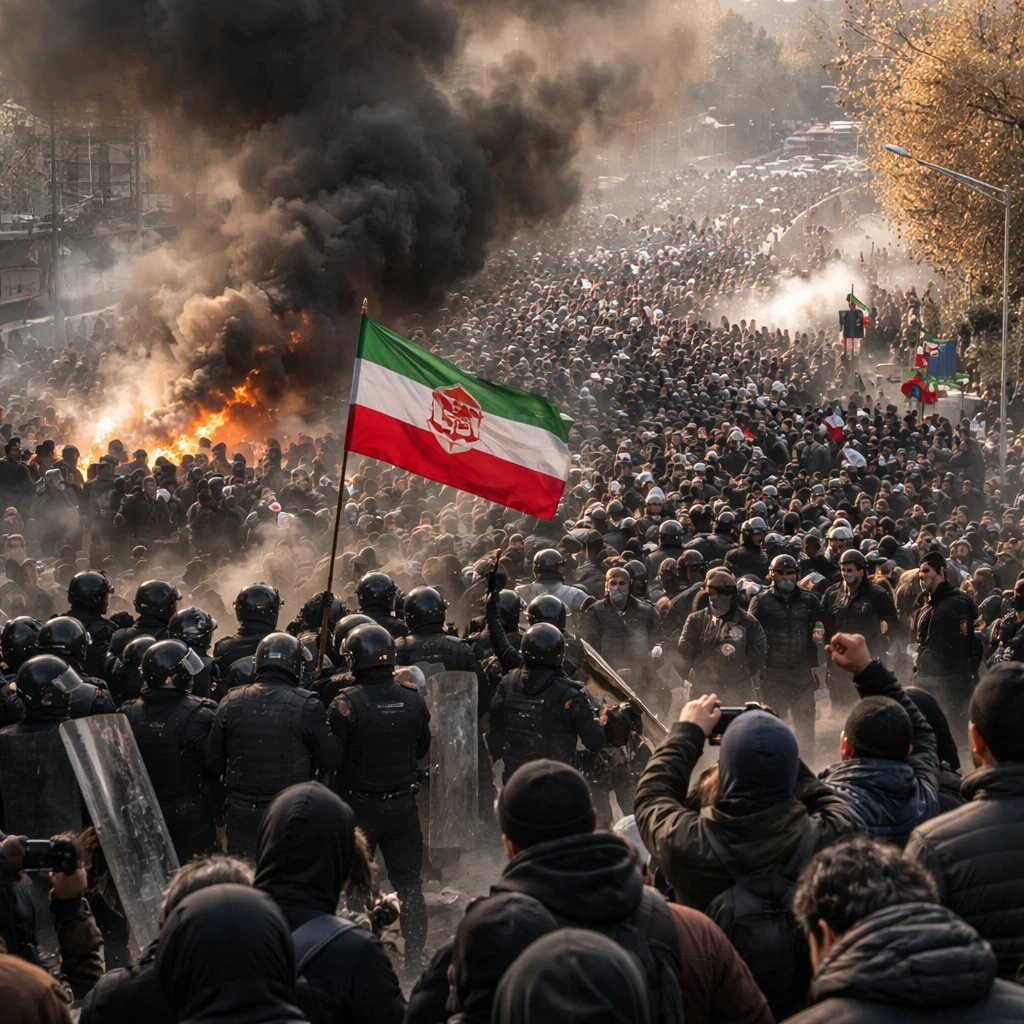
Reports from human rights activists indicate that the death toll from protests erupting across Iran has now surpassed 2,571 individuals, highlighting the extensive violence during these events. This figure, reported early Wednesday by a U.S.-based activist news agency focused on human rights, notably exceeds casualties from any recent periods of turmoil in Iran and recalls the upheaval surrounding the 1979 Islamic Revolution.
In a rare acknowledgment, Iranian state television broadcasted comments from an official confirming multiple fatalities, referring to them as 'martyrs.' The official explained that the severity of the injuries had delayed public disclosure of numbers. However, this admission came only after the activist groups released their casualty figures.
The protests, which began slightly more than two weeks ago, arose initially as a reaction to Iran's economic crisis but swiftly grew into a broader confrontation with the country's theocratic regime, with particular opposition directed at 86-year-old Supreme Leader Ayatollah Ali Khamenei. Recent images obtained in Tehran showcase graffiti and chants calling for Khamenei's death, an offense punishable by death under Iranian law.
Following the release of the new mortality estimates, former U.S. President Donald Trump posted on the social media platform Truth Social, urging Iranian citizens to continue protesting and seize control of their institutions. He also announced a suspension of all meetings with Iranian officials until the killings of demonstrators ceased, stating that aid was en route.
Nevertheless, Trump's later comments to reporters indicated that his administration awaited more precise data on protester deaths prior to taking further actions. He condemned the behavior of Iran's security forces but admitted the figure was unconfirmed. Iranian officials warned the United States against intervention; the Secretary of Iran's Supreme National Security Council, Ari Larijani, accused Trump and Israeli Prime Minister Benjamin Netanyahu of being principal perpetrators against the Iranian people.
The activists detailed that among the dead, 2,403 were protesters while 147 were government affiliates. The casualties also included twelve children and nine civilians reportedly uninvolved in the disturbances. Detentions have exceeded 18,100 people, according to the group.
Massive restrictions on internet access within Iran have complicated efforts to independently verify the protests' scope and the casualty count from abroad. The Iranian government has withheld official death toll numbers.
Skylar Thompson, speaking for the human rights news agency, described the toll as staggering, especially since in just two weeks, it was quadruple the number of deaths recorded during the 2022 protests sparked by Mahsa Amini’s death. He suggested the death count was likely understated.
Iranians recently regained the ability to place international phone calls after a period of communication isolation. Witnesses described a heavy security presence in Tehran’s city center, with government buildings set ablaze, ATM machines destroyed, and few pedestrians on the streets. Concerns also persist about potential U.S. military action. A local trader labeled Mahmoud expressed skepticism about foreign interests aligning with those of the Iranian populace, commenting on the conflicting reactions to Trump’s statements.
Reza, a taxi driver, reported that despite a sense of despair among the population, particularly youth, the commitment to ongoing protests remains.
Several Tehran residents successfully contacted news reporters on Tuesday, though outbound communication from the journalist office in Dubai was not possible. Messaging services remain down, and internet users in Iran are restricted to government-approved domestic websites without access to foreign ones.
Eyewitness accounts describe riot police equipped with helmets, armor, batons, shields, shotguns, and tear gas launchers maintaining order at major intersections. Basij forces, part of the Revolutionary Guard volunteers armed with guns and sticks, were also present, alongside plainclothes security personnel in public areas.
During the unrest, security forces arrested individuals arbitrarily, and various banks and government offices suffered fire damage. The financial sector faces operational challenges due to internet outages. Despite limited foot traffic, shops remain open, and authorities reportedly instructed merchants in Tehran's Grand Bazaar to resume business, reflecting attempts to restore normalcy.
Authorities appeared to be targeting satellite-based internet hardware, with reports of raids in northern Tehran of apartments housing satellite dish antennas. Despite being illegal, satellite dishes are prevalent, and enforcement had typically been lax until recent developments.
Public defiance extended to confrontations with plainclothes officers detaining civilians arbitrarily. State media announced morgue and funeral services would be free, possibly responding to prior instances of excessive fees amid the crackdown.
In state television broadcasts, Supreme Leader Khamenei commended tens of thousands participating in government-backed rallies nationwide. He framed these demonstrations as a message to U.S. politicians to cease what he branded deceit and warned against trusting traitorous mercenaries. Chanting crowds expressing hostility toward the U.S., Israel, and general enemies of God were showcased. Iran’s attorney general threatened that anyone partaking in the protests would be branded “enemies of God,” a charge carrying the death penalty.