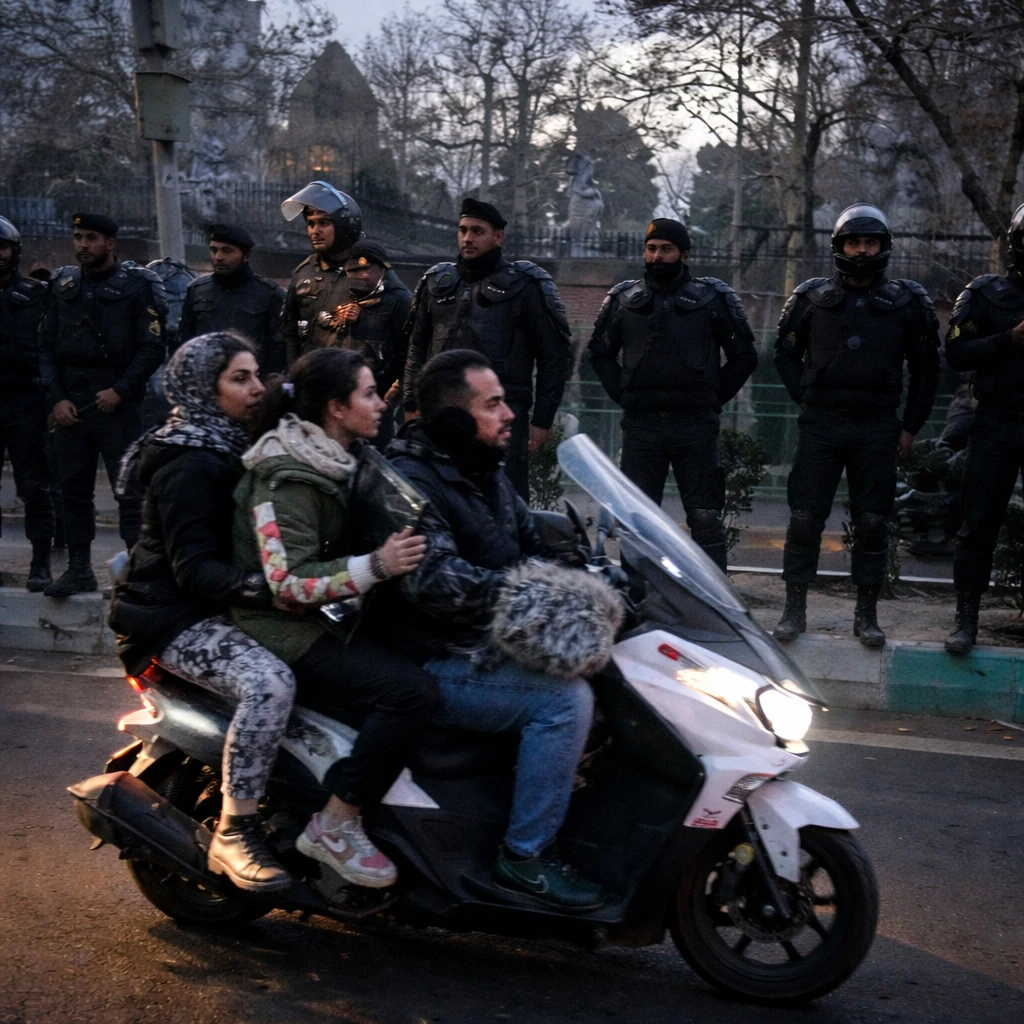

Across Iran, nationwide demonstrations challenging the ruling theocracy have been noticeably subdued one week after the government intensified its crackdown, cutting off the country from global communication channels. Activists estimate that at least 2,615 individuals have been killed in the government's response. Observers in Tehran report an absence of fresh signs of unrest such as bonfires or street debris in recent mornings, and a marked decrease in gunfire that had previously been frequent over several nights.
Simultaneously, Iranian state media reports successive waves of arrests targeting individuals labeled as “terrorists,” with a particular focus on locating Starlink satellite internet devices used to transmit protest materials externally. Justice Minister Amin Hossein Rahimi was quoted by the judiciary’s Mizan news agency stating, "Since January 8, we have witnessed an outright war, and anyone involved in the gatherings since then is deemed a criminal."
Meanwhile, Iran’s domestic grip coincides with rising international tensions. Early Thursday, the Iranian government closed its airspace for over four hours without providing official reasons. This move mirrors prior closures during periods of conflict with Israel, including a 12-day war in June and exchanges during the Israel-Hamas conflict. Following this shutdown, U.S. authorities relocated some personnel from Qatar's Al Udeid Air Base and cautioned diplomatic staff in Kuwait to avoid areas housing American troops.
The temporary airspace closure led international carriers to divert their flights around Iranian territory both north and south. Domestic flights resumed shortly after 7 a.m. local time following extension of the closure. Iranian state television later issued a statement from the Civil Aviation Authority affirming that the nation’s skies were open for incoming and outgoing flights, although this announcement did not address the preceding airspace restrictions directly.
Iran's history of abrupt airspace closures during times of conflict has caused significant ripple effects on global aviation. Safety advisory platform SafeAirspace noted that numerous airlines have curtailed or suspended flights over Iran amid fears of heightened military activity, including potential missile launches or increased air defenses, which could lead to possible misidentification of civil aircraft. Notably, Iran misidentified and shot down Ukraine International Airlines Flight PS752 in 2020, resulting in the death of all 176 passengers and crew aboard. Iranian authorities initially refuted accusations of downing the plane before eventually acknowledging responsibility.
Within Iran, the volume of protest-related videos disseminated internationally has sharply declined, suggesting the effectiveness of the increased security clampdown. However, global demonstrations in solidarity with the protesters persist worldwide, drawing heightened focus to the crackdown. The United Nations Security Council has convened an emergency meeting regarding Iran at the behest of the United States.
U.S. President Donald Trump issued ambiguous statements about forthcoming actions against Iran, indicating halted plans for executions within the country but providing limited detail. This shift came after Trump had previously promised aid to protesters and pledged appropriate responses to Iran's lethal suppression efforts. Iranian Foreign Minister Abbas Araghchi called for negotiation as a preferable alternative to conflict, despite expressing skepticism about constructive past dealings with the U.S. When asked about Trump’s statements, Araghchi emphasized that diplomacy should prevail over war.
The Iranian judiciary signaled an expedited process to punish thousands of detained individuals. Human rights organizations warn that executions, including hangings, may be imminent for protest detainees. The security response, which reportedly has claimed over 2,615 lives, exceeds casualty numbers from other civil unrest episodes in Iran over recent decades, invoking memories of turmoil surrounding the 1979 Islamic Revolution.
The U.S.-based Human Rights Activists News Agency, which has maintained a two-decade record of reliable documentation during Iranian protests through an extensive domestic activist network, provided the casualty figures. Verification of these numbers independently remains difficult due to severely limited communications within Iran. The Iranian government has yet to publicly release consolidated statistics on protest-related deaths.