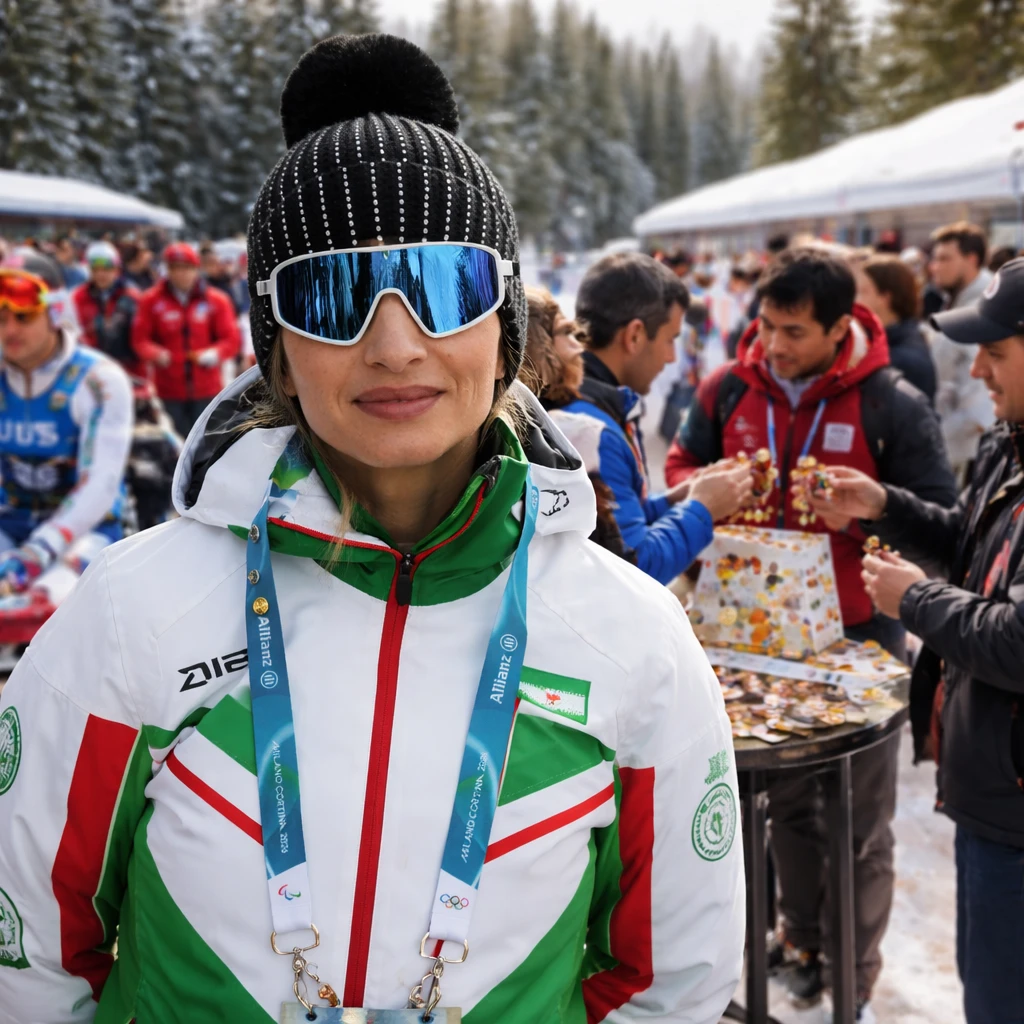

During the 2026 Winter Olympic Games situated in the Cortina d’Ampezzo Olympic and Paralympic Village, a poignant narrative unfolded involving the United States’ veteran skier Lindsey Vonn and the Iranian women’s Alpine skiing coach, Mitra Kalhor. Prior to Vonn’s severe crash on Sunday, which resulted in a fractured leg after she competed on a severely injured left knee, Kalhor shared her profound respect and admiration for the American athlete.
At a media interaction on Thursday, Kalhor described Vonn as her "superhero," highlighting a bond that transcends national affiliations amid the often tense political climate between their countries. Notably, Kalhor had encountered Vonn previously at world championships, and she expressed a keen desire to obtain a pin from Vonn, underscoring the valued Olympic tradition of exchanging team pins among athletes.
Pin trading, a custom with origins dating back to the modern Olympic revival in 1896 by Pierre de Coubertin, remains a visible symbol of goodwill and mutual respect. Athletes across countries display their collections on lanyards and exhibit their pins via social media platforms. At the top of Cortina’s Olympia delle Tofane course — the venue of the women’s downhill race — skiers once delayed by fog engaged in enthusiastic pin exchanges.
Kalhor’s Iranian pins have become notably scarce during the Games. Initially possessing approximately thirty pins, she reported nearing depletion by Thursday. Iran's delegation is notably small, featuring only four athletes, and just a single competitor present in Cortina. This scarcity has consequently made Iran’s pins highly sought after and exceptional among the global athletic community.
Unexpectedly, Kalhor remarked on the surprising enthusiasm surrounding her nation’s pins, emphasizing that despite Iran’s absence of Winter Olympic medals, the pins garnered widespread interest and admiration from fellow athletes and teams. She found it remarkable and heartening that so many sought to trade and possess her country’s pins.
Among those captivated by the Iranian pin was American bobsledder Boone Niederhofer, who specifically searched for Iranian skier Sadaf Savehshemshaki to acquire such a rare token. Niederhofer conveyed that the act of pin trading enables interactions between athletes who may otherwise never meet. However, as of Sunday, he had been unsuccessful in finding an Iranian athlete to trade with.
The broader pin trading culture within the Olympic Village extends across numerous nations and disciplines. For example, Chinese athletes brought an array of three distinct pin designs that featured the Olympic mascot Tina alongside a panda — pins prized for their aesthetic appeal. Similarly, a pin from the Netherlands adorned with miniature traditional wooden clogs drew admiration for its distinctiveness. Pins from countries with smaller delegations, such as the Philippines, were also highly coveted.
Notable among the athletes embracing this tradition was Kailey Allan, who represents Canada in the inaugural women's doubles luge event. Prior to the Games, Allan crafted hundreds of pins herself, emphasizing women in sports by depicting athletes with ponytails. She observed that pins had become a form of currency throughout the Olympic milieu, touting herself as the unofficial "pin trading queen."
In a touching anecdote from the village, Kalhor, who has transitioned from athlete to coach, was approached by an Italian security guard who requested a pin while she was at a popular outdoor coffee spot. Despite it being her last remaining Iranian pin and the guard having none to offer in return, Kalhor gave it willingly, expressing her happiness that all her pins had been distributed early in the competition. This act symbolizes the spirit of generosity and celebration that pin trading represents.
The process of exchanging pins is straightforward yet sociable. Participants customarily introduce themselves, share experiences about their sporting careers and journeys to the Olympics, and then proceed with the trade. This facilitates cross-cultural interaction and enhances social bonds within the global athletic community.
Beyond athletes and coaches, pin trading also involves Olympic staff, volunteers, media personnel, and collectors who actively seek to add to their collections. This widespread participation underlines the pervasive appeal and symbolic significance of the pin exchange tradition at the Games.
Overall, the Olympics demonstrate the power of sport to foster unity and mutual appreciation amid diverse national backgrounds and even in the face of serious adversity, such as the injury suffered by a celebrated competitor like Lindsey Vonn.