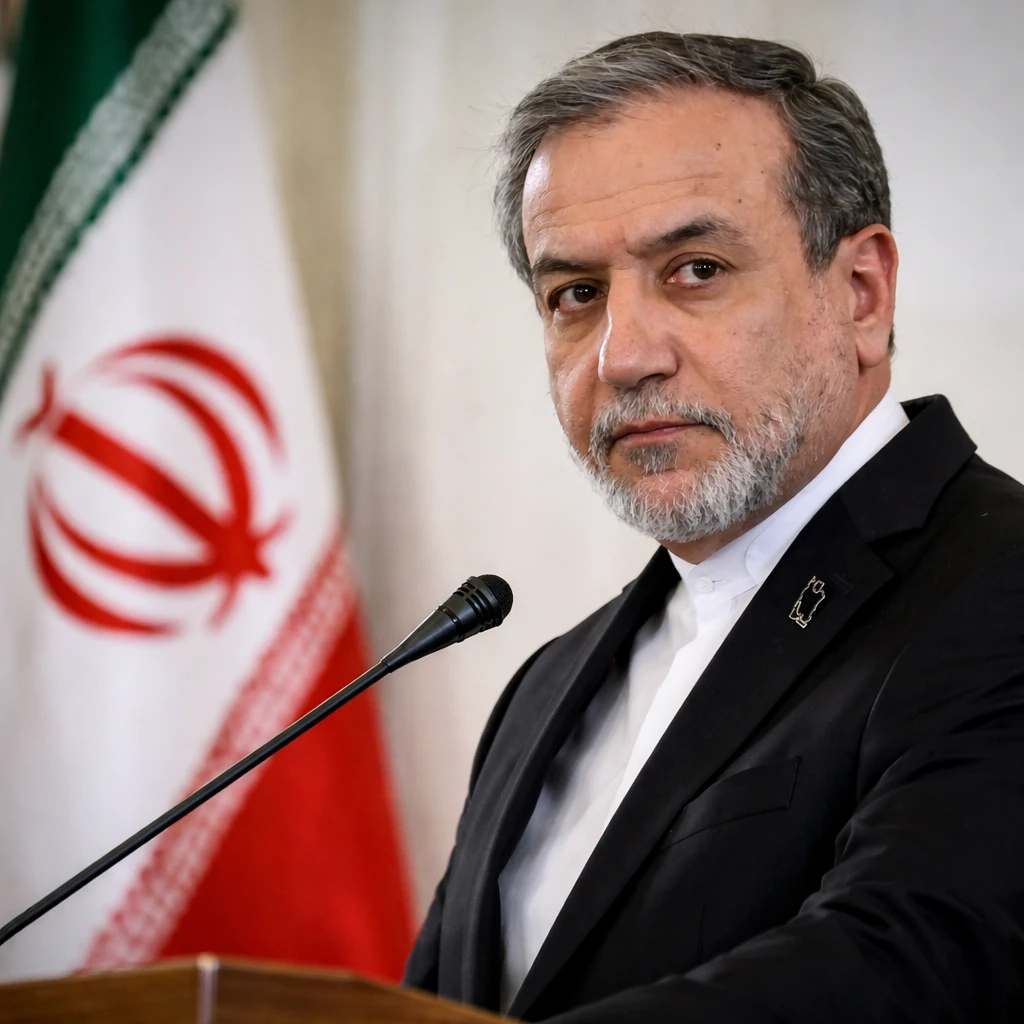
At a recent diplomatic summit in Tehran, Iran's Foreign Minister Abbas Araghchi asserted the strength of the Islamic Republic lies in its resolute ability to say "no" to major world powers. This declaration, made shortly after Iran engaged in nuclear negotiations with the United States and amid ongoing nationwide protests, underscores Iran's rigid stance on maintaining its nuclear enrichment capabilities.
Araghchi emphasized that Iran insists on the right to enrich uranium, a subject of intense dispute with the administration of U.S. President Donald Trump. Notably, Trump ordered airstrikes against Iranian nuclear facilities in June amid a short but intense conflict with Israel, further escalating tensions. The Israeli Prime Minister, Benjamin Netanyahu, is scheduled to visit Washington this week, where discussions are expected to center on Iran's nuclear ambitions, according to the Israeli Prime Minister's office.
In a separate development, Iran has sentenced Nobel Peace Prize recipient Narges Mohammadi to over seven years in prison following her hunger strike, supporters reported after consulting her defense attorney. Mohammadi's lawyer, Mostafa Nili, confirmed via social media platform X that she received six years for "gathering and collusion" and an additional one and a half years for propaganda offenses, alongside a two-year travel ban. Iranian officials have not made statements regarding the sentencing. Mohammadi's advocates report she has been on hunger strike since early February.
Despite Iranian President Masoud Pezeshkian's positive remarks about the nuclear dialogue with the U.S. on Friday in Oman, describing it as a progressive step, foreign minister Araghchi's comments reveal the challenges ahead. The U.S. has deployed the USS Abraham Lincoln aircraft carrier, alongside warships and military aircraft, to the Middle East as a show of power intended to pressure Iran toward a deal and to maintain the capability to strike if necessary.
"The secret to the Islamic Republic of Iran's strength lies in its ability to withstand harassment, domination, and pressure from others," Araghchi stated. He added, "They fear our atomic bomb, though we are not pursuing one. Our atomic bomb is the power to say 'no' to great powers. The secret of the Islamic Republic's strength is in the ability to say 'no' to powers."
The use of the term "atomic bomb" by Araghchi likely carries symbolic weight rather than an admission of nuclear armament ambitions. Iran maintains its nuclear program is for peaceful purposes, though Western governments and the International Atomic Energy Agency note that Iran previously operated a military nuclear project until 2003. Iran has enriched uranium up to 60% purity, narrowly short of weapons-grade levels (90%), making it unique among non-nuclear-armed states. Officials have at times threatened nuclear development even as Iran's supreme leader, Ayatollah Ali Khamenei, has issued a religious decree forbidding the production of nuclear weapons.
Following instructions from Pezeshkian, who likely received endorsement from Khamenei, Araghchi engaged in dialogue with U.S. representatives. On social media, Pezeshkian described these talks as "a step forward" facilitated by efforts of friendly regional governments and reaffirmed peaceful resolution through dialogue as Iran's preferred strategy. He stressed Iranians respond respectfully but reject coercive approaches.
Details regarding possible subsequent negotiation rounds remain unclear. After the discussions on Friday, President Trump provided limited information but remarked that Iran appeared eager to reach an agreement, "as they should be."
During the talks, U.S. Navy Admiral Brad Cooper, Commander of U.S. Central Command, was present in Oman, a likely deliberate signal of U.S. military presence in the region. Cooper accompanied U.S. Special Envoy Steve Witkoff and presidential advisor Jared Kushner to the USS Abraham Lincoln in the Arabian Sea following the negotiations.
Araghchi acknowledged the threat of U.S. military action seriously, a concern shared by many Iranians amid recent weeks of heightened tensions. He highlighted that despite numerous negotiation attempts last year, the U.S. launched attacks during talks. "If one steps back in negotiations, it is uncertain how far consequences might extend," he cautioned.