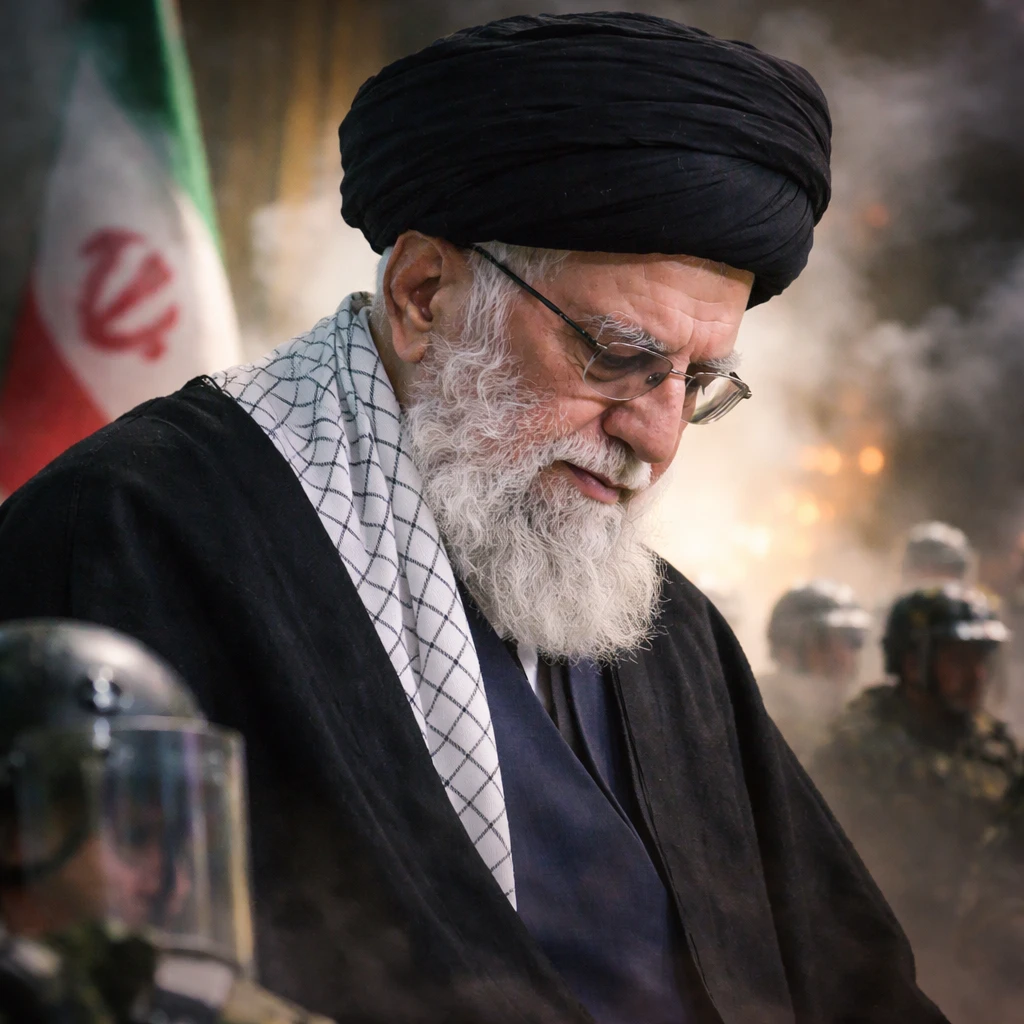
In the aftermath of sweeping protests across Iran, Supreme Leader Ayatollah Ali Khamenei has asserted control through the most severe clampdown witnessed during his nearly 40-year leadership. Now 86 years old, Khamenei faces the precarious situation of a nearby American naval fleet and the risk of a US attack. He has cautioned that any strike ordered by President Donald Trump could precipitate widespread conflict throughout the region. Concurrently, Khamenei’s administration has seemingly shifted strategy by consenting to nuclear discussions with the US, marking a significant departure from his earlier refusal to engage in such negotiations.
The brutal suppression of the demonstrations reveals the extent of threat perceived by Khamenei and Iran’s ruling elite from mass public discontent. Persistent sanctions, combined with systemic economic mismanagement and corruption, have severely undermined Iran’s economic stability, especially deteriorating the conditions of the formerly robust middle class. The protest chants denouncing Khamenei highlighted escalating resentment toward the clerical government amid economic grievances.
Beyond internal unrest, Iran’s leadership contends with military setbacks after intensive bombings by Israeli and US forces during the prior summer’s brief conflict. These strikes inflicted substantial damage on Iran's nuclear infrastructure, missile capabilities, and armed forces. Additionally, the country’s regional proxy alliances, notably including Hamas in Gaza and Hezbollah in Lebanon, collectively referred to as the “Axis of Resistance,” have eroded over recent years, weakening Tehran’s influence across the Middle East.
Nevertheless, the severe domestic clampdown underscores the stringent control Khamenei and the Islamic Revolutionary Guard Corps (IRGC) wield. The government’s response to the protests involved thousands of deaths, massive arrests, and an extensive internet shutdown, largely severing Iranians’ access to outside communication for weeks.
Upon ascending to power in 1989, Khamenei faced skepticism due to his lower clerical status compared to his predecessor, Ayatollah Ruhollah Khomeini, noted for his charismatic leadership during the Islamic Revolution. Despite these initial doubts, Khamenei has governed significantly longer and deeply entrenched clerical domination within the country’s political framework.
Under his tenure, Iran’s political system has solidified clerical supremacy, positioning Shiite Muslim clerics at the apex. This religious hierarchy directs political, military, and intelligence institutions, demanding their adherence. Hardline factions view Khamenei as the supreme authority subordinate only to divine sanction.
Simultaneously, Khamenei has expanded the IRGC's role, elevating it as Iran’s paramount military and political force. The Guards oversee elite military units, Iran’s ballistic missile arsenal, and have developed a substantial economic network. This dual military-economic powerbase has become a critical instrument to uphold Khamenei’s rule through loyal enforcement capabilities.
Early challenges to Khamenei’s authority arose from reformist movements that briefly gained traction in parliament and the presidency, advocating increased power for elected officials. However, hardliners, supported by Khamenei, curtailed these reforms through unelected clerical bodies, systematically excluding reformist candidates from elections. These political setbacks led to recurring waves of public protest, which security forces consistently suppressed.
Major protests date back to 2009 amid disputed elections, with further widespread unrest in 2017 and 2019 fueled by economic hardships, followed by demonstrations in 2022 sparked by the death of Mahsa Amini in custody. These crackdowns resulted in hundreds of fatalities and numerous reports of detainee abuse, including allegations of torture and sexual violence within prisons.
The current period of crackdown has surpassed previous episodes in severity. The protests, originating in December in Tehran’s traditional Bazaar amid the national currency’s steep decline to a historic low, rapidly spread nationwide. Khamenei’s declaration that rioters be decisively quelled effectively sanctioned the use of lethal force. Subsequent mass protests on January 8 and 9 witnessed unprecedented levels of security force firepower against demonstrators, resulting in casualties documented by activists exceeding 6,700, with Iran’s official figures citing over 3,100 deaths.
Historically, Iranian authorities have sought to mitigate public dissent by easing some social regulations or recognizing economic difficulties. In contrast, Khamenei has escalated his stance, labeling the protests a "coup" and overseeing extensive detentions estimated in the tens of thousands.
In a significant policy development, Khamenei’s administration has agreed to engage in nuclear discussions with the US, likely an effort to delay or prevent military conflict or a calculation that US threats lack follow-through. Middle Eastern nations including Turkey, Egypt, Oman, Pakistan, Qatar, Saudi Arabia, and the UAE have facilitated efforts to initiate these talks, which may occur imminently. Despite this, fundamental differences remain, with Iran firmly opposing US demands for a cessation of all nuclear enrichment and surrender of uranium reserves. The US position on the precise objectives of any strike remains unclear, initially motivated by stated concerns over human rights but now leveraged to press Iran into substantive nuclear negotiations.
Within and outside Iran, some hope for US military intervention to dismantle Khamenei’s regime; however, such action would likely require extensive military operations rather than limited airstrikes. There is also significant opposition to foreign-imposed regime change, including among some dissidents.
The prospect of Khamenei’s removal also raises critical succession issues. Officially, a clerical panel is responsible for selecting the next Supreme Leader, with several prominent Shiite clerics considered candidates, including Khamenei’s son. However, the growing influence of the Revolutionary Guard suggests it could assert greater overt control if a power vacuum emerges, potentially inciting internal conflict over governance of Iran’s populous, resource-rich nation.