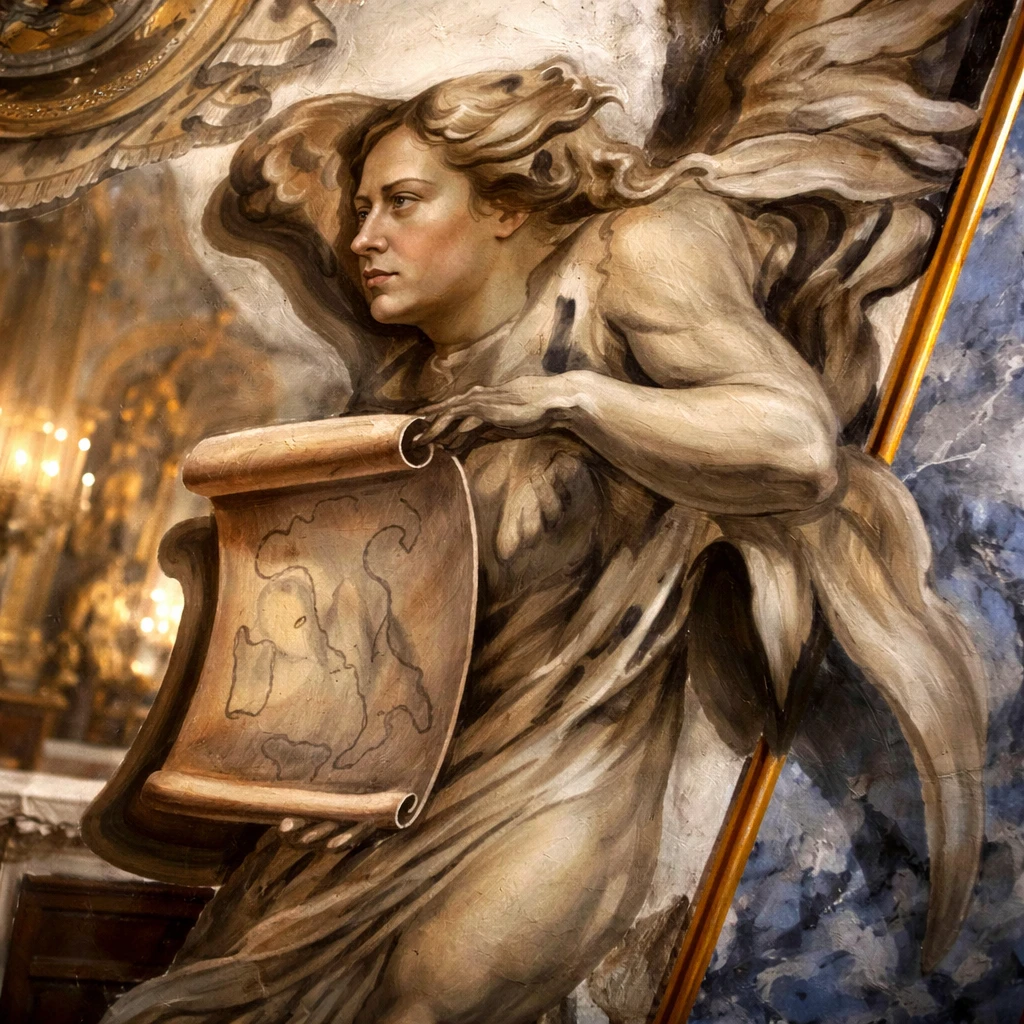

In Rome, a recent restoration in the Basilica of San Lorenzo in Lucina has become the center of controversy after a cherub depicted in the church was perceived to bear a strong resemblance to Italy's Prime Minister, Giorgia Meloni. This resemblance has instigated official probes by both the diocese of Rome and the Italian Culture Ministry into the renovation work conducted at the ancient basilica.
The basilica, located near the Spanish Steps on one of Rome's most prestigious piazzas, dates back to 440 AD when it was consecrated by Pope Sixtus III. Over the centuries, it has undergone several reconstructions and expansions and is currently maintained by Italy's Interior Ministry.
The cherub in question appears in a side chapel near the main altar and has attracted crowds of visitors eager to view and photograph it, sometimes even disrupting church services. This newfound attention has added to the basilica's existing prominence as one of Rome's oldest churches.
Prime Minister Meloni herself addressed the situation on social media, downplaying the similarities by humorously stating, "No, I definitely don’t look like an angel," accompanied by an emoticon and an image of the cherub.
This particular cherub was part of a 2000 refurbishment of a front chapel, which included a bust of Umberto II, Italy's last king before the post-World War II abolition of the monarchy. The cherub holds an Italian map and is positioned seemingly in an act of homage toward the king. The imagery has triggered debate because of the politically sensitive implications linked to Italy's rejection of the monarchy due to its fascist associations, and Meloni's party's roots traced to a neo-fascist lineage.
The restoration took place following damage from water infiltration that affected the basilica starting in 2023. The parish priest, Reverend Daniele Micheletti, acknowledged the cherub's resemblance but considered it unremarkable, citing historical precedents where artists incorporated real individuals into religious art, such as Caravaggio's depiction of the Virgin Mary or Michelangelo's self-representation in the Sistine Chapel.
Micheletti noted that he oversaw the church's pastoral functions but was not responsible for the artwork or its commissioning, pointing out that ownership and maintenance of the basilica lie with the Interior Ministry. His comment suggested a lack of involvement in the artistic decisions that led to the cherub's creation or restoration.
Responding to the public reaction, the Culture Ministry appointed Daniela Porro as a special delegate, alongside other officials, to inspect the cherub and evaluate its origins and the appropriate course of action. The restorer, Bruno Valentinetti, refuted allegations that he intentionally modeled the cherub after the prime minister, stating in interviews that perceptions are subjective and that he was merely restoring his own original work created in 2000.
Parallel to the Culture Ministry's inquiry, Cardinal Baldassare Reina, the vicar of Rome, expressed a sterner stance, initiating an investigation while chastising Reverend Micheletti's casual response. The diocesan statement emphasized that sacred art and Christian tradition are not to be manipulated or exploited, as their purpose is to support worship and prayer.