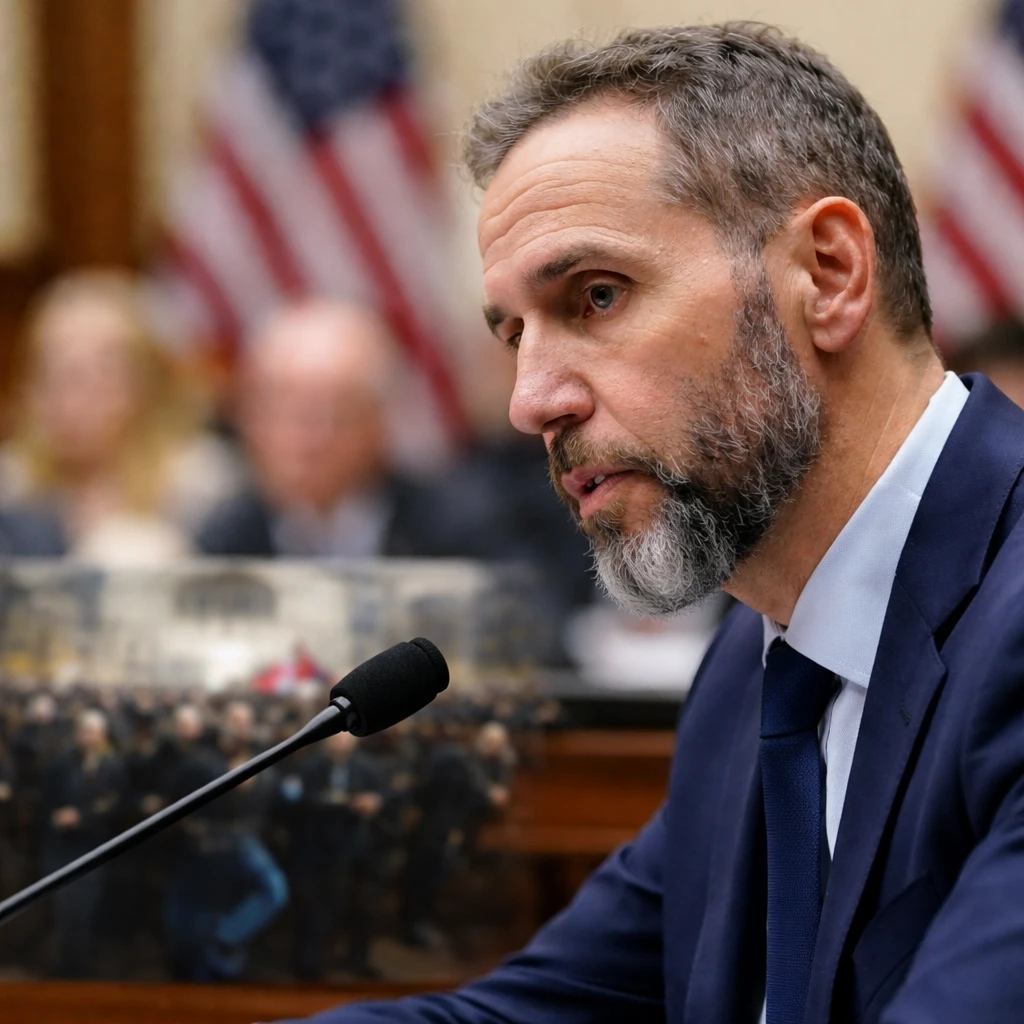

Jack Smith, the former special counsel leading investigations into ex-President Donald Trump’s endeavors to reverse the outcome of the 2020 presidential election, provided a comprehensive account Thursday before the House Judiciary Committee. Over the course of nearly five hours, Smith outlined his team’s conclusions that Trump manipulated his supporters and sought to remain in power, actions culminating in the violent events at the U.S. Capitol on January 6, 2021.
This marked Smith’s first public testimony since his departure from the Justice Department the previous year. The hearing extensively explored numerous facets of the investigation, including significant references to Cassidy Hutchinson’s pivotal testimony during the January 6 committee hearings and details about the gag order that constrained Trump amid probes into his witness intimidation tactics.
Smith asserted unequivocally, “Our investigation revealed that Donald Trump is the person who caused Jan. 6; it was foreseeable to him, and that he sought to exploit the violence.” Meanwhile, Trump publicly responded with social media posts denouncing Smith and calling for his own prosecution, underscoring the ongoing tension between the former president and the investigators.
The hearing atmosphere reflected the polarizing nature of the investigation. Present in the room was Stewart Rhodes, founder of the militant group Oath Keepers, while an altercation occurred involving a Capitol police officer, symbolizing the deep divisions persisting within Congress and the nation regarding the January 6 attack.
Smith acknowledged the likelihood that Trump-aligned officials would attempt legal reprisals against him but affirmed his resolve not to be intimidated. “I’m not going to pretend that didn’t happen because he’s threatening me,” Smith stated, highlighting the determined and evidence-based approach undergirding the probe.
Adhering to Justice Department policy, Smith ceased the investigation against Trump after the latter’s reelection in 2024, as sitting presidents are generally shielded from prosecution. Prior to this, Trump was indicted on charges related to conspiring to overturn the election results and separately over the retention of classified materials at his Mar-a-Lago estate. The hearing was characterized by Republican efforts to challenge and cast doubt on Smith's now inactive case, while Democrats cautioned against attempts to rewrite the implications of Trump’s actions and the ensuing Capitol riot.
Looking ahead, Smith is anticipated to testify before the Senate committee, which is conducting a related inquiry. However, aspects of the classified documents case remain undisclosed due to a judicial injunction, with Trump’s legal team advocating for permanent secrecy.
Republicans focused sharply on disputing Hutchinson’s testimony, which included her account of Trump’s alleged attempt to seize the steering wheel of the presidential limousine as he sought to join the Capitol mob. Smith categorized her testimony as “second hand” and noted that the Secret Service agent present did not corroborate the incident. Despite this, Smith and his team had multiple other witnesses and considered Hutchinson among many contributors to the body of evidence.
Addressing questions about witness selection, Smith emphasized the substantial number of witnesses interviewed, including Republicans who had supported Trump and sought his electoral victory. A core challenge, he explained, was distilling a complex case into a clear narrative, given the breadth of testimonies from state officials, campaign workers, and political advisers.
As a longtime career prosecutor serving under both Republican and Democratic administrations, Smith portrayed himself as a neutral figure guided strictly by law and evidence. "I am not a politician and I have no partisan loyalties," he stated, underscoring his impartial commitment to justice.
Republican lawmakers depicted Smith as an overzealous prosecutor needing oversight as he pursued charges against Trump in advance of a potential second term. Among criticisms was the collection of phone records of congressional members, including then-House Speaker Kevin McCarthy. Smith responded that the subpoenas and nondisclosure agreements were routine investigative measures aimed at clarifying the scope of the conspiracy and preventing witness intimidation, which was compounded by Trump’s public threats toward dissenters.
Democratic representatives highlighted the broader stakes of the case for American democracy. In response to a query from Rep. Pramila Jayapal about the potential consequences of failing to hold a president accountable for election-related crimes, Smith warned, “If we do not hold the most powerful people in our society to the same standards, the rule of law, it can be catastrophic.” Smith framed the January 6 Capitol assault as an existential threat to democratic institutions, echoing recent judicial findings.
Smith further noted President Trump's ongoing attacks against him during the hearing, with Rep. Joe Neguse reading the president’s disparaging social media posts aloud. Smith recognized such actions as examples of political weaponization and corruption but confirmed he was not directed by the current administration to undertake any investigations into Trump.
Throughout the hearing, Smith reaffirmed the legal basis for the charges against Trump, stating plainly that the evidence showed the former president knowingly engaged in criminal actions to reverse the 2020 election outcome and thwart the constitutionally mandated transfer of power. While he did not pursue an insurrection charge against Trump, a charge that featured prominently in the House impeachment proceedings after January 6 but did not result in a Senate conviction, Smith expressed confidence in the sufficiency of his evidence and readiness to proceed with prosecution if circumstances were unchanged.
When questioned about Trump’s pardoning of over 1,500 individuals convicted in connection with the January 6 attack, including those who assaulted law enforcement officers, Smith expressed bafflement, admitting, “I don’t get it. I never will.”
The hearing concluded with Smith’s firm declaration that accountability under the law is essential to safeguarding elections and democracy, and he restated his commitment to impartial justice despite intense political pressures and personal threats.