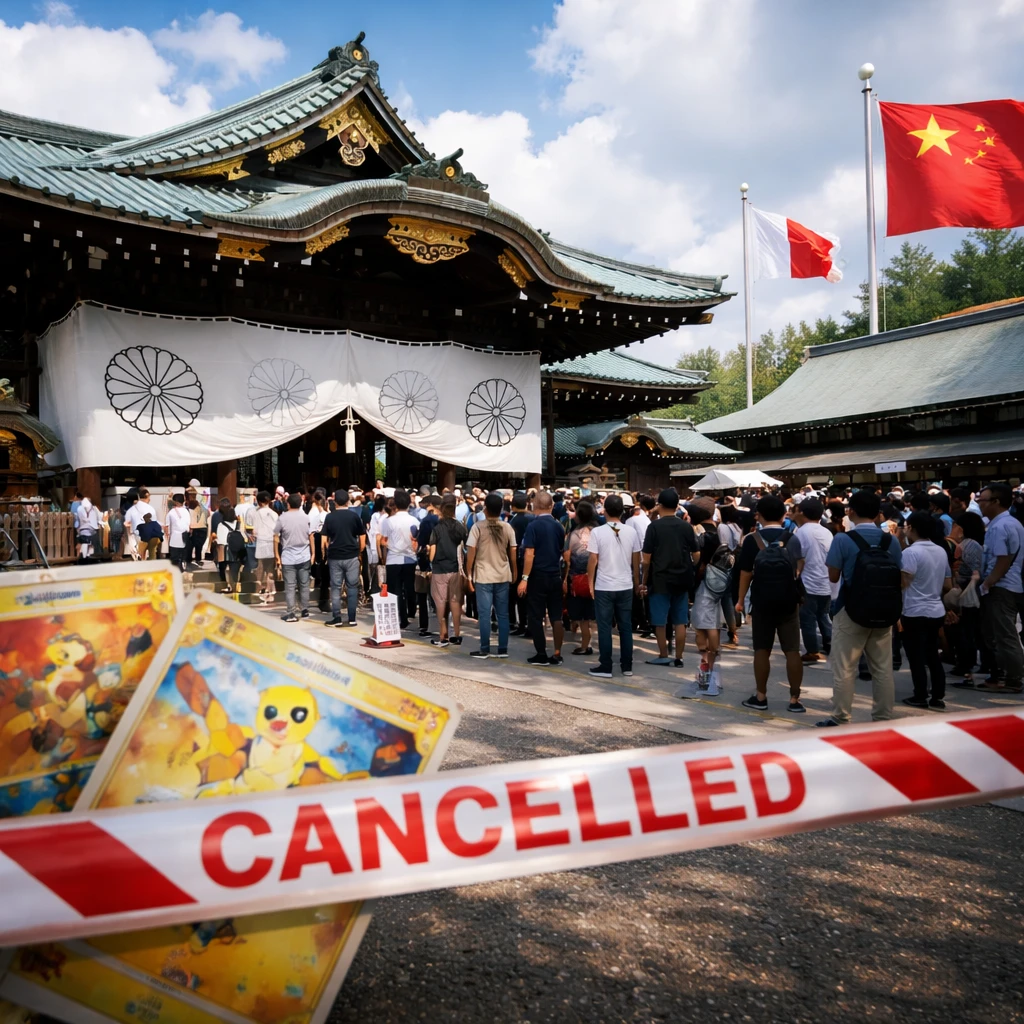

Plans for a Pokémon trading card game event scheduled to take place on Saturday at Tokyo’s Yasukuni Shrine have been revoked following a strong adverse response from Chinese audiences. The Yasukuni Shrine is a memorial honoring approximately 2.5 million Japanese individuals who perished in World War II, including several who were convicted as war criminals. This site remains a source of controversy, particularly among countries such as China and the Koreas, which suffered under Japanese wartime aggression. These nations interpret visits and activities held at the shrine as disregarding Japan's acknowledgment of its wartime actions.
The announcement for the Pokémon event was posted on the official website of Pokémon Company, a subsidiary of Nintendo, provoking significant backlash from Chinese state-affiliated media and trending critical discussions on Chinese social media. It is important to note that Chinese social media platforms operate under strict government supervision, which has a considerable influence on which topics gain widespread attention.
Specifically, the Communist Party’s official newspaper, the People’s Daily, issued a statement on its Weibo account warning brands against ignoring historical sensitivities, asserting, “Brands that ignore history and hurt the feelings of the Chinese people will ultimately be abandoned by the market.” The publication stressed that relevant companies must bear social responsibility and not minimize historical significance under the pretext of entertainment.
Following the controversy, Pokémon Company acknowledged the mistake and promptly apologized in both Japanese and Chinese. The company clarified that the event had been privately organized by a licensed Pokémon card player, but the promotional information was mistakenly shared on their official platform. They stated, “This was an event that should not have been held in the first place,” attributing the error to a lack of sufficient understanding of the issue. The event was cancelled, and all related information was removed from the company website. The company reaffirmed its commitment to connecting people through Pokémon while being mindful of diverse perspectives.
This incident unfolds amid heightened diplomatic tensions between Japan and China. The strain has intensified since Japan’s Prime Minister Sanae Takaichi recently suggested that Tokyo might intervene if China initiates military action against Taiwan, an autonomous island claimed by Beijing. In reaction, China has implemented both economic and diplomatic countermeasures. Takaichi herself was previously known to visit Yasukuni Shrine frequently but has not done so since assuming office in October.
The evolving diplomatic landscape underscores ongoing sensitivities around historical memory and geopolitical posturing in East Asia. The cancellation of a seemingly apolitical gaming event illustrates how corporate activities can become entangled in broader international disputes and the necessity for companies to navigate historical and political contexts carefully.