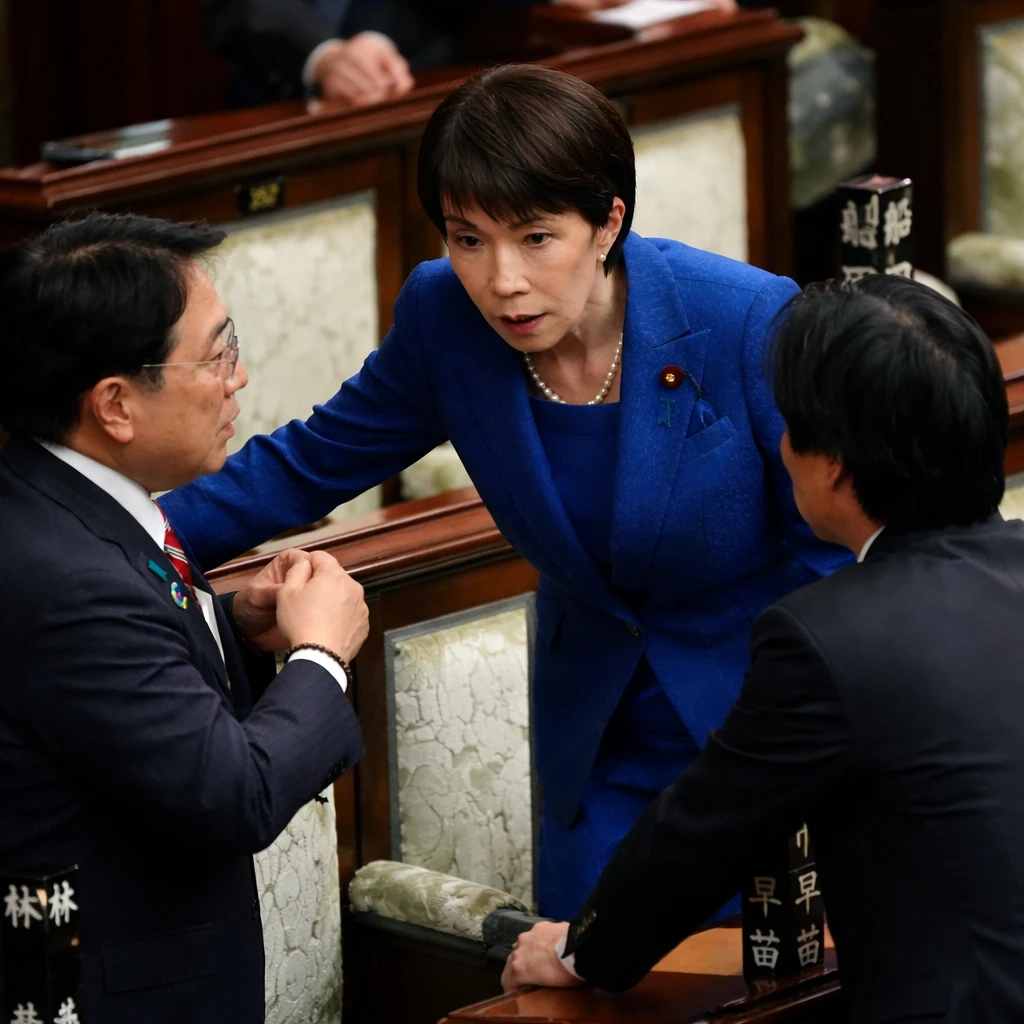

On Friday, Japan's Prime Minister Sanae Takaichi took the decisive step of dissolving the country's lower house of Parliament, clearing the path for early general elections scheduled for February 8. The initiative aims to harness her substantial popularity to bolster the ruling Liberal Democratic Party's standing following significant setbacks in recent years, while also delaying parliamentary approval of a vital budget designed to rejuvenate a struggling economy and address inflationary pressures.
Takaichi, who ascended to the premiership in October as Japan's first female prime minister, has maintained a strong approval rating near 70% despite her brief tenure of just three months. Her leadership period has been marked by increased tensions with China, spurred by her supportive comments regarding Taiwan, and pressures from former U.S. President Donald Trump urging Japan to increase defense expenditures amid escalating regional military rivalry between Washington and Beijing.
The dissolution affects the 465-member lower house and triggers a 12-day election campaign set to start officially on Tuesday. Upon the announcement by House Speaker Fukushiro Nukaga, legislators collectively expressed their support with the traditional "banzai" chant and quickly adjourned to prepare for campaigning.
Prime Minister Takaichi's strategy seeks an enhanced majority in the politically dominant lower house. Following a narrow majority held by the LDP and its coalition partners post-2024 elections, the ruling coalition lacks a majority in the upper house and depends on opposition votes to advance its legislative agenda. Opposition leaders have criticized Takaichi for delaying the budget approval process essential for funding crucial economic initiatives.
In a recent press conference, Takaichi stated, "I believe the only option is for the people, as sovereign citizens, to decide if Sanae Takaichi should remain prime minister." She emphasized her willingness to stake her political career on this mandate.
A conservative and hardline figure, Takaichi positions herself in contrast to the centrist predecessor Shigeru Ishiba. She urges voters to evaluate her fiscal policies, enhanced defense posture, and stricter immigration controls as part of her vision for a "strong and prosperous" Japan. Her optimistic and assertive image resonates strongly with younger demographics; however, the LDP struggles to regain popularity amid its recovery from a political funding scandal. Voter shifts toward emerging far-right opposition parties, such as the anti-globalization Sanseito, have been noted.
Meanwhile, Japan's diplomatic relations with China have become increasingly strained, exacerbated by Takaichi's statements suggesting possible Japanese intervention if China launches military actions against self-governing Taiwan—a territory Beijing claims as its own. This has resulted in increased diplomatic and economic countermeasures from China.
Takaichi advocates for amplified military capabilities accompanied by increased public spending. Concurrently, former U.S. President Donald Trump has been active in pressing Japan to elevate its defense budget in light of escalating military competition between the United States and China in the region.
Politically, Takaichi seeks a fresh mandate to advance the agenda established with her new coalition partner, the conservative Japan Innovation Party (JIP). Since October, the alliance has agreed on key objectives, including bolstering military strength, maintaining imperial succession rules favoring male heirs, and accelerating the reactivation of halted nuclear reactors.
This union with JIP follows the departure of the centrist Komeito party, historically allied with the LDP, due to ideological rifts and reluctance to endorse anti-corruption measures. The alliance with JIP enabled Takaichi to secure sufficient votes to assume the premiership.
Meanwhile, Komeito has joined forces with the progressive Constitutional Democratic Party of Japan to form the Centrist Reform Alliance ahead of the elections. Former Prime Minister and Democratic leader Yoshihiko Noda described this coalition as an opportunity to initiate centrist reforms focused on a diverse, gender-equal, and inclusive society with "people-centered politics."
As global divisions and internal economic inequalities expand, the new alliance emphasizes pragmatic security policies and initiatives aimed at achieving a nuclear-weapons-free world. Despite the opposition's historical fragmentation limiting electoral prospects and current polls not favoring the alliance, Komeito's capacity to mobilize votes from the Soka Gakkai Buddhist sect positions it as a noteworthy player.
Economically, Takaichi prioritizes addressing inflation and stagnant wages with support measures targeted at lower-income households. She also promises to revise security and defense policies by year-end to further strengthen Japan's military and ease restrictions on arms exports to promote industrial growth.
In addition, the ruling party proposes tighter immigration regulations and constraints on foreign residents, responding to growing domestic anti-foreigner sentiment. Recent policy proposals include stricter requirements for foreign property owners and caps on tourist entries from abroad.