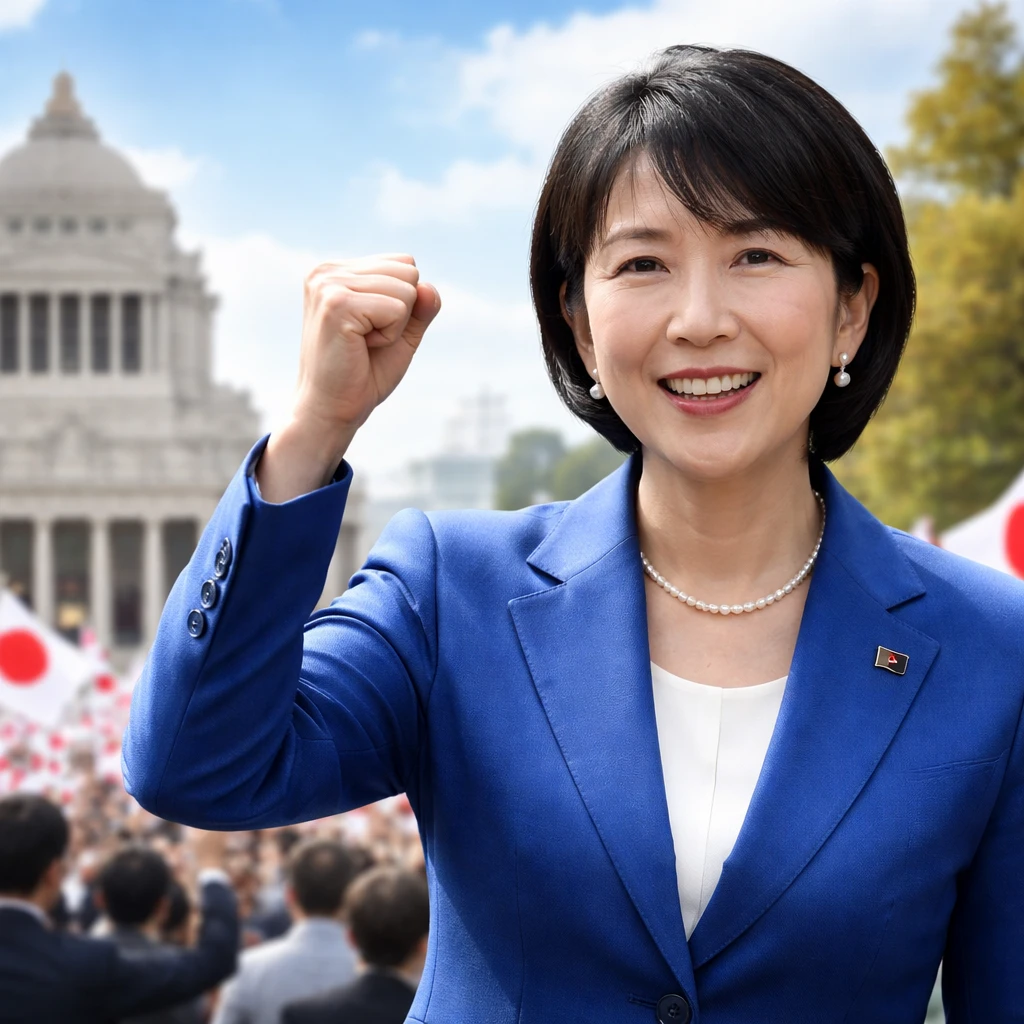

In a decisive electoral outcome on Sunday, Japan's Liberal Democratic Party (LDP), led by Prime Minister Sanae Takaichi, achieved a commanding two-thirds supermajority in the country’s 465-seat lower house, according to provisional tallies reported by Japanese media. This victory, attributed largely to Takaichi’s considerable popularity, represents the largest seat count for the party since its establishment in 1955 and surpasses the previous record of 300 seats held in 1986.
Public broadcaster NHK reported that by early Monday, the LDP alone secured 316 seats, comfortably exceeding the 261-seat threshold needed for an absolute majority. Supporting allies, including the Japan Innovation Party (JIP), contributed an additional 36 seats, bringing the governing coalition's total to 352 seats. This substantial majority positions the government with considerable legislative leverage in the more influential lower chamber of Japan’s bicameral parliament.
Following the election, Prime Minister Takaichi expressed readiness to advance her policy objectives aimed at strengthening Japan's economy and national security. In an NHK interview, she emphasized a commitment to making Japan “strong and prosperous,” indicating a willingness to engage with opposition factions pragmatically while steadfastly pursuing her agenda.
Despite the coalition's dominant performance in the lower house, the governing alliance does not hold a majority in the upper house. Nevertheless, the remarkable increase from the previous electoral share provides Takaichi with a stronger platform to promote a conservative policy agenda that emphasizes economic revitalization and bolstered defense capabilities. This shift aligns with regional concerns, especially regarding China's rising influence, and reflects efforts to deepen strategic ties with the United States.
Takaichi, who assumed office as Japan’s first female Prime Minister in October, has been noted for her ultraconservative stance and energetic leadership style that appeals to younger voters who were previously disengaged from politics. Her administration's early decision to call snap elections after only three months in office was a calculated move to capitalize on this popularity and to counteract prior party struggles related to funding and controversies involving religious organizations.
The electoral outcome left the opposition fragmented and weakened. Attempts to unify centrist and liberal factions under a new alliance—including the former coalition partner Komeito and the Constitutional Democratic Party—were insufficient to match the governing coalition, with projections indicating their combined seat count could decline to half of its previous level.
International reactions included a message of congratulations from former U.S. President Donald Trump via social media, praising Takaichi's "landslide victory" and leadership qualities.
Among the electorate, some voters welcomed the conservative shift. For example, Akihito Iwatake, a 53-year-old office worker, endorsed the LDP’s move to a more right-leaning position, interpreting it as a corrective to the party’s previously more liberal policies.
Takaichi's administration intends to pursue significant legislative initiatives on national security, immigration, and economic policy. The alliance with the right-wing JIP, led by Hirofumi Yoshimura, is expected to facilitate a more assertive stance on defense and domestic issues. Increased representation of far-right populist parties, such as the nationalist Sanseito, further reflects shifts within Japan’s political landscape. Exit polls indicated gains for Sanseito in the election.
Key legislative priorities for Takaichi include advancing a delayed budget bill to address rising living costs and stagnant wages, enhancing Japan's offensive military capabilities by revising established pacifist stipulations, and lifting the longstanding weapons export ban. The administration also proposes expanding foreign policy measures in response to U.S. calls for greater defense spending.
However, Takaichi faces challenges involving the balancing of civil liberties concerns with policies targeting foreigners and espionage prevention, which have drawn criticism for possibly undermining rights. The administration also seeks to implement stricter immigration controls, including limiting foreign property ownership and capping the number of foreign residents.
Within foreign policy discourse, experts anticipate continuity rather than radical change, with Japan expected to maintain stable relations with South Korea despite potential tensions arising from Japan’s historical wartime actions and military expansion efforts. Regional security concerns, especially regarding North Korea and China, continue to influence bilateral cooperation.
The Prime Minister advocates for government investment in "crisis management, investment, and growth," with focus areas including economic security and technological innovation. Nonetheless, analysts warn that the prioritization of political survival during elections may impede substantial policy reforms necessary for long-term progress.
The election coincided with unusual snowfall across Japan, including Tokyo, which brought logistical challenges. Recent record snowfalls in northern regions have disrupted travel and contributed to numerous fatalities.