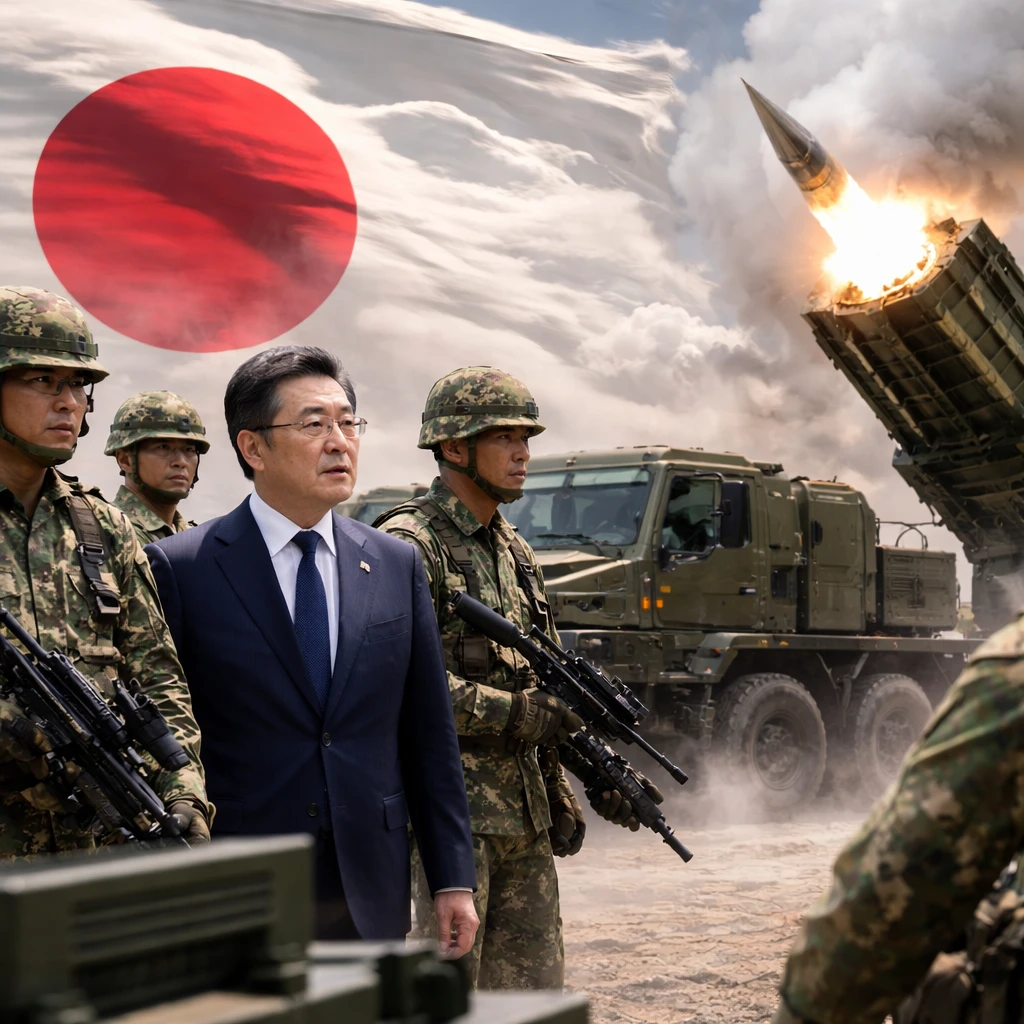

In response to growing security concerns linked to China's expanding military activities, Japan is advancing efforts to substantially increase its defense capabilities. The government has approved a plan to double the annual arms budget, signaling a clear departure from its traditionally restrained military posture. This shift coincides with pressure from the United States, Japan’s primary security partner, which advocates for enhanced military cooperation and contributions across the Asia-Pacific region.
Despite emphasizing its peaceful intentions, Japan frames the military expansion as a measure to develop a self-sufficient force capable of deterring potential aggression. However, this approach has drawn criticism from Beijing and others who interpret Japan’s moves as a departure from its post-World War II commitment to pacifism. Shortly after assuming office, Prime Minister Sanae Takaichi remarked that any Chinese military action against Taiwan might prompt a Japanese military response, a stance that contrasts with past official ambiguity.
The evolution of Japan’s military outlook spans decades and raises critical discussions about the interpretation and future of its pacifist constitution. Initially, the 1947 constitution, drafted during the U.S. occupation after World War II, prohibited Japan from maintaining military forces and renounced war as a means for settling disputes. Specifically, Article 9 forbids the use of force and the upkeep of land, sea, and air forces dedicated to conflict.
Originally aimed at eliminating militarism that precipitated Japanese aggression, this legal framework faced reassessment when hostilities in the Korean Peninsula began in 1950. At that time, the United States shifted its policy, seeing Japan as a strategic partner. Consequently, Japan established the Self-Defense Forces in 1954, with Article 9 being reinterpreted to permit a defensive military sufficient for protecting national sovereignty.
Over subsequent decades, Japan incrementally expanded the scope of its military engagement, including overseas deployments primarily centered on international peacekeeping, while avoiding direct combat roles. A significant milestone arrived in 2014 under Prime Minister Shinzo Abe, who sought to normalize Japan’s military status. Abe reinterpreted Article 9 to sanction collective self-defense, allowing Japan to use force in defense of allies, even absent direct attacks on its own territory. This culminated in legislation permitting Japan to support U.S. or friendly nations under attack, signaling a marked shift toward a conventional military posture without altering the constitution itself.
Prime Minister Takaichi’s public suggestion that Japanese forces could respond militarily to a Chinese attack on Taiwan broke with previous strategic ambiguity and increased diplomatic tensions. In late 2023, Chinese military aircraft engaging in exercises near southwestern Japan engaged in provocative conduct by locking targeting radar onto Japanese planes, interpreted as potential missile targeting preparations. Additionally, China deployed aircraft carriers near Iwo Jima, intensifying Japanese security concerns about military assertiveness beyond its borders and within contested maritime zones.
In response, Takaichi’s cabinet sanctioned a record defense budget exceeding 9 trillion yen (approximately $58 billion) for the upcoming fiscal year. This package focuses on strengthening Japan’s counterattack potential and coastal defenses through enhanced cruise missiles and unmanned weaponry. Beijing criticized Japan’s accelerated military buildup, accusing it of abandoning its peaceful development path and moving in a dangerous direction.
Adding to regional sensitivity, Takaichi's previous frequent visits to Tokyo’s Yasukuni Shrine, which honors war dead including convicted war criminals, have been viewed negatively by countries affected by Japan’s wartime actions. Recently, she refrained from visiting the shrine and instead sent a religious ornament as a commemorative gesture, indicating some moderation in expression amidst ongoing disputes over historical memory.
A transformative policy change occurred in December 2022 when former Prime Minister Fumio Kishida's administration adopted a new security strategy endorsing the possession of strike-back capabilities, including long-range missiles. Marking a clear departure from Japan’s strictly defensive military stance, the strategy identifies China as the primary strategic threat and endorses a more proactive, offensive role for Japanese forces within the U.S.-Japan security alliance.
This realignment effectively challenges the constraints of Article 9, with some commentators describing the development as eroding the constitutional commitment to pacifism. Historically, Japan prioritized economic growth while hosting significant U.S. military presence to safeguard regional security. However, defense spending caps tied to 1% of GDP have been relaxed in recent years, with Abe’s administration increasing it to roughly 1.1%. The current government, under Takaichi, is on track to reach the ambitious target of 2% of GDP much earlier than initially planned.
In parallel with budgetary expansion, Japan is actively pursuing the modernization of its defense industry. Plans include acquiring unmanned combat systems, enhancing missile technology, and eliminating residual arms export restrictions to foster defense sector growth and international cooperation. Japan is currently involved in collaborative projects on next-generation fighter jets with the United Kingdom and Italy, and is finalizing a sale of frigates to Australia, further deepening defense industry ties. Moreover, Japan intends to support maintenance operations for U.S. naval vessels, augmenting the allied maritime presence.
A government advisory panel has proposed the consideration of developing nuclear-powered submarines to extend Japan’s deterrence reach, a contentious suggestion for a nation committed to non-nuclear principles since World War II. While Japan seeks continued protection from the U.S. nuclear umbrella, internal debate about possessing nuclear weapons persists, drawing criticism from pacifist groups and atomic bomb survivors. Defense Minister Shinjiro Koizumi reaffirmed Japan’s adherence to the non-nuclear principles of no possession, production, or introduction of nuclear arms but acknowledged that all options are under consideration for new submarine capabilities.