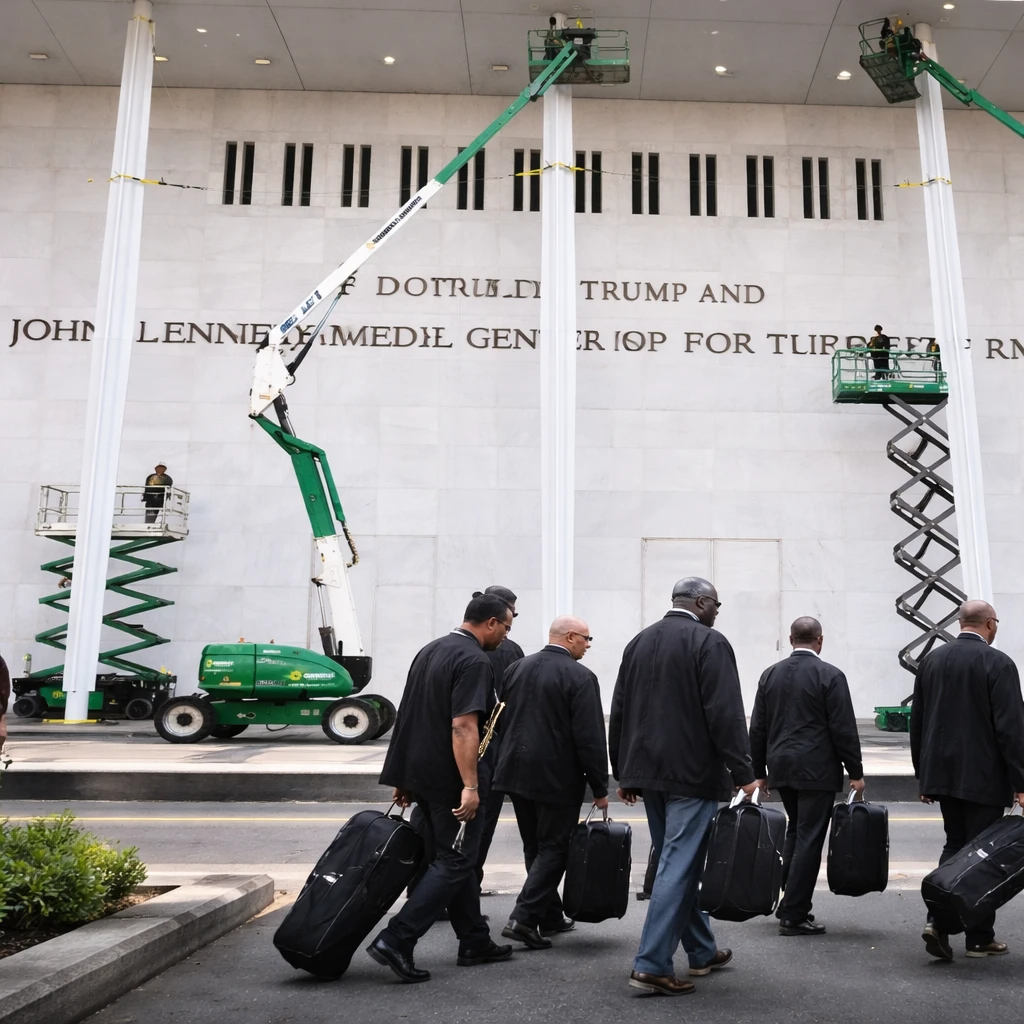

The Kennedy Center is currently facing a series of artist cancellations in the wake of a contentious renaming that includes President Donald Trump’s name. The most recent to announce a withdrawal is The Cookers, a prominent jazz supergroup with nearly two decades of collaboration, who had been slated to perform at a New Year’s Eve event titled "A Jazz New Year's Eve." The group communicated their decision on their official website, describing the choice as sudden and expressing regret for any disappointment this might cause to attendees.
While The Cookers did not directly address the Kennedy Center’s renaming or the Trump administration, they emphasized a desire for future performances to occur in environments which "celebrate the full presence of the music and everyone in it," reaffirming their dedication to musical expression that bridges divisions rather than intensifying them.
This latest departure is part of a broader pattern of artist disengagement that followed early 2023 developments. In February, after President Trump replaced the Kennedy Center board and assumed chairmanship of the institution, several artists responded with withdrawals or resignations. Notably, Issa Rae and the producers of "Hamilton" canceled scheduled shows, while musicians Ben Folds and Renee Fleming stepped down from advisory roles.
Adding personal commentary on the situation, saxophonist Billy Harper, a member of The Cookers, articulated his opposition on the Jazz Stage Facebook page. Harper declared his refusal to perform in a venue that not only bears a name he associates with "overt racism and deliberate destruction of African American music and culture" but is also managed by a board that reflects similar values. Highlighting the significance of these principles, Harper pointed out that the White House confirmed that President Trump's selected board had approved the renaming. He stated that both the board and the naming represent a mindset opposed to his lifelong commitments in music.
Responding to these events, Richard Grenell, appointed by Trump to lead the Kennedy Center following the overhaul of its leadership, suggested that the artists withdrawing had been booked under previous "far left leadership," implying alignment with the Biden administration's era. Grenell expressed on social media that the cancellations demonstrated an unwillingness among some artists to perform universally, including for those with differing political viewpoints. He further noted high interest from other performers ready to engage at the Kennedy Center irrespective of political overtones.
Regarding potential legal repercussions, there has been no immediate confirmation from Kennedy Center officials about pursuing action against The Cookers or similar groups who have canceled. However, after musician Chuck Redd canceled a Christmas Eve performance citing opposition to the center's renaming, Grenell announced intentions to seek $1 million in damages, labeling the cancellation a "political stunt."
It is essential to note the historical and legal context surrounding the venue. Following President John F. Kennedy's assassination in 1963, Congress enacted legislation establishing the Kennedy Center as a living memorial to him. This law explicitly restricts renaming the facility after other individuals and prohibits the board of trustees from altering it into a memorial for anyone else or from displaying another person's name on the building’s exterior.
As this complex situation unfolds, the Kennedy Center remains at the intersection of cultural expression, political influence, and legal frameworks, with implications for performers and patrons alike.
While The Cookers did not directly address the Kennedy Center’s renaming or the Trump administration, they emphasized a desire for future performances to occur in environments which "celebrate the full presence of the music and everyone in it," reaffirming their dedication to musical expression that bridges divisions rather than intensifying them.
This latest departure is part of a broader pattern of artist disengagement that followed early 2023 developments. In February, after President Trump replaced the Kennedy Center board and assumed chairmanship of the institution, several artists responded with withdrawals or resignations. Notably, Issa Rae and the producers of "Hamilton" canceled scheduled shows, while musicians Ben Folds and Renee Fleming stepped down from advisory roles.
Adding personal commentary on the situation, saxophonist Billy Harper, a member of The Cookers, articulated his opposition on the Jazz Stage Facebook page. Harper declared his refusal to perform in a venue that not only bears a name he associates with "overt racism and deliberate destruction of African American music and culture" but is also managed by a board that reflects similar values. Highlighting the significance of these principles, Harper pointed out that the White House confirmed that President Trump's selected board had approved the renaming. He stated that both the board and the naming represent a mindset opposed to his lifelong commitments in music.
Responding to these events, Richard Grenell, appointed by Trump to lead the Kennedy Center following the overhaul of its leadership, suggested that the artists withdrawing had been booked under previous "far left leadership," implying alignment with the Biden administration's era. Grenell expressed on social media that the cancellations demonstrated an unwillingness among some artists to perform universally, including for those with differing political viewpoints. He further noted high interest from other performers ready to engage at the Kennedy Center irrespective of political overtones.
Regarding potential legal repercussions, there has been no immediate confirmation from Kennedy Center officials about pursuing action against The Cookers or similar groups who have canceled. However, after musician Chuck Redd canceled a Christmas Eve performance citing opposition to the center's renaming, Grenell announced intentions to seek $1 million in damages, labeling the cancellation a "political stunt."
It is essential to note the historical and legal context surrounding the venue. Following President John F. Kennedy's assassination in 1963, Congress enacted legislation establishing the Kennedy Center as a living memorial to him. This law explicitly restricts renaming the facility after other individuals and prohibits the board of trustees from altering it into a memorial for anyone else or from displaying another person's name on the building’s exterior.
As this complex situation unfolds, the Kennedy Center remains at the intersection of cultural expression, political influence, and legal frameworks, with implications for performers and patrons alike.