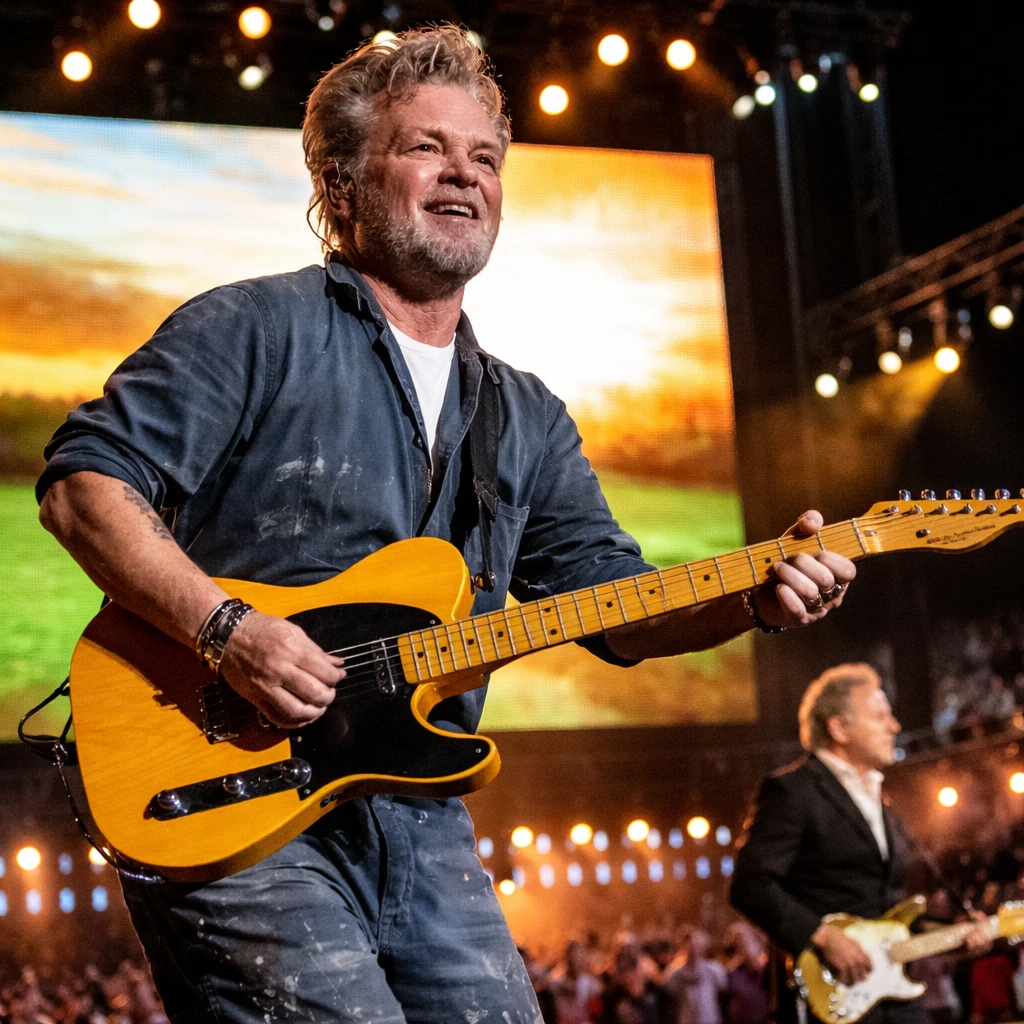

John Mellencamp, the veteran rock artist known for his evocative songwriting and enduring hits, has announced plans for a summer tour featuring a setlist centered solely on his most popular songs. This 19-date run, titled "Dancing Words Tour - The Greatest Hits," will take place in various amphitheaters across the United States, positioning itself as one of Mellencamp's most comprehensive presentations of his signature music in recent decades.
Unique to the tour's announcement was a short film starring Mellencamp and acclaimed actor Sean Penn. The two are seen conversing in a diner, where Mellencamp expresses hesitation about embarking on a "greatest hits" tour. Penn counters with encouragement, suggesting that embracing the hits not only honors the soundtrack of many lives but allows the artist to genuinely enjoy the moment.
Mellencamp boasts an impressive chart history, with 22 songs securing Top 40 positions on Billboard charts between 1979 and 1996. Of these, ten cracked the Top 10, highlighted by "Jack & Diane," which spent four weeks at number one in 1982.
While Mellencamp has continued to perform popular songs like "Pink Houses," "Hurts So Good," "Small Town," and "Lonely Ol' Night" throughout his recent live shows—often in combination with newer material—several hits have seen limited or no live renditions for years. For example, "I Need a Lover" has not been performed live since 2005, "Wild Nights" since 1997, "Rumbleseat" since 1992, and "R.O.C.K. in the USA (A Salute to '60s Rock)" last appeared in 2014. In addition, some songs such as "Rooty Toot Toot" have never been part of his live performances.
This upcoming series resembles the diner jukebox featured in the promotional video, where the music selection comprises solely Mellencamp's hits. The sequence in the short film culminates with the jukebox playing "Jack & Diane," followed by the diner's patrons singing along enthusiastically, a joyful moment that prompts Mellencamp to commit to the tour.
In an interview conducted over Zoom prior to the tour's announcement, Mellencamp discussed his decision to focus on his greatest hits. Reflecting on advice received years earlier, he shared an encounter with folk musician Pete Seeger, who counselled him to "keep it small, but keep it going" rather than relying on past successes in large venues. Mellencamp explained that while this advice shaped his approach for two decades, the current tour represents a temporary departure, a chance to revel fully in his classic songs before returning to more traditional, smaller theater shows.
He conveyed that performing for large outdoor audiences often felt like being a cheerleader, coaxing the crowd rather than engaging as a musician. The new tour offers a different experience, centered on celebration rather than promotion.
Mellencamp addressed perceptions about the motivations for such a tour, noting that although some critics might view it as a commercial endeavor, he personally has never been driven by money. Instead, his objective is to bring happiness to fans and himself by revisiting these enduring pieces.
Looking ahead, Mellencamp indicated that the current 19 shows are likely to constitute the extent of this tour, with little chance of it extending beyond the planned U.S. dates or venturing internationally. He remarked on the mixed feelings artists have about touring, enjoying initial performances but eventually feeling its demands.
Discussing audience responses, Mellencamp observed that as fans age, their interest in new material wanes somewhat. At theater shows, he sometimes senses audience impatience during consecutive new songs, recognizing the importance of balancing fresh content with familiar classics.
Regarding his body of work, Mellencamp remarked that many of his early compositions have aged remarkably well, citing "Minutes to Memories" as an example. Notably, he resumed performing "Jack & Diane" a few years ago after a hiatus, finding the audience's enthusiastic singalong rejuvenating. For this tour, the song will be presented in a new style, described as a soulful mashup.
At present, Mellencamp does not anticipate retiring any of his old hits from the setlist, although he acknowledges that his attitude could change after multiple performances. For now, he remains open and positive about the project, embracing Sean Penn’s sentiment that making people happy through music is wholly appropriate.
Unique to the tour's announcement was a short film starring Mellencamp and acclaimed actor Sean Penn. The two are seen conversing in a diner, where Mellencamp expresses hesitation about embarking on a "greatest hits" tour. Penn counters with encouragement, suggesting that embracing the hits not only honors the soundtrack of many lives but allows the artist to genuinely enjoy the moment.
Mellencamp boasts an impressive chart history, with 22 songs securing Top 40 positions on Billboard charts between 1979 and 1996. Of these, ten cracked the Top 10, highlighted by "Jack & Diane," which spent four weeks at number one in 1982.
While Mellencamp has continued to perform popular songs like "Pink Houses," "Hurts So Good," "Small Town," and "Lonely Ol' Night" throughout his recent live shows—often in combination with newer material—several hits have seen limited or no live renditions for years. For example, "I Need a Lover" has not been performed live since 2005, "Wild Nights" since 1997, "Rumbleseat" since 1992, and "R.O.C.K. in the USA (A Salute to '60s Rock)" last appeared in 2014. In addition, some songs such as "Rooty Toot Toot" have never been part of his live performances.
This upcoming series resembles the diner jukebox featured in the promotional video, where the music selection comprises solely Mellencamp's hits. The sequence in the short film culminates with the jukebox playing "Jack & Diane," followed by the diner's patrons singing along enthusiastically, a joyful moment that prompts Mellencamp to commit to the tour.
In an interview conducted over Zoom prior to the tour's announcement, Mellencamp discussed his decision to focus on his greatest hits. Reflecting on advice received years earlier, he shared an encounter with folk musician Pete Seeger, who counselled him to "keep it small, but keep it going" rather than relying on past successes in large venues. Mellencamp explained that while this advice shaped his approach for two decades, the current tour represents a temporary departure, a chance to revel fully in his classic songs before returning to more traditional, smaller theater shows.
He conveyed that performing for large outdoor audiences often felt like being a cheerleader, coaxing the crowd rather than engaging as a musician. The new tour offers a different experience, centered on celebration rather than promotion.
Mellencamp addressed perceptions about the motivations for such a tour, noting that although some critics might view it as a commercial endeavor, he personally has never been driven by money. Instead, his objective is to bring happiness to fans and himself by revisiting these enduring pieces.
Looking ahead, Mellencamp indicated that the current 19 shows are likely to constitute the extent of this tour, with little chance of it extending beyond the planned U.S. dates or venturing internationally. He remarked on the mixed feelings artists have about touring, enjoying initial performances but eventually feeling its demands.
Discussing audience responses, Mellencamp observed that as fans age, their interest in new material wanes somewhat. At theater shows, he sometimes senses audience impatience during consecutive new songs, recognizing the importance of balancing fresh content with familiar classics.
Regarding his body of work, Mellencamp remarked that many of his early compositions have aged remarkably well, citing "Minutes to Memories" as an example. Notably, he resumed performing "Jack & Diane" a few years ago after a hiatus, finding the audience's enthusiastic singalong rejuvenating. For this tour, the song will be presented in a new style, described as a soulful mashup.
At present, Mellencamp does not anticipate retiring any of his old hits from the setlist, although he acknowledges that his attitude could change after multiple performances. For now, he remains open and positive about the project, embracing Sean Penn’s sentiment that making people happy through music is wholly appropriate.