
WASHINGTON — The U.S. Department of Justice has decided against launching a criminal civil rights investigation into the killing of Renee Good by an Immigration and Customs Enforcement (ICE) officer in Minneapolis, Deputy Attorney General Todd Blanche announced on Tuesday. This marks a notable shift from previous government approaches, where the Civil Rights Division swiftly engaged in reviewing cases involving law enforcement shootings for potential civil rights violations.
While the Federal Bureau of Investigation continues its inquiry into the incident, sources with knowledge of internal deliberations revealed that Civil Rights Division attorneys were informed last week that they would not be involved in the probe at this juncture. These sources spoke under the condition of anonymity due to the sensitivity of the matter.
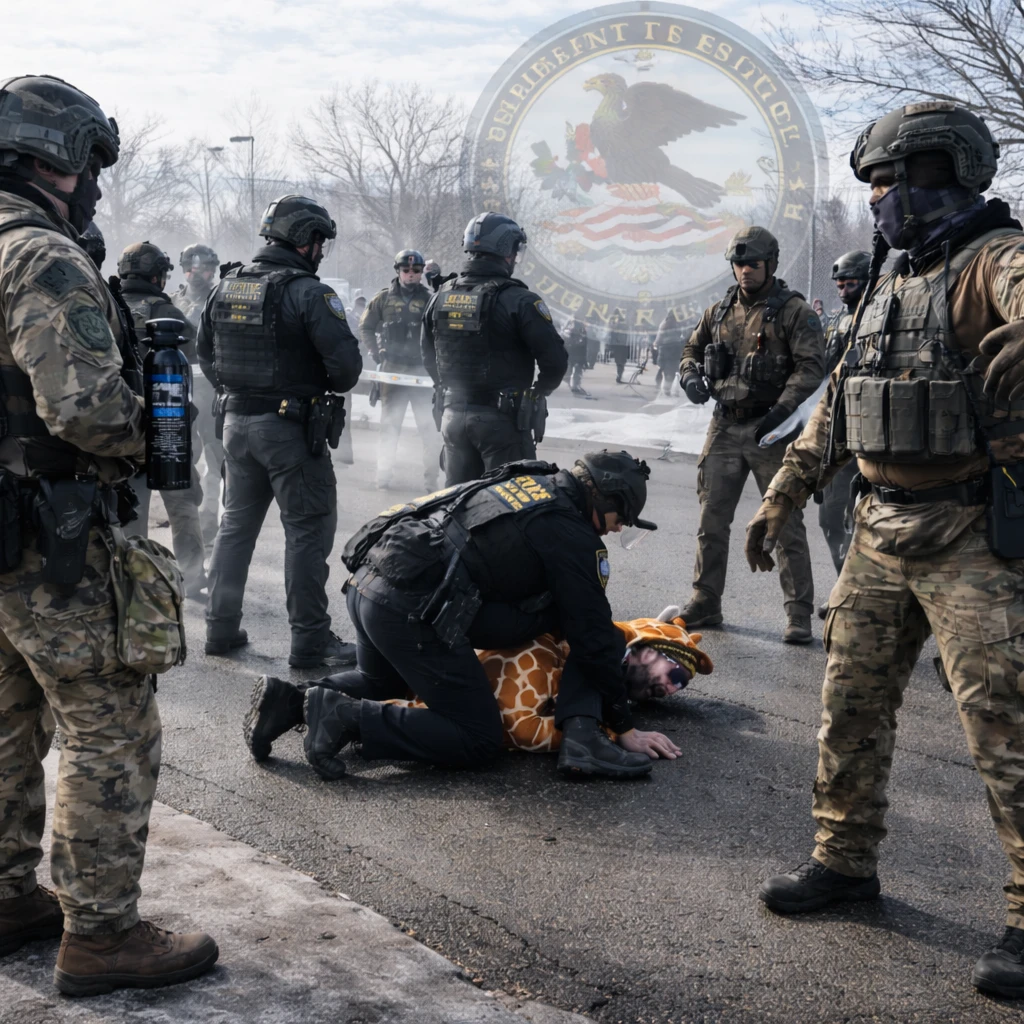
Protesters in Minneapolis have voiced opposition to ICE following the fatal shooting of Renee Good on January 12, 2026. The administration's statement did not specify the rationale behind the Justice Department's decision to forgo a civil rights investigation, raising questions about the criteria and evidence considered.
Federal authorities contend the ICE officer acted in self-defense, characterizing Renee Good’s actions of moving her vehicle toward the officer as an act of domestic terrorism. This early declaration by officials, made before the completion of a full investigation, has fueled concerns about the federal government's commitment to a comprehensive and impartial review of the events. Furthermore, Minnesota officials have criticized federal actions that have prevented state investigators from examining key evidence, asserting that the state has jurisdiction to conduct its own inquiry into the shooting.
Amid these developments, several federal prosecutors based in Minnesota, alongside supervisors within the Civil Rights Division's criminal section in Washington, have resigned recently, according to individuals familiar with the situation. Among those departing is Joseph Thompson, First Assistant U.S. Attorney in Minnesota, who was overseeing extensive fraud investigations in the region. Reports indicate that at least four other prosecutors from the Minnesota U.S. attorney’s office also resigned during this period of internal unrest, with sources requesting anonymity to discuss personnel issues.
These departures form part of a broader pattern of high-profile resignations and dismissals of career attorneys within the Justice Department under the current administration, attributed to concerns about political interference and shifting prosecutorial priorities. The turnover has drawn criticism from Minnesota’s Democratic lawmakers; Senator Amy Klobuchar, a Judiciary Committee member, described the resignations as detrimental to the state and public safety, cautioning against prosecutorial decisions driven by politics. Governor Tim Walz voiced apprehension that political pressures may influence career federal officials in their work.
The resignations within the Civil Rights Division’s criminal section—including its chief—were communicated to its staff on Monday, shortly after attorneys were informed they would not take part in the Minneapolis shooting investigation. The Justice Department stated on Tuesday that the prosecutors had applied for an early retirement program well before the events in Minnesota occurred and dismissed any suggestions of a connection between their departures and the shooting case.
Established nearly 70 years ago, the Civil Rights Division has a history of investigating shootings by law enforcement, maintaining rigorous standards required to pursue criminal charges. In past administrations, this division typically acted swiftly to open and publicly announce investigations into such cases, reflecting the federal government's jurisdiction over possible civil rights violations and its efforts to ease community tensions inherent in law enforcement-involved shootings.
Kristen Clarke, who led the Civil Rights Division during the Biden administration, remarked on the high level of community grief and anxiety in Minnesota. She emphasized the federal government’s historical role as a neutral agency committed to conducting thorough investigations, stressing that public confidence suffers when this process does not occur.
For example, during the Trump administration’s early years, the Justice Department initiated a civil rights investigation into the 2020 killing of George Floyd by Minneapolis police officers, leading to criminal charges. Later, under the Biden administration, Minneapolis police faced scrutiny for possible systemic civil rights violations in a “pattern or practice” probe—a police reform mechanism currently not favored by the present Justice Department leadership.