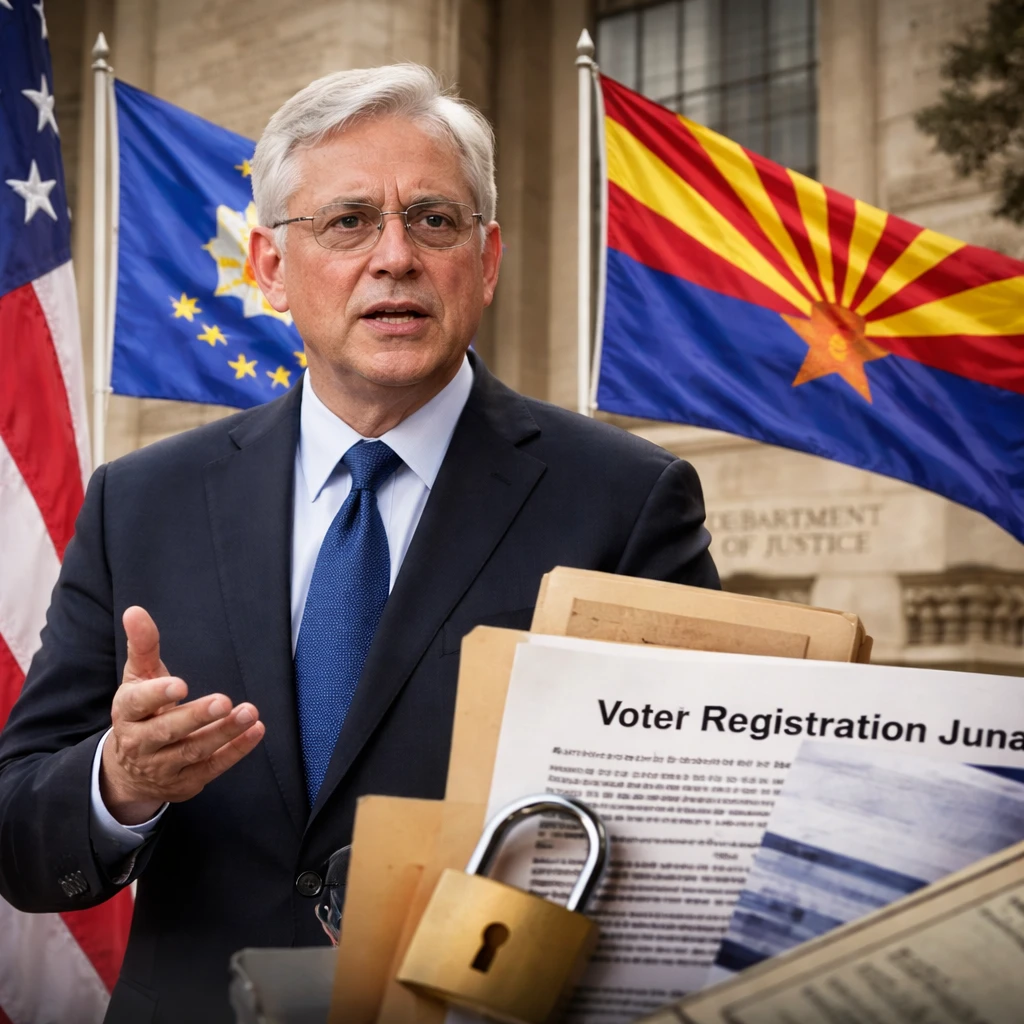

The U.S. Justice Department has recently filed lawsuits against the states of Connecticut and Arizona due to their refusal to provide detailed voter data requested by the department. This legal action makes Connecticut and Arizona the newest additions to over twenty states facing similar federal lawsuits in the ongoing efforts to access voter information.
Arizona Secretary of State Adrian Fontes expressed strong opposition to the data release on social media platform X, stating that divulging voter records would breach both state and federal regulations designed to protect such information. Meanwhile, Connecticut officials have echoed these concerns, emphasizing their commitment to safeguard voters' privacy and uphold relevant laws.
According to statements from the Civil Rights Division of the Justice Department, the lawsuits target states that have failed to comply with federal requests seeking detailed voter records. The data sought includes sensitive personal details such as full names, dates of birth, residential addresses, driver’s license numbers, and partial Social Security numbers.
Attorney General Pam Bondi highlighted the Justice Department’s intention to persist with litigation aimed at preserving election integrity, specifically citing the importance of accurate voter rolls as a foundational element of trustworthy elections.
Officials at the state level, including secretaries of state and attorneys general opposing the Justice Department’s efforts, argue that such requests undermine federal privacy protections related to individual data sharing, and conflict with their own states’ laws limiting the extent to which voter data can be publicly disclosed. The scope and nature of the Justice Department’s demands have drawn criticism for potential overreach into personal information safeguarded by various privacy statutes.
Beyond data requests, the Justice Department has queried states on their compliance procedures with federal voting laws, citing inconsistencies identified through surveys conducted by the U.S. Election Assistance Commission. These inquiries have extended to state-specific voting policies, reflecting an attempt to scrutinize election administration practices comprehensively.
The bulk of the lawsuits predominantly involve states governed by Democratic officials, many of whom report a lack of transparent explanation from the Justice Department regarding the purpose behind accessing detailed voter data and the intended usage of that information. Last autumn, a coalition of ten Democratic secretaries of state formally conveyed their apprehensions to the Justice Department and the Department of Homeland Security after disclosures indicated that DHS had received voter data and planned to integrate it into a federal program focused on citizenship verification.
Connecticut Attorney General William Tong, a member of the Democratic Party, remarked that his office had sought cooperative engagement with the Justice Department to clarify its justification for obtaining such extensive personal data from voters. However, he criticized the federal agency for opting to initiate litigation rather than pursuing meaningful dialogue. Tong reaffirmed Connecticut’s dedication to abiding by federal statutes and declared the state would mount a robust defense against what he labeled a baseless and regrettable lawsuit.
Contrastingly, two Republican state senators from Connecticut expressed support for the Justice Department’s lawsuit, referencing recent absentee ballot controversies in Bridgeport, the state’s largest city, which have attracted national attention and criticism. They implied that enhancing scrutiny over voter registration data is necessary to address these local election integrity concerns.