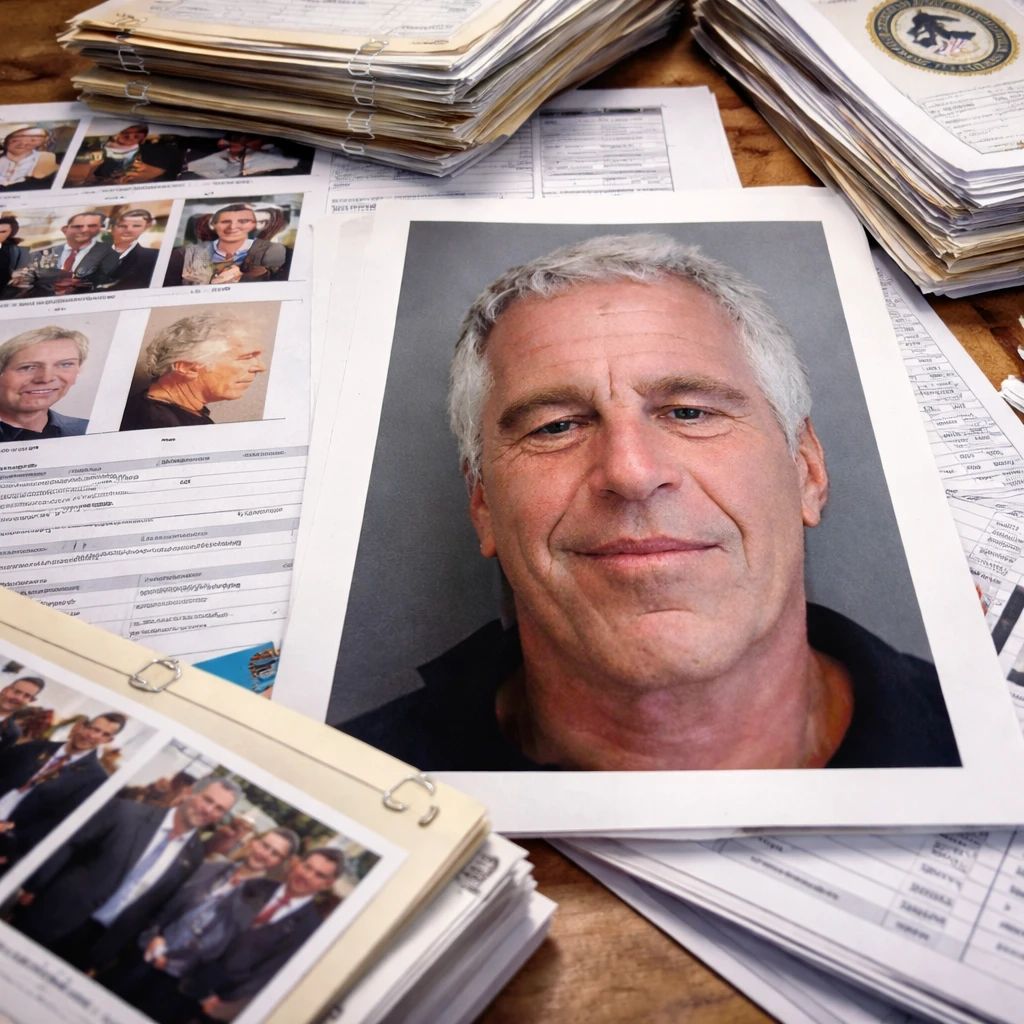

The Justice Department has made available a significant volume of files pertaining to Jeffrey Epstein, the affluent financier and convicted sex offender, who died by suicide in 2019. This release encompasses over 3 million pages of documents, supplemented by thousands of photographs and videos, in accordance with federal legislation. As of Friday evening, upwards of 600,000 documents had been uploaded online for public access, though millions of additional materials deemed eligible for release remain undisclosed, inviting criticism from members of the Democratic party.
The contents unveiled so far provide detailed insights into Epstein's communications with notable political and business figures, some occurring shortly before his demise.
Among the revelations are numerous cordial exchanges between Epstein and Steve Bannon, a former senior adviser to President Donald Trump. Their correspondence, occurring months prior to Epstein’s death, encompassed discussions about politics, travel plans, and a documentary Bannon proposed that aimed to rehabilitate Epstein's public image. In March 2019, Bannon requested Epstein’s assistance with transportation from Rome, and shortly thereafter, Epstein sent Bannon a message highlighting the perceived tension it caused for President Trump, mentioning that Trump "wakes up in the middle of the night sweating when he hears you and I are friends." The precise context remains ambiguous due to redactions and a lack of detailed organization in the documents.
Further communications from 2018 reveal discourse regarding President Trump's then-stated intentions to remove Federal Reserve Chairman Jerome Powell, who had been appointed the previous year. Around the same period, Epstein interacted with Kathy Ruemmler, a lawyer and former Obama administration official. In an email marked by typographical errors, Epstein cautioned against depicting Trump as a Mafia-style figure while simultaneously criticizing him as a "maniac." Bannon did not reply to requests for comment, while Ruemmler, through a representative, acknowledged professional dealings with Epstein during her legal career and expressed regret over her acquaintance with him.
The documents also disclose Epstein’s correspondence with Tesla CEO Elon Musk and Commerce Secretary Howard Lutnick concerning visits to Epstein’s private island, known as the site of numerous abuse allegations. Between 2012 and 2013, Musk exchanged emails with Epstein about arrangements for helicopter transfers to the island, mentioning that likely only he and his then-partner would attend. Epstein inquired specifically about the timing of the "wildest party" on the island. However, confirmation of these visits' occurrence is not evident in the records. Representatives for Musk’s companies did not immediately respond to inquiries, and Musk has publicly denied attending the island, stating he refused Epstein’s invitations.
Epstein also extended an invitation to Lutnick in December 2012, which Lutnick’s wife accepted enthusiastically, with plans to arrive via yacht accompanied by their children. Earlier in 2011, Lutnick and Epstein reportedly had drinks together. Their communications continued several years later, discussing construction near their residences. Lutnick has publicly distanced himself from Epstein, describing him as "gross" and affirming he severed ties decades prior; he did not reply to comment requests.
The files additionally provide more information on Epstein’s incarceration and death. Arrested on federal sex trafficking charges in July 2019, he was found dead in his cell slightly over a month later. The newly released documents include email exchanges among investigators regarding the circumstances of his death, highlighting at least one investigator’s perspective that Epstein’s last message did not resemble a conventional suicide note. Multiple investigations have concluded Epstein's death was a suicide. Details also emerged about tactics employed by jail staff to mislead media stationed outside while Epstein’s body was removed. Staff used boxes and sheets to simulate a body, loading it into a white van marked for the Office of the Chief Medical Examiner.
In an interview, reporters noted they followed this van unaware that Epstein's actual body was transported in a separate unmarked black vehicle, which left unnoticed. The extensive investigation and release of these records provide unprecedented insight into Epstein's network and the official handling of his incarceration and death.
Multiple reporters across various locations contributed to the investigation and compilation of this information.